
When a sauce pouch needs to work hard on shelf and in transit
Sauce pouches are used for chutneys, marinades, salad dressings, table sauces, cooking sauces and portion packs where easy dispensing matters. For retail packs, food service packs or promotional sachets, the challenge is the same: the pack must keep its shape, seal cleanly and give the buyer a good pour without mess.
In practice, the right format depends on the product thickness, fill volume and how the pack will be opened. A thin vinegar-based sauce behaves differently from a thicker tomato or mayonnaise-style filling. We look at the pouch size, the seal area, the opening style and the artwork together so the pack makes sense on the shelf and in use.
For South African brands, delivery matters too. A pouch going to Durban, Johannesburg or Cape Town may spend time in warm trucks, warehouse stacking and retail handling, so the laminate build and print finish need to suit the route. Coastal humidity in KwaZulu-Natal can also affect storage if stock is left in a warm storeroom for too long.
Typical pouch formats for sauces and condiments
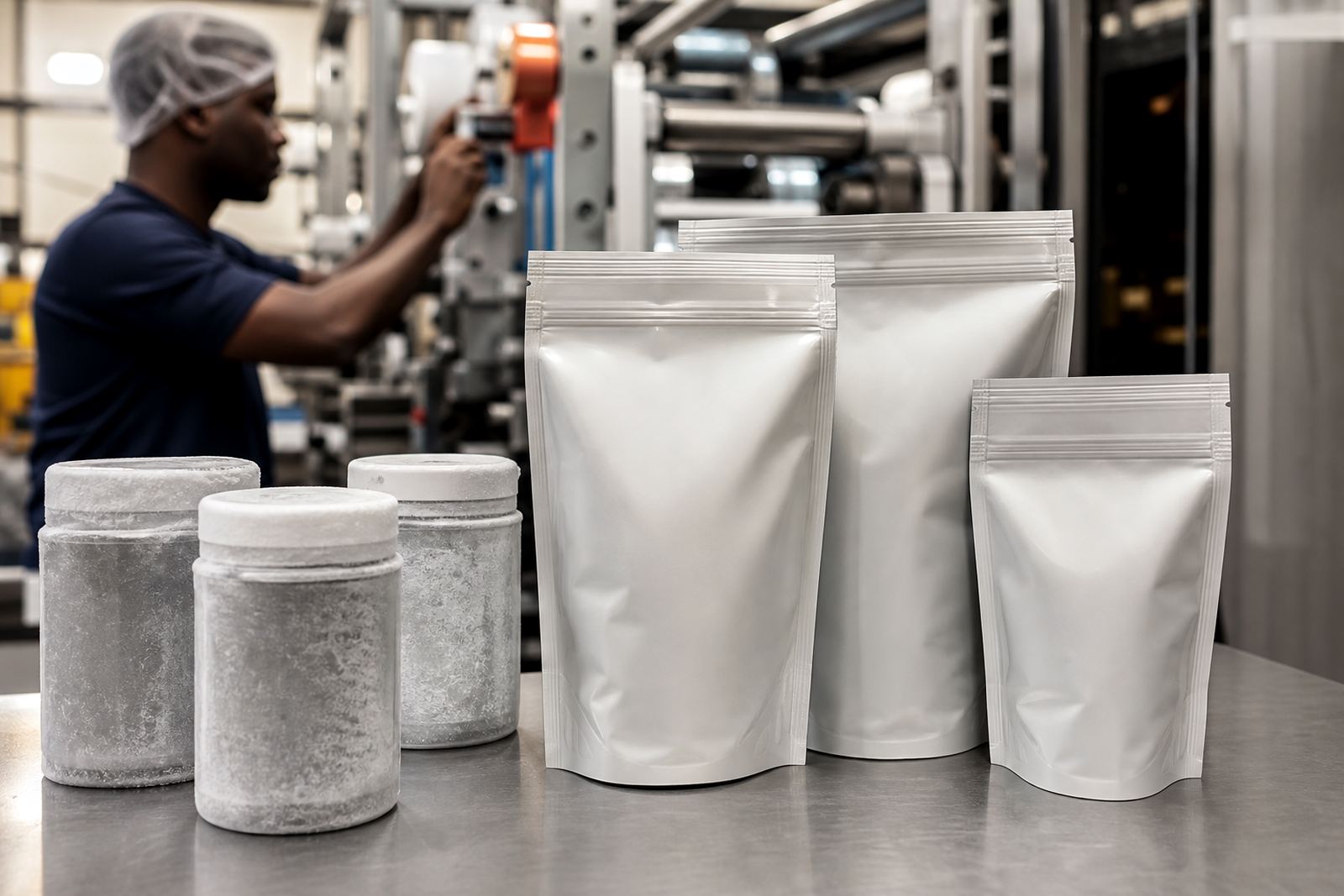
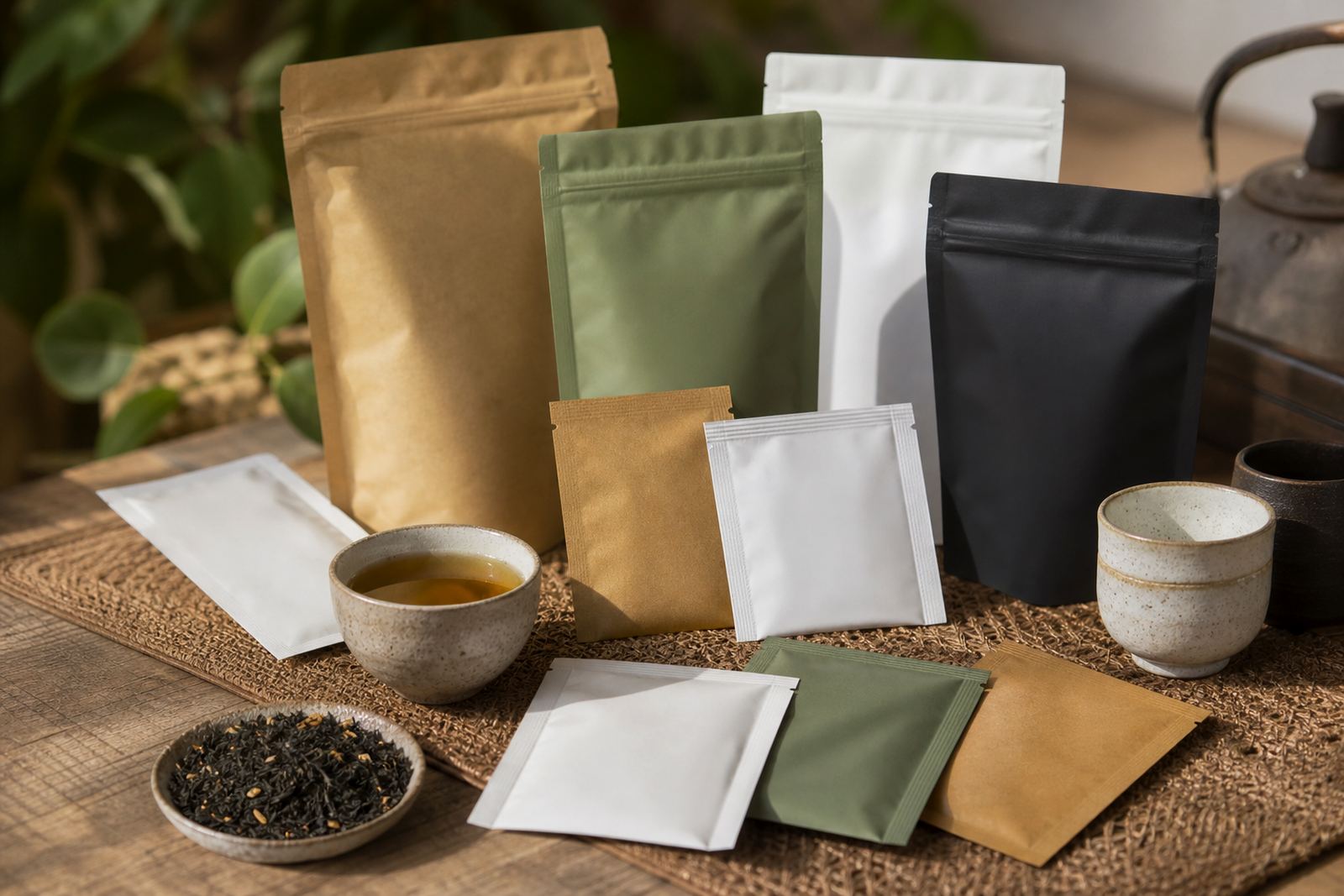
Most sauce jobs start with a few practical options rather than a one-size-fits-all answer. The usual format is a flat pouch for single-use or small retail packs, then a stand-up pouch when more shelf presence and easier filling are needed. Wrap formats can also suit secondary packs or bundled product lines, depending on the pack-out method.
- Flat sachets for sample portions, takeaway use and controlled serving sizes
- Stand-up pouches for retail sauces that need shelf visibility and easier handling
- Spouted pouch options where controlled pouring or re-sealing is required
- Wrap prints for grouped items, cartons or outer packaging presentations
For sauces with particulates or thicker body, the seal and cut line need careful planning so the product does not sit against weak areas. If a pouch is too small, the fill line can become awkward. If it is too large, the pack can look underfilled and the shelf presence suffers. The answer is usually a balance between pack size, filling speed and the way the end user opens it.
Printing and converting setup for sauce packs
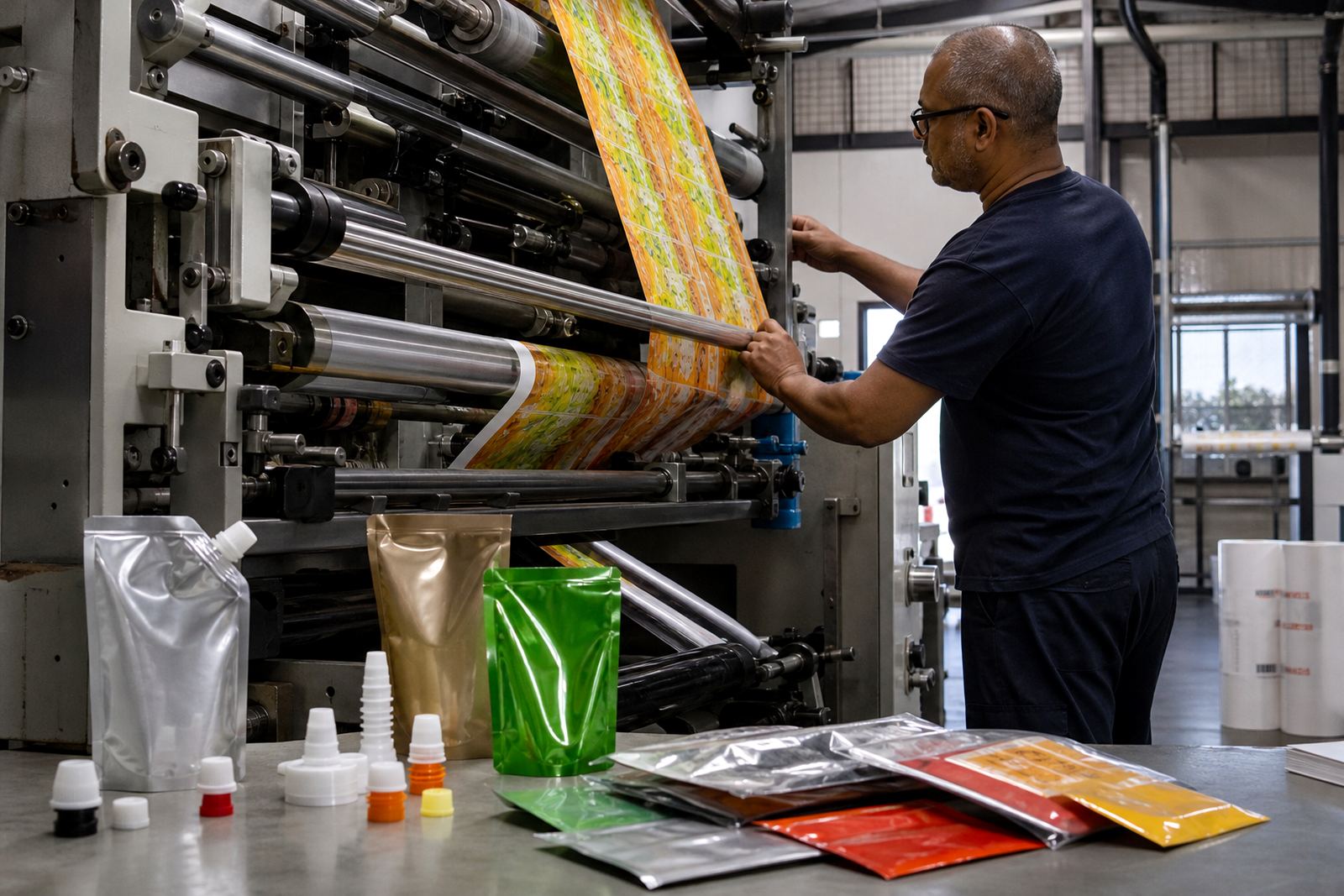
Flexo printing for sauce pouches usually works with reel-fed material that is then converted into finished packs. The setup depends on the pouch style, whether the pack needs a tear notch, a spout, a notch for opening or a bottom gusset for standing. Artwork has to suit the print method and the physical construction at the same time.
A typical equipment set for this kind of work includes a flexo print line, slitting and rewinding, pouch converting equipment, cutting and sealing stations, colour checking tools and prepress systems for artwork setup. Once the print is approved, the production flow moves through proofing, material selection, print, conversion and dispatch coordination.
For businesses working with load-shedding, timing is important. If production runs are planned badly, you can lose time on changeovers and drying windows. Good scheduling helps keep repeat orders moving, especially when a brand needs the same pouch colour and registration across several production batches. Small variations are easy to notice on pack, so proof control matters.
Layout planning that helps sauces pour properly
Packaging layout is not only about looking neat. For sauce pouches, the graphic layout must leave enough space for seals, batch coding, top openings and any tear line or spout area. If the artwork runs too close to a seal edge, the result can look cramped or cause production issues.
We usually advise brands to plan the front panel for the main product name, flavour or variant, then keep the supporting information clear and readable. On smaller sachets, the text needs to stay simple. On larger retail pouches, there is more room for instructions, serving suggestions and brand details. The key is to avoid crowding the pack with too much text.
- Leave clear seal margins on all sides
- Keep important text away from fold lines and cut lines
- Match colours to the actual film and not just the screen proof
- Allow space for coding, expiry details and handling marks
- Check how the pouch will stand, hang or stack in store
If the sauce is meant for takeaway counters, hospitality use or wholesale supply, the layout should also work when the pouch is handled with wet hands or stored in busy kitchens. Simple, clear graphics usually hold up better than overpacked artwork.
Common mistakes with sauce pouch jobs
One common mistake is choosing a pouch size before checking the fill volume and the viscosity of the sauce. That can lead to packs that look overfilled, difficult to seal or hard to pour. Another issue is using artwork that was not set up for flexo print, which can create colour shifts, fine-line loss or text that prints too small.
Suppliers also run into trouble when they ignore handling conditions. A sauce pouch shipped from Pinetown to inland destinations may face heat during transport, while coastal deliveries can face humidity and storage issues. If the material build is not suited to the product, the pack can wrinkle, distort or lose presentation quality before it reaches the shelf.
- Choosing the wrong pouch format for the sauce thickness
- Forgetting to allow space for seal widths and cut areas
- Using tiny text that is unreadable on small sachets
- Skipping a proper print proof before production starts
- Not planning for repeat production and stock consistency
A final mistake is underestimating how the pack will be used after sale. A sauce sold in Pietermaritzburg for local retail may need different handling than a sachet packed for national distribution. The pack should suit both the product and the route it takes.
Budget ranges for sauce pouch production in Rand
Budget depends on size, print colours, material choice, pouch style, run length and whether you need repeat production or a short trial batch. For smaller sauce sachet jobs, the unit cost can be higher because setup time is shared across fewer packs. Larger production runs usually bring the per-pack cost down, but they need better planning and enough storage space at the client side.
As a practical guide, short run orders for simple sauce sachets or plain pouch work can start in the lower thousands of Rand, while more involved printed pouch jobs with converting and proofing can move into the mid to higher thousands depending on the brief. Repeat production, better material planning and larger quantities can improve the value over time. Exact pricing should always follow the size, artwork and format selected.
Clients often ask whether it is better to start with a small test run. In many cases that is sensible, especially if the sauce is new to market or the pack is still being refined. It gives room to check sealing, filling and shelf appearance before committing to a larger order. That approach helps avoid waste and keeps the budget under control.
Working with our Pinetown team on sauce pouch orders
From our Pinetown base, we support local brands with flexo printing, pouch converting, sachet production, artwork prep, print proofing, colour matching, material selection and dispatch coordination. The team includes Siyabonga Ndlovu as Managing Director, Priya Naicker in sales, Marius van Wyk in production, Thandiwe Mkhize in client service, Jason Petersen in prepress and Lerato Molefe handling logistics.
We work through the enquiry form on our contact page and then look at the product type, required volume, delivery area and pack format. Whether the order is going to Durban, Johannesburg, Pretoria, Cape Town or Bloemfontein, the goal is the same: a sauce pouch that is practical, readable and ready for the shelf or kitchen use.
If you are planning a new sauce line or need repeat production on an existing pouch, it helps to share the fill type, approximate size and target packing route as early as possible. That makes the material and layout decisions much easier, and it keeps production moving without avoidable delays.