
Pet food pouches built for day-to-day handling
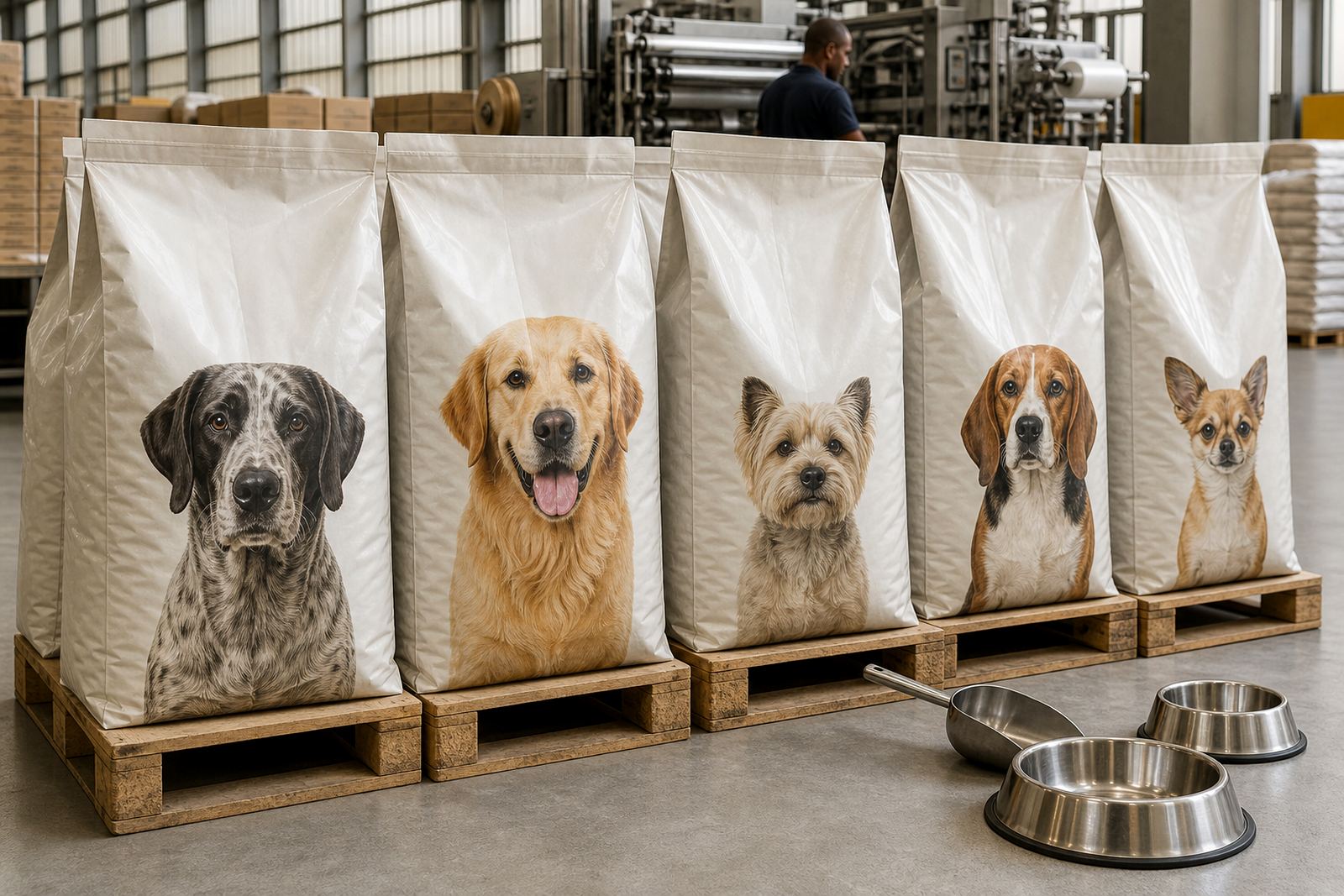
Pet food packaging has to work harder than a simple retail pouch. It gets stacked, moved through warehouses, opened and resealed, and often sits in warm stores or motor vehicles before it reaches the end customer. For that reason, pouch structure, seal strength and print laydown matter as much as the artwork itself. We supply flexible pouches for pet food ranges in sizes from small sample packs through to larger retail packs, with format choices suited to dry food, treats and moist product lines.
For brands selling into Durban, Johannesburg, Pretoria, Cape Town and Bloemfontein, the practical issues are usually the same. The pack must stay neat on shelf, resist scuffing in transit and carry clear product information without clutter. In coastal areas like Durban and Ballito, moisture and heat can affect storage conditions, so material selection and seal planning need attention from the start. A good pouch is not only about looks, it has to survive the full trip from filling line to consumer cupboard.
Pet ranges often change by flavour, weight or life stage, so the pack set needs a structure that can be repeated without constant artwork rework. That is where flexo printing and disciplined production planning help. We work with local brands to keep the pack format practical, the print repeat consistent and the dispatch plan simple enough for regular reorders.
Common pouch formats used for pet ranges
Different pet products call for different pouch styles. Dry kibble usually benefits from a stable pouch that sits upright and presents well on shelf, while treats and smaller food ranges may suit lighter formats. Moist products need extra care around sealing, barrier choice and fill handling. We help clients select the format that suits the product, the filling method and the retail price point.
- Stand-up pouches for shelf presence and easier filling
- Flat pouches for sample packs, sachet-style portions or trial sizes
- Gusseted pouches for wider pack capacity and better storage shape
- Resealable closures where product needs repeat use
- Printed wraps for bundled pet products or outer wrapping
The exact structure depends on how the pack will be filled and stored. A pouch that looks good on a sample table may fail once it is packed, stacked and moved through a hot dispatch area. We look at seal position, panel size, tear behaviour and label placement before print. Small changes in layout can save a lot of grief later.
Planning the artwork and pack layout before print
Good pet food packaging starts with the layout, not the final artwork. The pack needs room for product name, flavour, net mass, feeding notes, storage guidance and batch or trace details. If the front panel is overcrowded, the pack becomes hard to read. If the side and back panels are ignored, there may be no space for the information the brand needs to include. Planning ahead avoids last-minute panic and unnecessary plate or cylinder changes.
Our artwork prep and print proofing process helps brands check the image area, key text and colour balance before production runs. This is important when you have several SKUs in one family range. A chicken flavour, lamb flavour and puppy formula may share the same base design but still need very clear differences for store staff and buyers. On a busy retail shelf, even a small layout mistake can cause confusion, so the proof stage should be treated seriously.
For brands based in Pinetown or nearby industrial areas, we often see files that are nearly ready but need practical adjustment for the chosen pouch size. That might mean shifting a logo, enlarging a flavour panel or tightening copy so it sits safely away from the seal area. It is far easier to correct those points before print than to try and rescue them after production has started.
Typical equipment set and production flow
Pet food pouch work usually runs through a set production chain rather than a single step. The process can include print preparation, flexo printing, pouch converting, checking the finish and coordinating dispatch. The equipment used depends on the format and the volume, but the logic stays the same: print the roll or substrate cleanly, convert it into the final pouch shape and keep the repeat consistent from batch to batch.
- Flexo printing for repeated artwork and solid colour coverage
- Converting equipment for pouch formation and sealing
- Inspection and proof checks for colour, text position and panel alignment
- Dispatch coordination for delivery to Durban, Johannesburg, Pretoria, Cape Town and Bloemfontein
Production planning matters because pet food packaging is often reordered in the same format with only minor changes. Repeat production should be simple, but only if the original brief was clear and the file set was handled properly. We also plan around load-shedding risk, lead times and transport schedules, because a missed collection or delayed delivery can hold up filling and stock release. That part of the job is not glamorous, but it keeps the line moving.
Mistakes that cost money on pet pouch orders
The most common mistake is choosing a pack based on shelf appearance alone. A pouch may look smart in a mockup, but if the seal zone is too tight or the filling method is not matched to the format, the result is waste. Another problem is overloading the artwork with too many claims, icons or product notes. That makes the front panel noisy and leaves little room for the information people actually need to see.
Colour mismatch is another issue, especially when a brand repeats the same design across multiple pack sizes. A darker or lighter run can make the family look uneven on shelf. In humid or coastal conditions, material choice and storage discipline also matter. Pouches that are handled carelessly in a warm warehouse can mark, curl or lose presentation quality before they even reach the retailer. Its a small thing until the pack arrives looking tired.
Budget is often discussed too late. For pet food pouches, the cost can vary widely depending on format, material build, artwork complexity and order size. Short run orders are useful for trials and small regional launches, while repeat production usually brings better unit value. As a practical guide, a smaller test order may sit in the low thousands of Rand, mid-volume branded pouch orders often land in the mid to upper thousands, and larger repeat volumes can move into the tens of thousands depending on spec and quantity. The best way to manage spend is to brief the pack properly first, then work from the real requirements rather than guesses.
Who this works best for in South Africa
This page is for local pet brands that need practical packaging and straight answers. If you are launching a new pet food line, refreshing an existing range or managing several pack sizes for different stores, pouch-based packaging gives you a flexible route without making the production process messy. It also suits businesses that need regional delivery support, especially when stock must move between KwaZulu-Natal, Gauteng, the Western Cape and the Free State.
Based in Pinetown, KwaZulu-Natal, we work with brands that need a supplier who understands local production timing, municipal operating realities and the pressure of retail deadlines. Our team includes Siyabonga Ndlovu, Priya Naicker, Marius van Wyk, Thandiwe Mkhize, Jason Petersen and Lerato Molefe, each handling a different part of the job from sales and production through to client service, prepress and logistics. Clients reach us through the enquiry form on our contact page, then we take the brief from there and keep the process practical.
Getting a clean start on your next pouch range
When pet food packaging is planned properly, the end result is easier to fill, easier to store and easier to sell. Start with the product type, pack size, filling method and delivery region, then build the artwork around those facts. That approach reduces rework and helps keep the budget under control.
Whether you need small trial runs or repeat production for an established pet range, the main goal is the same: a pouch that performs well and presents cleanly. If the brief is clear from the beginning, the production process becomes much simpler and the pack is more likely to do its job on shelf and in transit.