
What frozen food pouches need to handle in South African supply chains
Frozen products are handled in very ordinary ways that still create very real strain on packaging. Packs are lifted from cold stores, stacked into outer cartons, moved through loading bays, and sometimes sit in a vehicle while doors are open. In coastal areas like Durban and Pinetown, humidity also affects the way film behaves during packing, especially when the line runs early in the morning and the ambient temperature changes quickly.
For this use case, the pouch structure must be chosen around the product, the fill temperature, and how often the pack will be opened and closed in the cold chain. Free-flowing items behave differently from bulkier products, and any sauce, crumb or irregular cut needs enough seal margin and strength to stay intact. A pouch that looks fine on a warm table can perform badly once it is frozen, stacked and handled with gloves, so the material spec should be set before print artwork is finalised.
- Match the laminate or film structure to freezing, stacking and transport conditions.
- Allow space for seals, tear notches, gussets or zips where needed.
- Keep key information legible in low light and under condensation.
Common pouch formats used for frozen foods
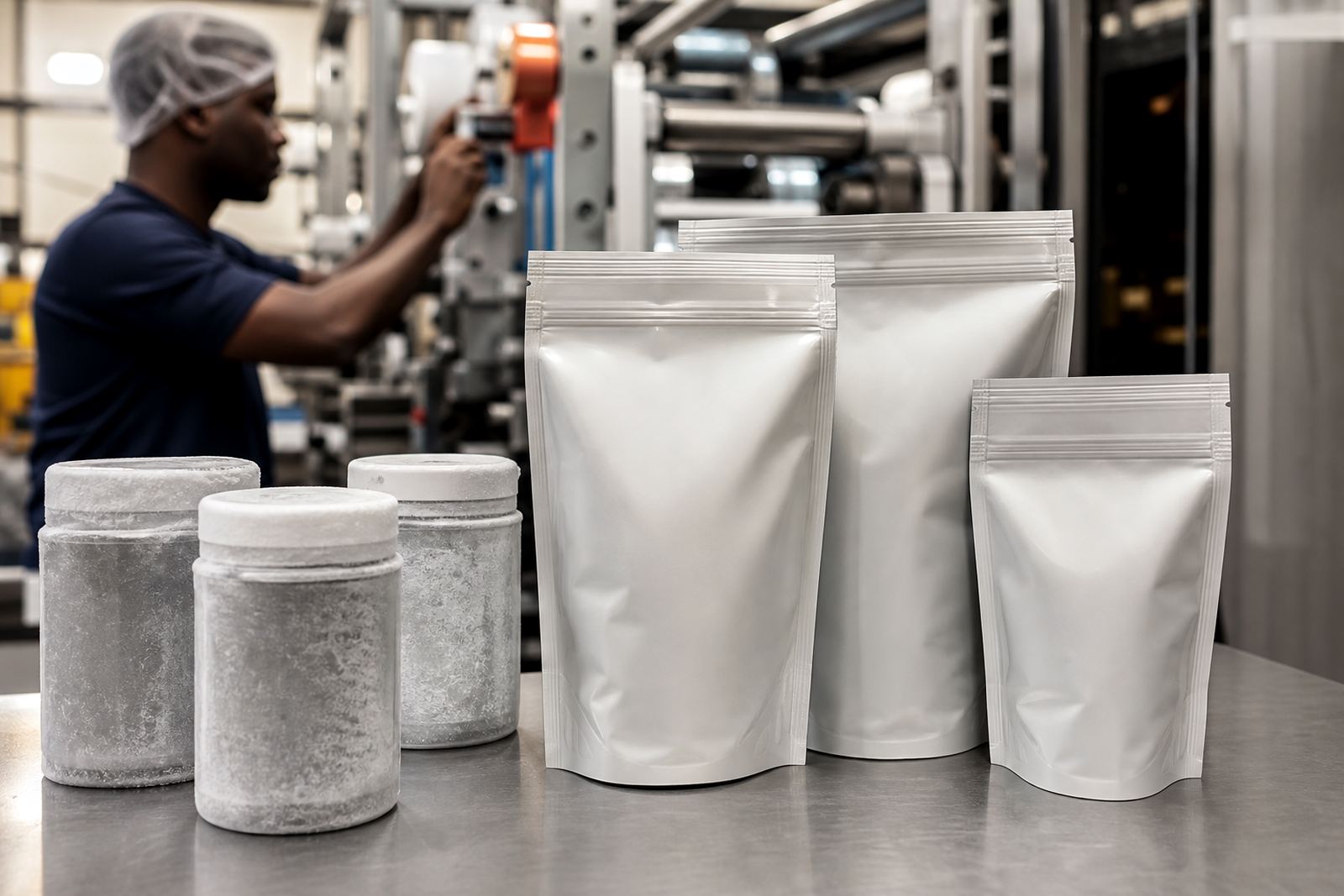
Frozen food ranges often move into stand-up pouches for retail display, lay-flat pouches for efficient filling, and larger format wraps for multi-pack or bulk applications. The layout depends on whether the product is sold in a shelf-ready freezer display, packed for wholesale, or sent through a distributor network into stores across Durban, Johannesburg, Pretoria, Cape Town and Bloemfontein.
Flexo printing works well on repeated runs and on packaging families that need the same visual language across several sizes. If you are planning a range, it helps to decide which products will share artwork blocks and which will need separate panel information. For example, a 500 g pouch and a 1 kg pouch may use the same front design but need different back panels, barcodes and product directions. That keeps production simpler and avoids unnecessary plate or setup changes, which helps on budget.
- Stand-up pouches for retail freezer shelves and counters.
- Lay-flat pouches for efficient packing and tighter carton use.
- Wraps and overwrap style packs for grouped frozen items.
- Sachets where a small frozen portion or sauce component is required.
Planning artwork for cold-room visibility and practical use
Frozen food packaging has to communicate quickly. In a freezer or cold room, shoppers and packers often see only the front panel for a second or two. Strong contrast, clean hierarchy and short product naming help the pack do its job. If the front is too busy, or if the important text sits too close to folds and seals, the pouch becomes harder to use and harder to read.
Artwork preparation also needs to respect the actual pouch shape. A zip track, gusset, tear notch, hang hole or side seal changes where text can sit. It is worth planning the label area around the finished pack rather than forcing a flat layout onto a three-dimensional shape. Colour matching should be checked with print proofing because freezer lights and warehouse lighting can make colours read differently from how they look on screen, and a light blue can shift surprisingly on some films.
- Keep the product name, weight and key selling point on the front panel.
- Leave safe margins away from seals, edges and fold lines.
- Use strong, simple colour blocks for better visibility in cold displays.
Typical equipment and production steps for frozen pouches
For this kind of work, the usual production set-up includes flexo printing equipment for the film or laminate, pouch converting equipment for shaping and sealing, and finishing tools for cutting, slitting and bag forming. Depending on the pack type, a run may also involve prepress checks, proof approval, material selection, and dispatch coordination to make sure the finished packs reach the client in the right sequence for filling.
Short run orders are often useful when a brand is testing a frozen line or launching into a few stores first. Repeat production suits established packs where the artwork is stable and the material spec has already been settled. In both cases, production has to account for practical issues like static, film curl, warehouse dust and changes in temperature across the day. These are not dramatic problems, but they can affect alignment and sealing if they are ignored.
- Artwork prep and proofing before plates or print setup are approved.
- Colour matching against agreed references, not guesswork.
- Material selection based on cold storage, pack weight and shelf life expectations.
- Dispatch coordination for local delivery or national freight movement.
Layout advice for packs that move through cold storage and retail
Frozen food packs need a layout that works for both production and retail. If the pouch will be stacked flat in cartons, the panel dimensions should allow for clean folding and predictable stacking. If the product is meant for hanging or display facing, the front panel must remain readable after the pack has been handled several times. It is also wise to think about how the pouch will look when slightly frosted or damp, because that is the condition many end users actually see.
In South African operations, municipal waste rules, courier handling and store receiving procedures can all affect packaging choices. A pack that is easy to load, store and count will usually perform better than one that looks fancy but causes trouble at dispatch or in the freezer aisle. Labels, date coding and carton marks should be planned as part of the whole system, not added later as an afterthought.
- Make sure outer cartons and inner pouch sizes work together.
- Keep date code areas clear and easy to find.
- Plan for freezer storage, carton stacking and retail shelf orientation.
Common mistakes with frozen food pouch orders
One common mistake is choosing a pack structure that looks good but does not suit the product weight or filling method. Another is underestimating how much text needs to fit on the back panel once product instructions, ingredients and handling notes are added. Brands also sometimes approve colours too quickly, then find that the final print appears too dark or too light under cold-room lighting. It is better to check these points early than to try fixing them after production, because that gets costly fast.
Another issue is leaving too little room for sealing and equipment tolerances. Frozen products may need a little extra margin depending on the fill process and how the pouch sits in the carton. If the pouch is going through a wrapping or secondary pack step, the shape should be tested with the actual carton or tray size. A pack that is one or two millimetres off can still create delays on the line, even if it sounds minor.
- Do not approve artwork without checking the finished pouch size.
- Do not place key information too close to seals or fold points.
- Do not ignore handling conditions in cold stores and vehicle transit.
Budget ranges for frozen food pouches in Rand
Budget depends on pack size, material structure, artwork complexity and the quantity required. For smaller test runs or short run orders, brands often budget from about R12 000 to R35 000 for a simple pouch project, depending on format and setup. Mid-size repeat orders for a standard frozen food pouch range can sit from around R35 000 to R90 000, while larger multi-format programmes with several sizes, proof rounds and repeat production can move well beyond that.
It helps to think in terms of total packaging value rather than just the unit price. A slightly stronger material or cleaner print layout can reduce spoilage, rework and handling issues later on. For brands in Pinetown, Durban and the wider KZN market, that often matters more than chasing the lowest quote. If the pack will travel nationally, also allow for logistics, pallet build and dispatch timing so the product is not sitting too long in a warm loading bay, which happens more often than people like to admit.
For a practical quote, the team at Flexography Printing Co can work through the pack size, artwork needs and production route through the enquiry form on the contact page. That is usually the fastest way to compare options and decide whether the job needs a simple repeat run or a more tailored packaging consultation.
Based in Pinetown and working with local brands across South Africa, the team includes Siyabonga Ndlovu, Priya Naicker, Marius van Wyk, Thandiwe Mkhize, Jason Petersen and Lerato Molefe.