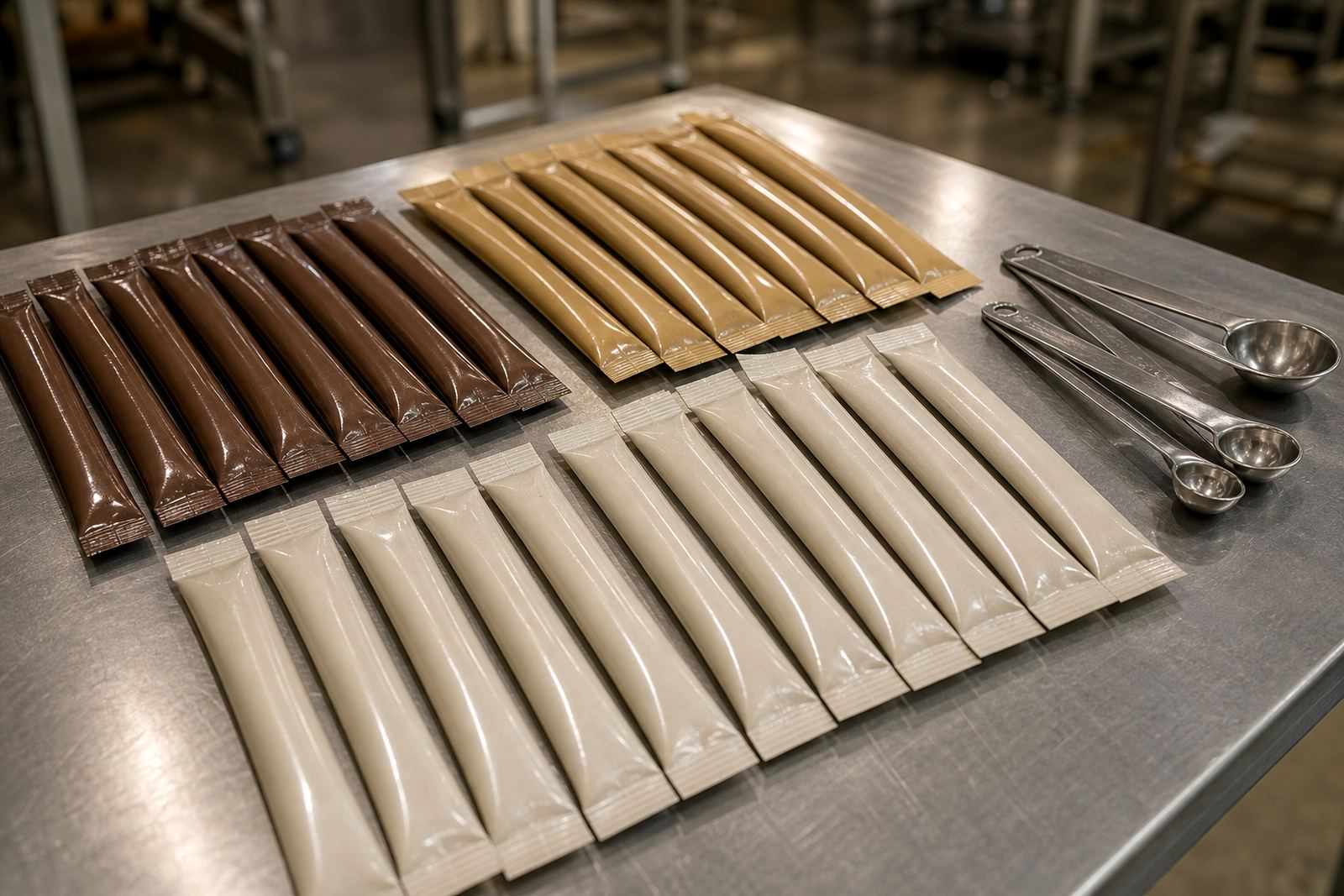
When Powder Sachets Need a Better Fit
Powder sachets suit products that must be portioned neatly and used one pack at a time. They are common for drink powders, instant mixes, seasoning blends, cleaning powders and other dry products that need a compact format with consistent fill. If your product is moving from tubs or loose bags into smaller retail packs, sachets can make stock handling simpler and more practical for shops, distributors and field sales teams.
For South African brands, the main question is usually not only how the pack looks, but how it behaves in real use. The material has to handle filling, sealing, transport and storage in hot conditions, with enough strength for stacking in a depot or on a shop shelf. In coastal areas like Durban and Ballito, humidity can affect powder flow and sealing, while inland distribution to Johannesburg or Pretoria often means longer transit and more handling.
- Measured portions for one time use
- Compact packs for retail shelves and sample packs
- Suitable for dry products that need repeat consistency
- Easy to bundle into cartons for dispatch
Typical Pack Formats and Print Setups
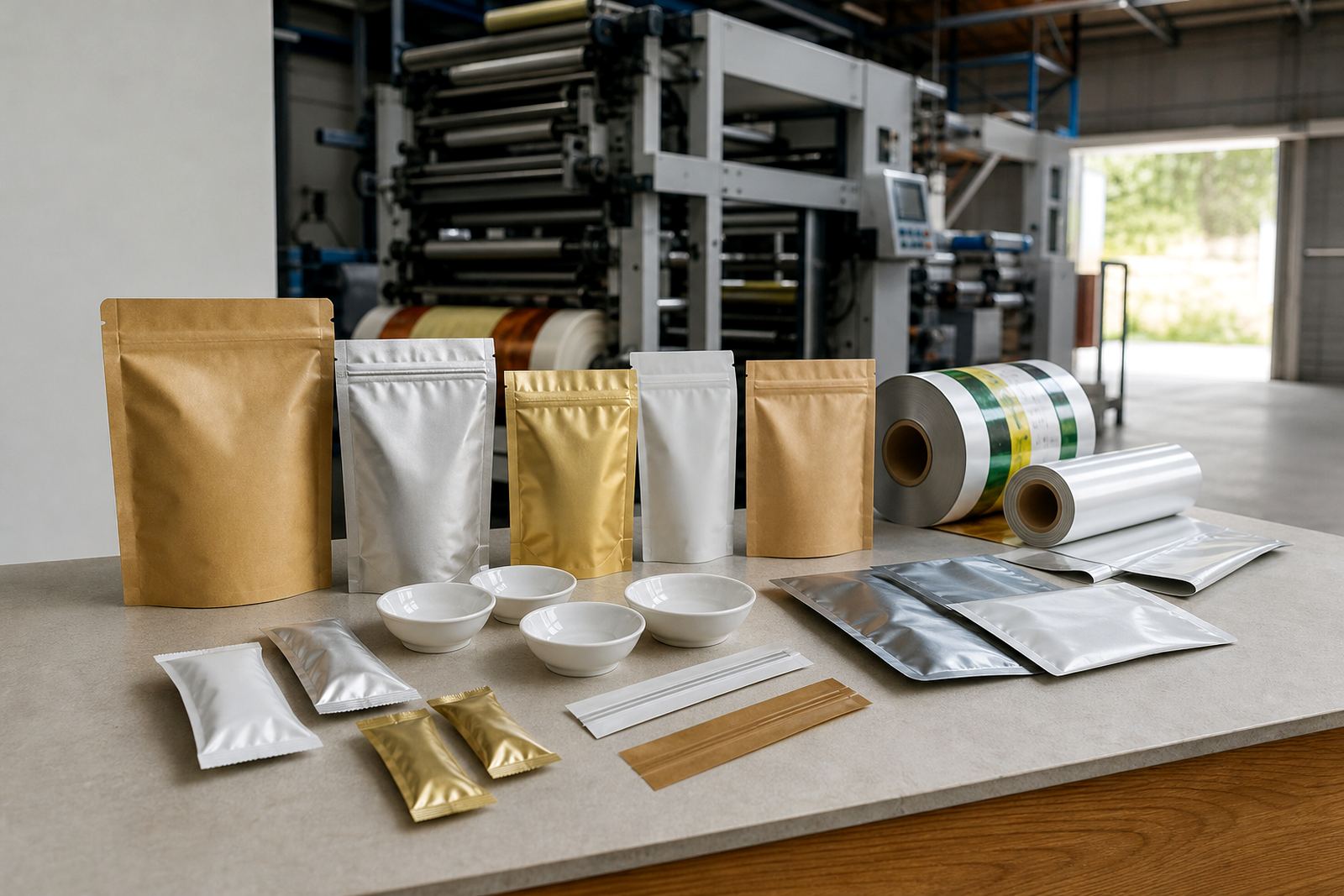
Powder sachets are usually produced in narrow strip format or small flat pouches, depending on the fill weight and how the pack will be opened. Some products need a simple tear notch, while others need a longer seal area to keep fine powder from leaking at the edges. The choice of film structure and finish depends on the powder type, storage conditions and the look you want on shelf.
Flexo printing is well suited to repeating artwork, clear product names and consistent brand colour across large or short production runs. It also suits wraps and multipacks when sachets need to be grouped together. If your artwork carries fine type, dosage notes or usage directions, keep those elements simple. Small packs can lose legibility very quickly if too much is squeezed in.
- Flat sachets for single dose packs
- Strip sachets for small retail or sample runs
- Wraps for bundled packs and outer presentation
- Artwork prepared for small text and clear panel use
How to Plan the Layout Before Printing
Good planning starts with the product itself. Measure the fill weight, test how the powder settles and decide how the customer will open and use the sachet. If the powder is very fine, allow for clean seals and enough headspace so the pack does not bulge or split during packing. If the product cakes easily, you may need to review the material choice and storage advice before production starts.
Artwork layout matters just as much as the pack structure. Keep the product name, flavour or variant and usage instructions in the most visible zones. Leave enough room for batch coding, expiry details and any required regulatory text. A tidy layout helps your pack look professional on the shelf and also makes life easier in the packhouse, especially where operators are working during load-shedding windows and need fewer line stops.
- Confirm fill weight and target usage per sachet
- Allow space for batch codes and date marks
- Keep key text large enough for small-format packs
- Plan outer cartons and dispatch labels at the same time
Common Mistakes That Cost Time and Money
One of the most common mistakes is trying to fit too much information onto a sachet. When the panel becomes crowded, the product name gets lost and the pack starts to look untidy. Another mistake is choosing a structure that looks good on screen but fails in practice because the powder leaks, the seal line is too narrow or the sachet becomes difficult to fill at line speed.
Brands also sometimes underestimate how much testing is needed before repeat production. A layout that works for a sample pack may need adjustment for a larger order, especially if the product is being packed by a contract packer or moved between sites. It is also worth checking how the sachets will be stored after packing. In humid coastal areas, bags and cartons need sensible handling so the product stays dry and the print remains clean.
- Too much copy in a very small panel
- Poor seal area for fine or dusty powders
- Ignoring how the powder behaves in filling equipment
- Skipping proof checks before repeat production
Budget Ranges for Short Runs and Repeat Orders
Budget depends on size, print colours, material choice and how many variants you need. Short runs for powder sachets often work best when you are testing a new product or launching into a specific region. Repeat production can improve unit pricing once the artwork and pack structure are settled. If you need several flavours or formula variants, it is usually better to standardise the base layout and only change the variable panels.
As a working guide, small short run projects can start from around R18 000 to R35 000 depending on the setup and complexity. Larger repeat orders with simpler artwork may land in the R35 000 to R120 000 range or more, especially where multiple pack sizes, colour changes or dispatch staging are involved. Those figures shift with the material choice and the quantity, so the best approach is to price the pack as a full job, not just by artwork alone.
- Short run orders for product trials and market testing
- Repeat production for stable supply
- Multi-variant layouts to reduce setup changes
- Dispatch coordination for delivery to Durban, Johannesburg, Pretoria, Cape Town and Bloemfontein
Working with a Pinetown Team That Knows Local Distribution
Our base in Pinetown, KwaZulu-Natal puts us in a practical position for brands that need printed flexible packaging moving through the local supply chain and out to the rest of the country. The team includes Siyabonga Ndlovu, Priya Naicker, Marius van Wyk, Thandiwe Mkhize, Jason Petersen and Lerato Molefe, and the work is handled from enquiry through artwork, proofing, production and dispatch coordination.
For powder sachets, that means you can ask for help with flexo printing, pouch converting, sachet production, artwork prep, print proofing, colour matching, material selection and repeat production planning. Clients reach us through the enquiry form on our contact page, which keeps the brief in one place and makes it easier to plan packaging that suits your product and your delivery route. Whether the order is going to a distributor in Pietermaritzburg or a retailer moving stock into Cape Town, the goal is the same: a sachet that fills well, seals properly and arrives ready for pack out.