
Snack packaging that fits the product and the shelf
Snack packing starts with the product itself. Crisps, biltong, nuts, sweets, rusks and powdered snack mixes all behave differently, so the pack must suit the fill weight, shelf life needs and how the customer opens it. A light snack meant for impulse sales may work well in a small sachet or wrap, while a larger share pack often needs a stand-up pouch with a stronger base and dependable seal area.
For local brands in Durban, Johannesburg, Pretoria, Cape Town and Bloemfontein, the main aim is simple: keep the pack practical for handling while presenting the product clearly. In KwaZulu-Natal humidity and coastal conditions, material choice matters too. A pack that looks fine in a dry storeroom can show issues once it sits in warm delivery vehicles or on retail shelves for a few days.
Typical formats used for snack packing lines
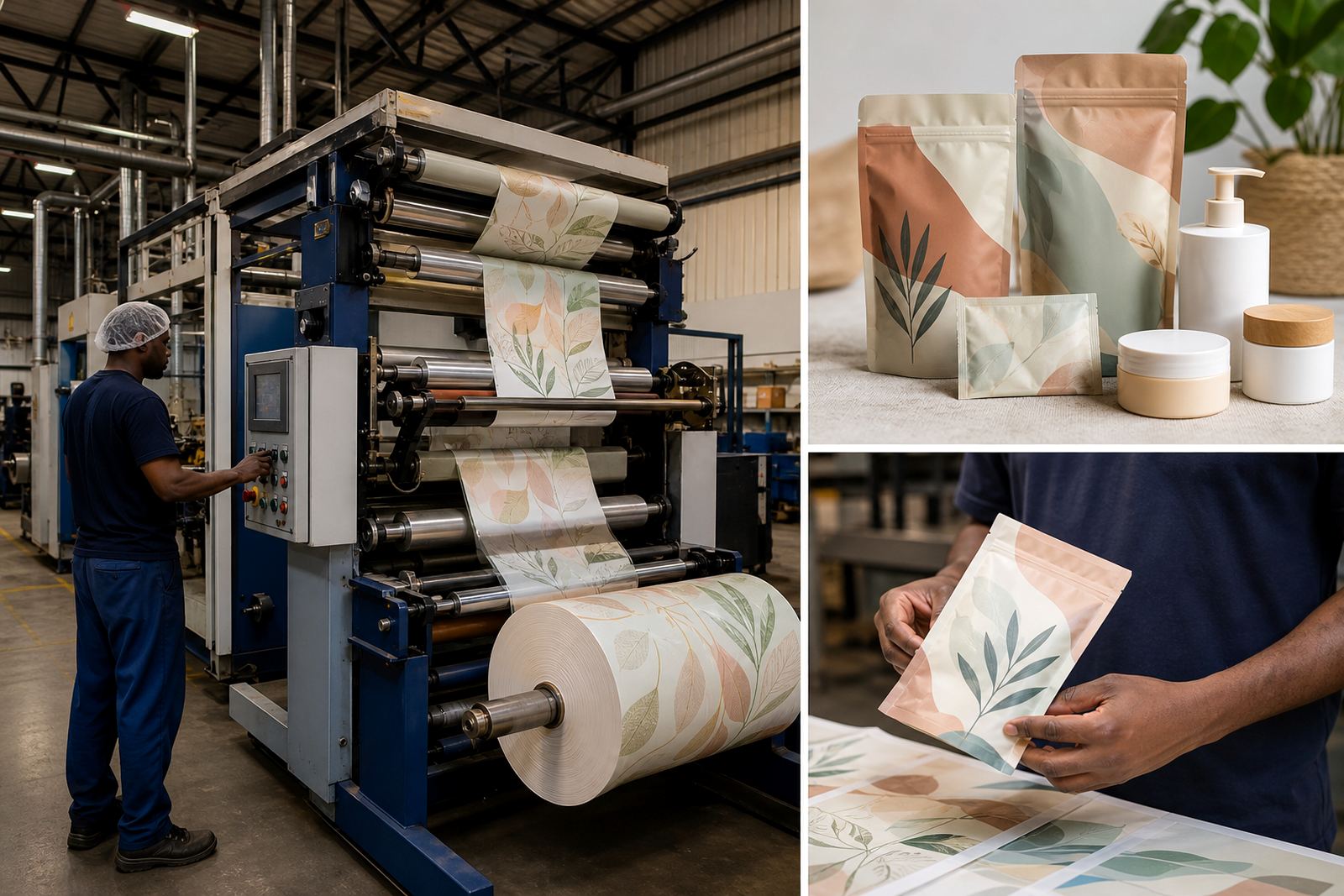
Most snack products can be handled with a fairly straightforward equipment set. The exact setup depends on whether the brand is packing by hand, using semi-automatic equipment or running a fuller production line. We work on flexo-printed flexible packaging formats that are then converted for the intended packing method.
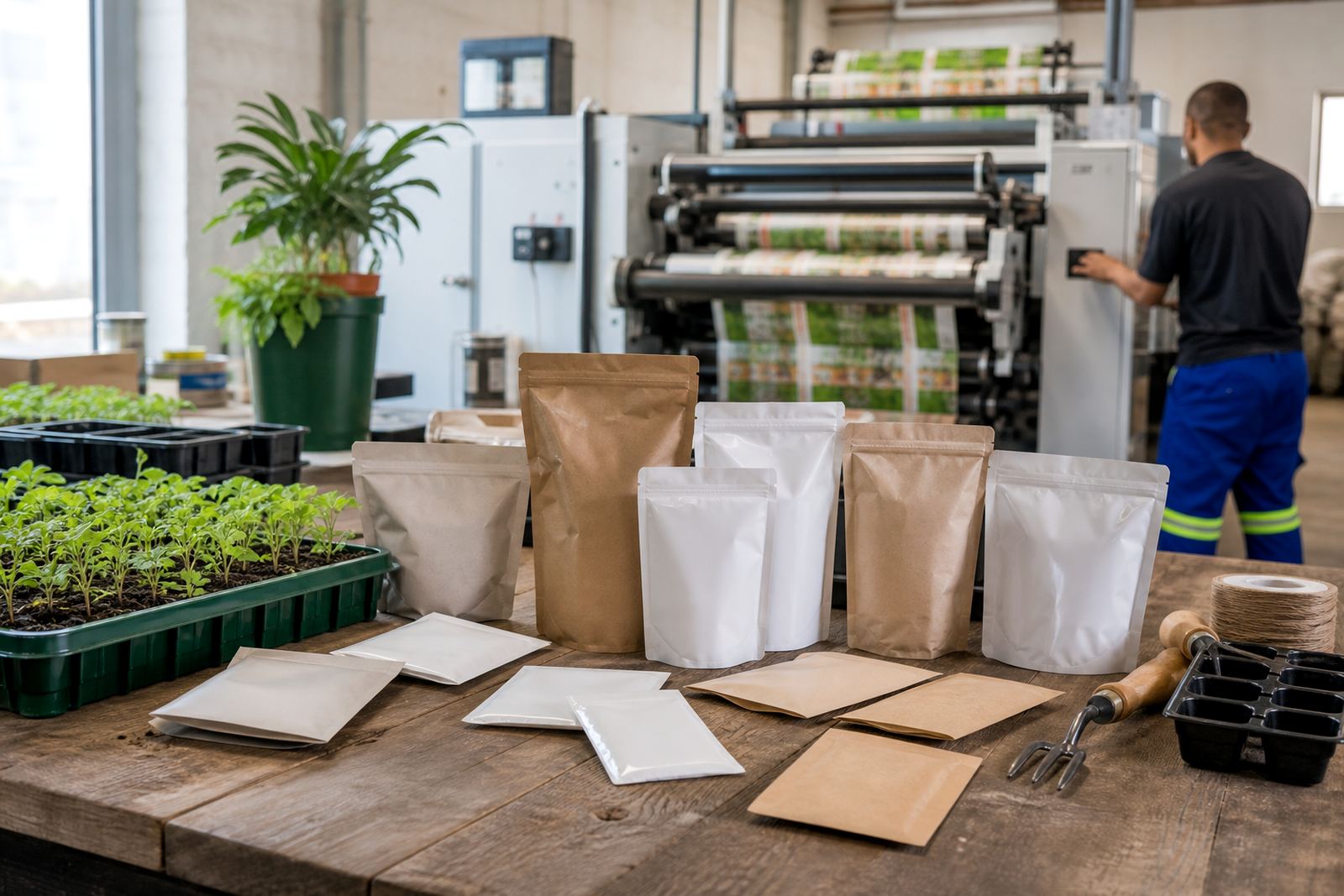
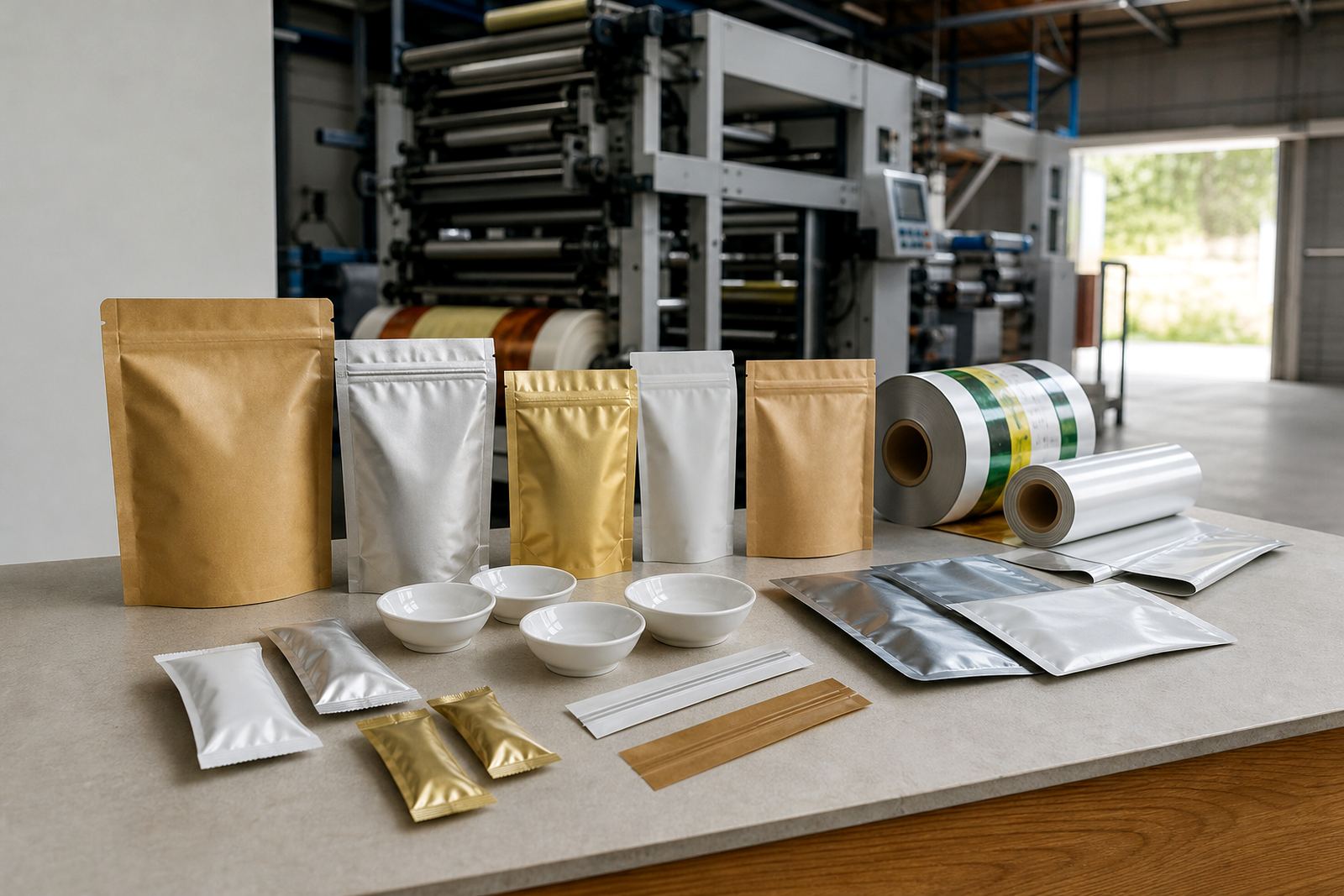
- Pre-printed rollstock for form fill seal work
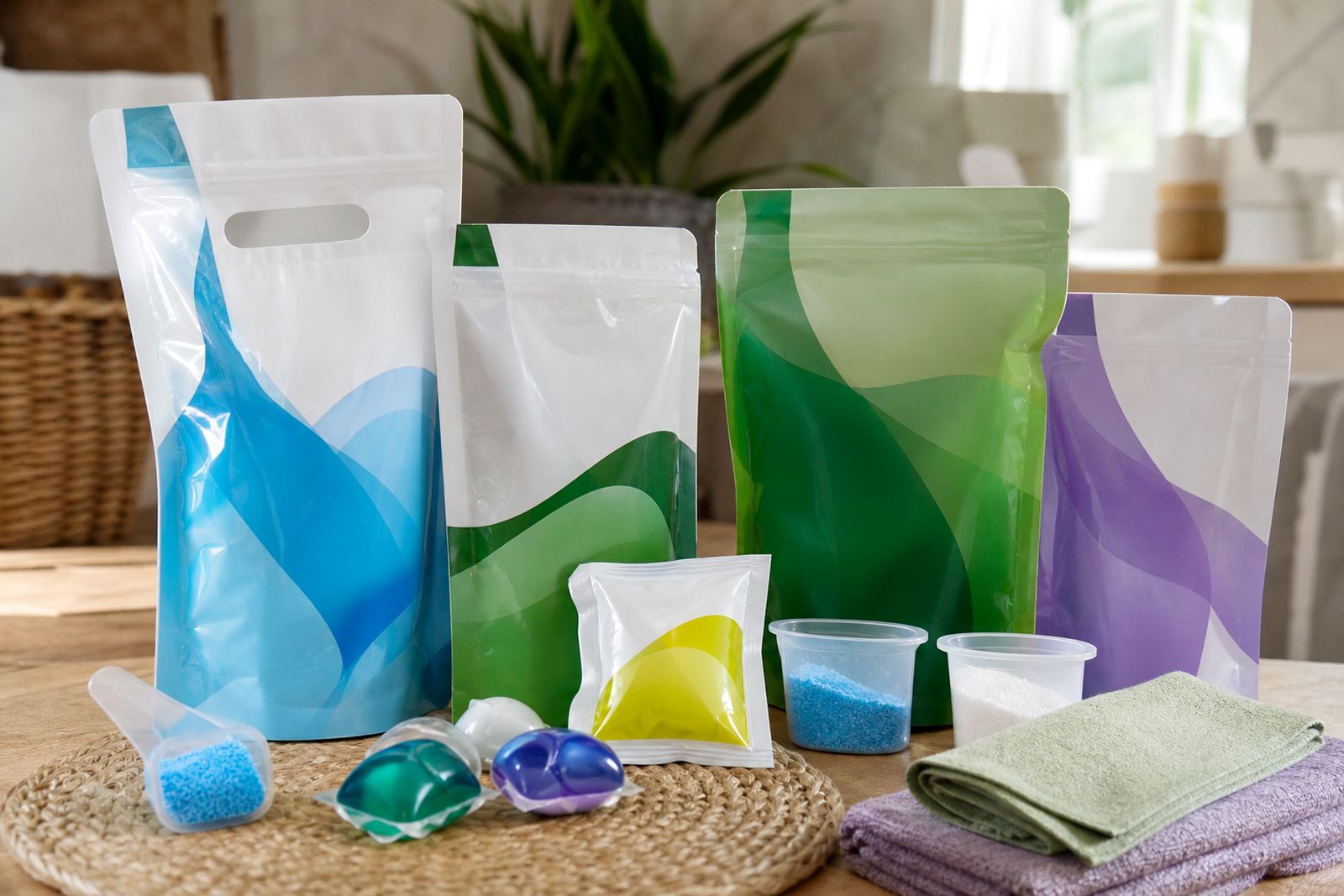
- Flat or stand-up pouches for filled snacks
- Sachets for single portions and sample packs
- Flow wraps for bars, biscuits and similar products
- Reclosable options where the product is used over several days
When planning the format, it helps to know the pack speed, sealing temperature range, and whether the product edges or crumbs can interfere with a seal. A crumbly product can cause a bad closure even when the print is fine, so the pack design and filling method should be considered together.
Artwork, colour and product detail that sell the pack
Snack packaging often has to do a lot on a small surface. The front panel should carry the product name clearly, the flavour or variant, pack size, and any key handling information that matters to the buyer. If the artwork is too busy, the shelf message gets lost. If it is too plain, the product can disappear next to competing packs.
Flexographic printing is well suited to repeat jobs and multi-pack ranges, especially where a brand needs consistent colour across flavours or pack sizes. Proper colour matching is important for logos, background blocks and brand stripes. We also help with artwork prep and print proofing so the final result is closer to what was approved, not something that surprises you at delivery. Small text should be checked carefully because on narrow packs it can become tight very quickly.
- Keep flavour coding consistent across the range
- Leave room for batch coding and sealing zones
- Do not overcrowd the panel with too many claims
- Make sure barcodes and legal copy have clean contrast
Planning the pack for handling, storage and dispatch
Snack packing is not only about how the pack looks on day one. It also needs to survive storage, transport and retail handling. A pack moving from Pinetown to Gauteng will face different conditions to one staying local, and the packaging should be planned with that journey in mind. Dispatch teams also need packs that stack neatly and do not wrinkle too easily in cartons.
For many brands, the most useful layout decisions are simple ones. Keep the seal areas clean, allow enough margin for cutting and forming, and choose a film structure that suits the product weight. If the pack will be stored near loading bays or in warm back rooms, check whether the material is suitable for that exposure. We often advise on material selection, short run orders and repeat production so the brand can test a size before committing to larger volumes.
Common snack packing mistakes that cost money
Some of the most expensive errors are avoidable. A pack that is slightly too small can force product into the seal area. A pack that is too large can make the product shift around and look underfilled. Poor colour control can cause batch-to-batch differences that are very easy to spot on shelf. One missed detail can mean rework, delay or rejected stock.
Another common issue is ignoring the filling method during planning. A pack designed for hand filling may not run well on faster equipment, and a pack intended for machine use may be awkward for a smaller operator. Artwork files can also cause problems if the print area, cutter line or bleed is not set correctly. It is worth checking these points early, rather than trying to fix them after the first print run. That can get costly, and frankly it's avoidable.
- Using a film that is too weak for transport
- Leaving no allowance for the sealing jaws
- Mixing up flavour colours between variants
- Ordering too much before confirming the pack size
Budget ranges for snack packing in Rand
Budget depends on format, size, artwork complexity and order quantity. Short run orders are useful for testing a new snack line or seasonal flavour, while repeat production usually improves unit cost once the format is settled. A simple sachet or wrap will usually cost less to set up than a shaped pouch with extra features, and more colours or more complex artwork can push the price up.
As a practical guide, smaller test quantities can start in the low thousands of Rand, while larger repeat runs move into higher production budgets. Most brands do best when they compare the true cost per pack, not only the upfront print price. That includes converting, proofing, dispatch coordination and the waste that can happen when the wrong size is chosen. We quote according to the actual job brief, so the numbers reflect the pack you need rather than a generic estimate.
Since 2009, our Pinetown team has supported snack brands with packaging that is easier to fill, easier to dispatch and better suited to day to day handling. Siyabonga Ndlovu leads the business with a team that includes sales, production, prepress, client service and logistics, so the process stays practical from first enquiry through to delivery.