
Spice Packing That Handles Dust, Flow and Shelf Display
Spice products are unforgiving on pack presentation. Fine powders can cling to the inside of a film, catch in the seal area, or leave the pack looking untidy once it has travelled through depots, back rooms and retail shelves. A good spice pack must protect the product, support portion control, and still look neat when it sits next to other condiments, dry ingredients or foodservice stock.
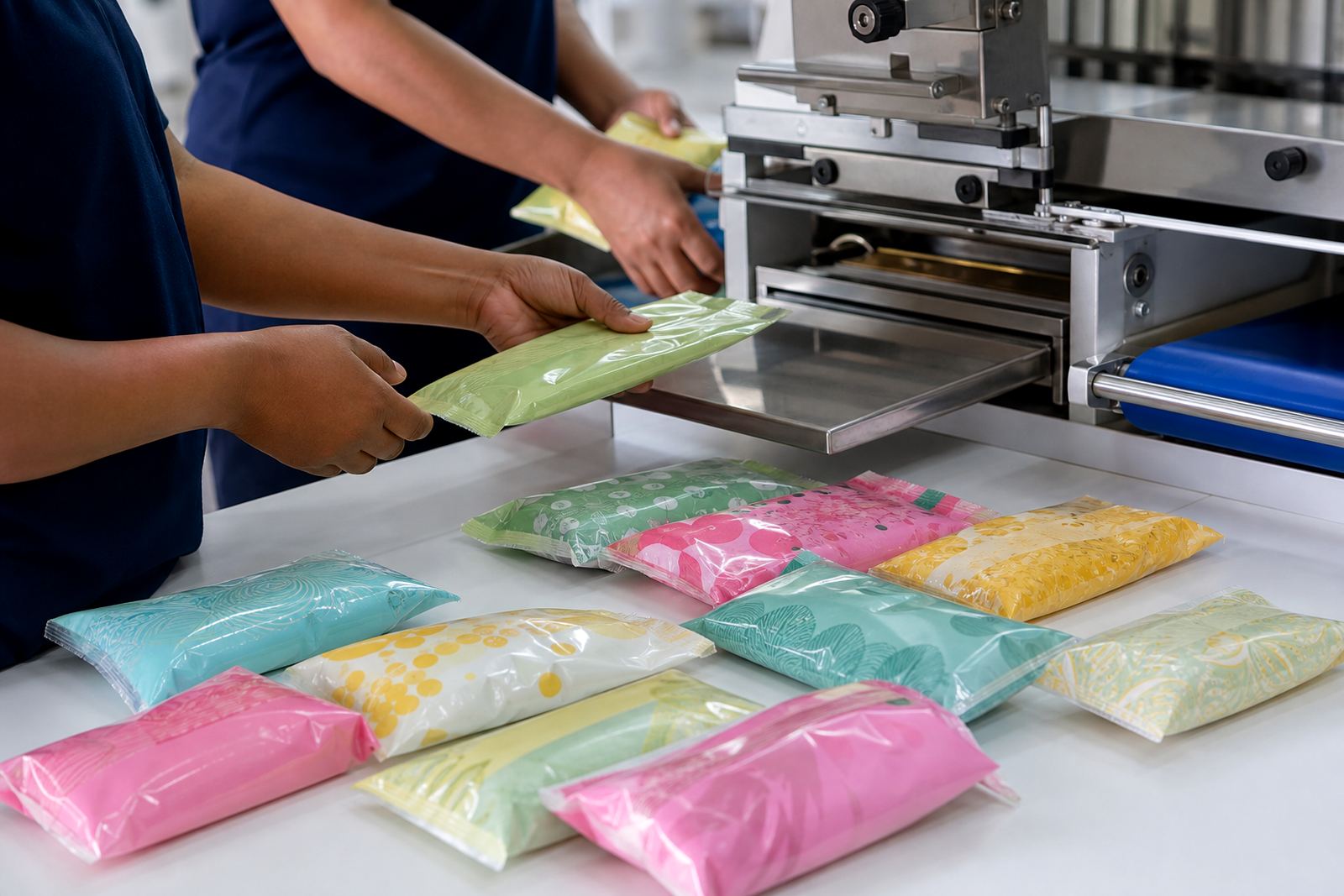
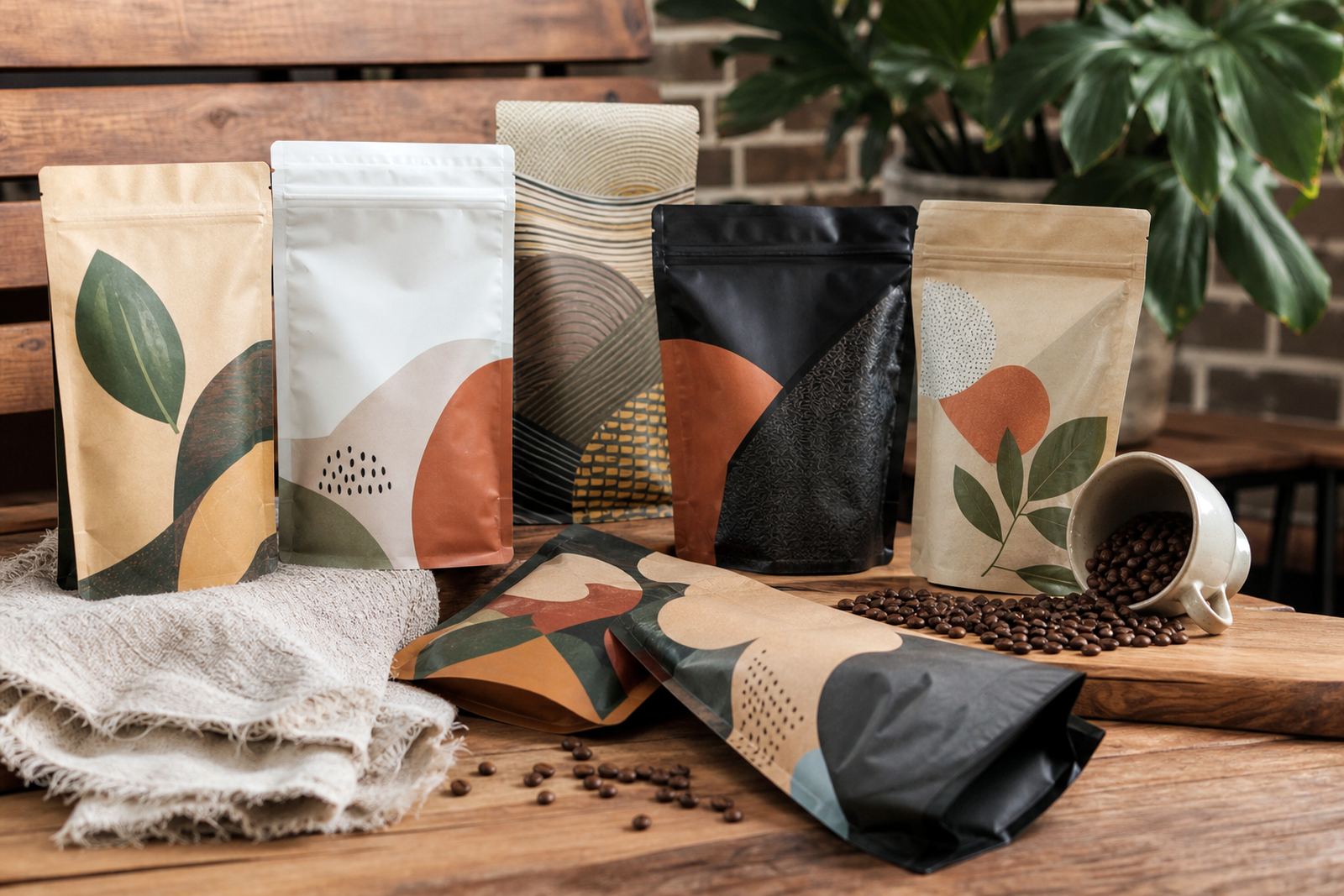
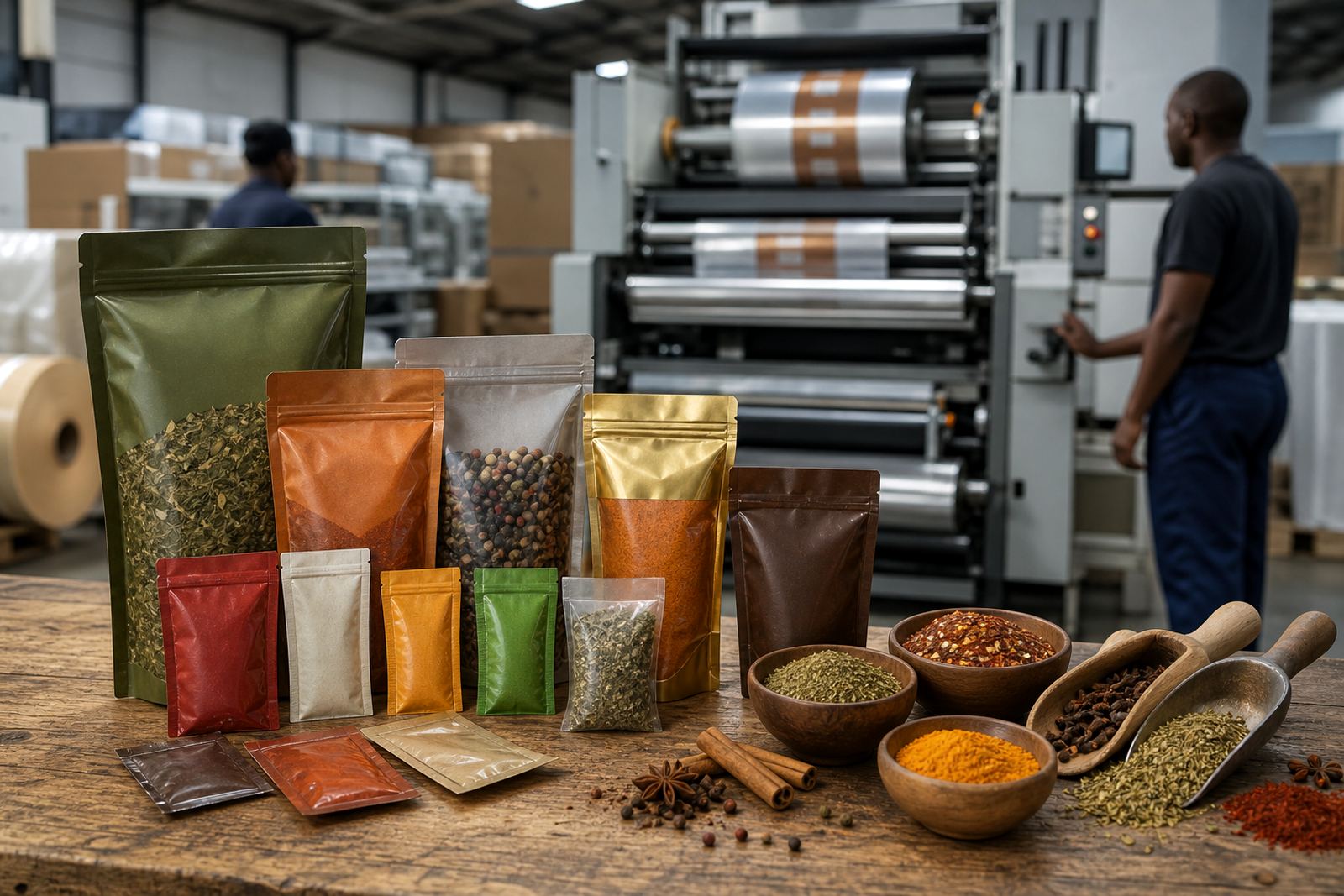
For this use case, we work with flexible packaging formats that suit small retail packs and trade packs alike. That can include narrow sachets for single use portions, printed pouches for refill stock, and wraps for certain dry product applications. The layout must allow for product name, flavour variant, weight, ingredients, batch detail and space for a barcode or other line markings. If the pack is too crowded, the front panel loses impact. If it is too plain, the product can be hard to pick out on shelf.
In KwaZulu-Natal, humidity matters too. Pinetown can get sticky in summer and that affects handling, storage and the way a filled pack sits in transit. We consider the seal area, material choice and the way artwork is laid out so the final pack is practical, not just attractive.
Typical Equipment Set For Spice Runs
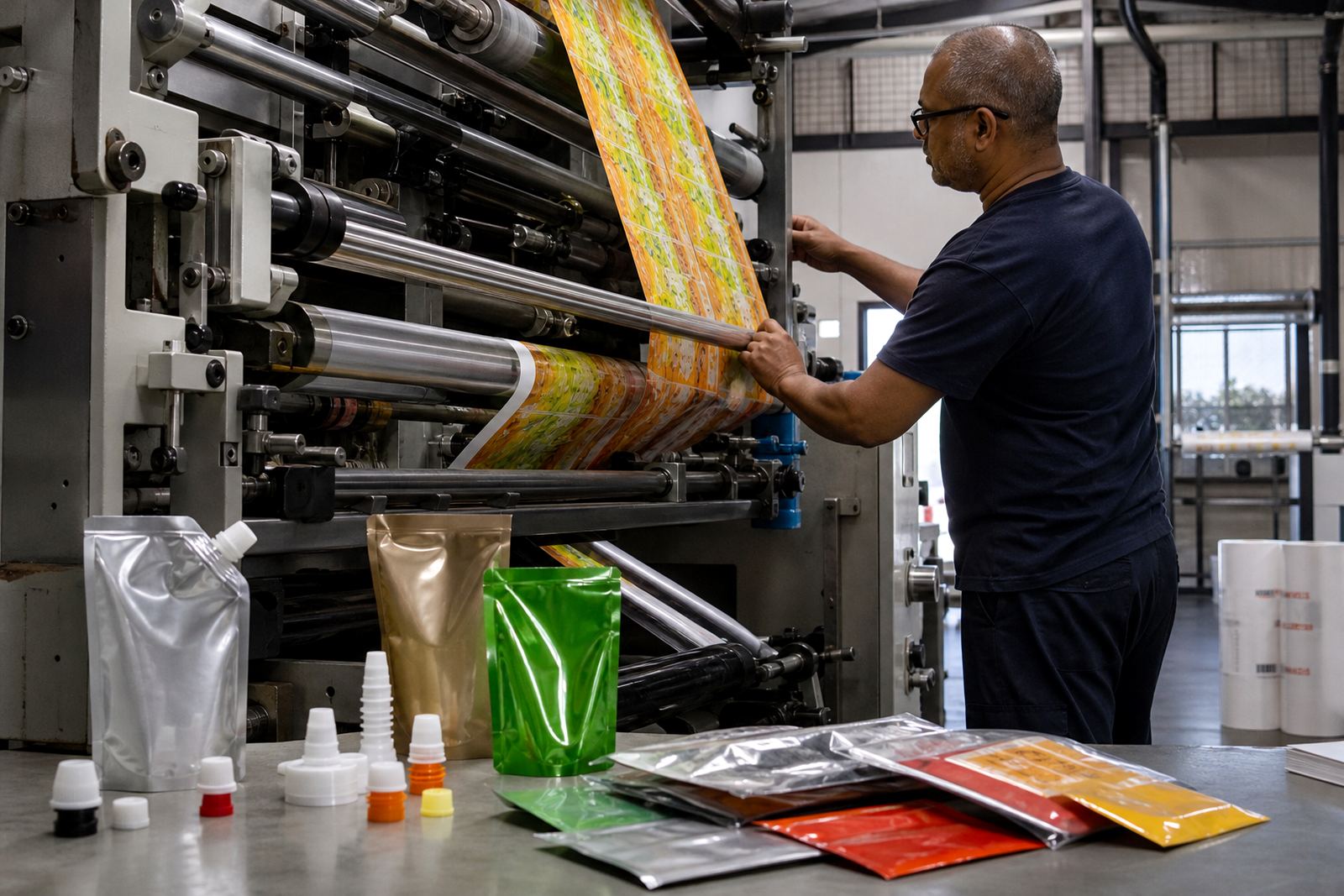
Most spice pack projects start with a straightforward production setup: material selection, artwork prep, flexo printing, converting and dispatch coordination. The exact fill line is usually handled by the client or their packhouse, but the packaging has to match the machine, the product and the target pack size. A spice blend that flows freely is different from a heavier granule mix, and that changes the way the pack should seal and run.
Common equipment and production steps include:
- Flexible film print preparation for pouches, sachets or wraps
- Artwork proofing before plates or print setup are approved
- Colour matching to keep brand colours consistent across repeat orders
- Converting for the final pack format and size
- Dispatch planning for local and national deliveries
For short runs, we keep the process practical. That helps smaller spice brands, contract packers and seasonal product lines that do not need massive volumes every month. Repeat production is also easier when the pack spec is already recorded correctly and the print details are kept tidy from one order to the next.
Layout Planning That Makes Small Packs Easier To Use
Spice packs are small, so every millimetre counts. A clean layout helps shoppers read the flavour, pack size and brand name quickly. It also helps your production team when the same artwork needs to work across several sizes, such as 25 g sachets, 100 g pouches and larger refill formats. The challenge is to keep the look consistent without forcing the same artwork onto every pack shape.
Before print, we look at where the seal will land, where the product information sits, and whether the design needs space for variable details. If the design is too close to the edge, trimming or sealing can cut into text. If the colour background is too dark and the type too fine, the pack becomes hard to read under warehouse lighting or in a retail aisle. That is why proofing matters.
- Keep the spice name large enough to read from a metre away
- Leave clear space around fine print and legal copy
- Use strong contrast for variant colours like chilli, masala or curry blends
- Plan for the seam and seal areas before approving the artwork
Good planning also reduces waste. Many packaging mistakes happen when the design is approved before the pack size is final, or when the product fill weight is changed late in the process. That can throw out the balance of the layout and delay dispatch.
Common Mistakes We See On Spice Packaging
The most common problems are not usually about print quality alone. They are about how the pack is specified in the first place. A client may choose a format that looks good but does not suit the fill speed, storage space or the retail environment. Another common issue is underestimating how much information has to fit on a small surface area.
Typical mistakes include:
- Choosing a pack size that does not match the actual fill weight
- Using artwork with too much detail for a small sachet
- Ignoring seal margin and ending up with cropped text
- Changing product names or weights after proof approval
- Not allowing enough time for repeat production before a promotion
Spice products also need to travel well. Packs delivered to Durban, Johannesburg, Pretoria, Cape Town or Bloemfontein may spend time in depots and trucks before they reach the shelf. If the artwork is poorly planned or the pack spec is rushed, those issues show up later as wrinkled print, awkward seals or inconsistent pack presentation. A few hours spent on planning can save a lot of grief later, it really does.
Budget Ranges For Flexible Spice Packs
Spice packing budgets depend on pack format, print coverage, size, order quantity and how often the design changes. Short run orders cost more per unit than repeat production, but they are often the right choice for new product launches, seasonal spice blends or smaller regional brands. A simple sachet order will usually sit in a different range from a larger printed pouch run, especially if multiple variants are involved.
As a guide, small spice packaging projects can start from a few thousand Rand for basic short runs, while more involved orders with multiple artworks, proofing rounds and larger quantities can move into the tens of thousands. If there are several pack sizes, colour variants or route deliveries involved, the total will increase accordingly. The best way to manage budget is to finalise the pack size early and avoid last minute changes once print setup has started.
Packaging consultation helps here. We can talk through the likely pack structure, the repeat order pattern and how to keep production practical for your team. That is often the difference between a pack that works on paper and one that works on the line.
Working With Our Pinetown Team On Spice Projects
Our base in Pinetown gives us a practical position for serving Durban and the wider KwaZulu-Natal market, while also supporting clients in Johannesburg, Pretoria, Cape Town and Bloemfontein. The team is set up to handle the full packaging workflow from enquiry through to dispatch coordination. Siyabonga Ndlovu leads the business as Managing Director, with Priya Naicker handling sales, Marius van Wyk on production, Thandiwe Mkhize in client service, Jason Petersen on prepress and Lerato Molefe on logistics.
For spice packing projects, the enquiry usually starts with the pack size, product type and the intended use. From there, we can look at the print route, the finish required and whether the order is best suited to a short run or a repeat production schedule. If your brand is working around load-shedding, tight launch dates or limited warehouse space, that needs to be factored into the plan early.
Clients reach us through the enquiry form on our contact page. That keeps the job details together in one place so the next step is straightforward and nobody has to chase information around.
- Pinetown Delivery for local collections and nearby dispatch
- Durban Delivery for coastal and metro supply
- Johannesburg, Pretoria and Bloemfontein Delivery for inland distribution
- Cape Town Delivery for national rollouts and repeat stock