
Sachets that suit everyday homecare products
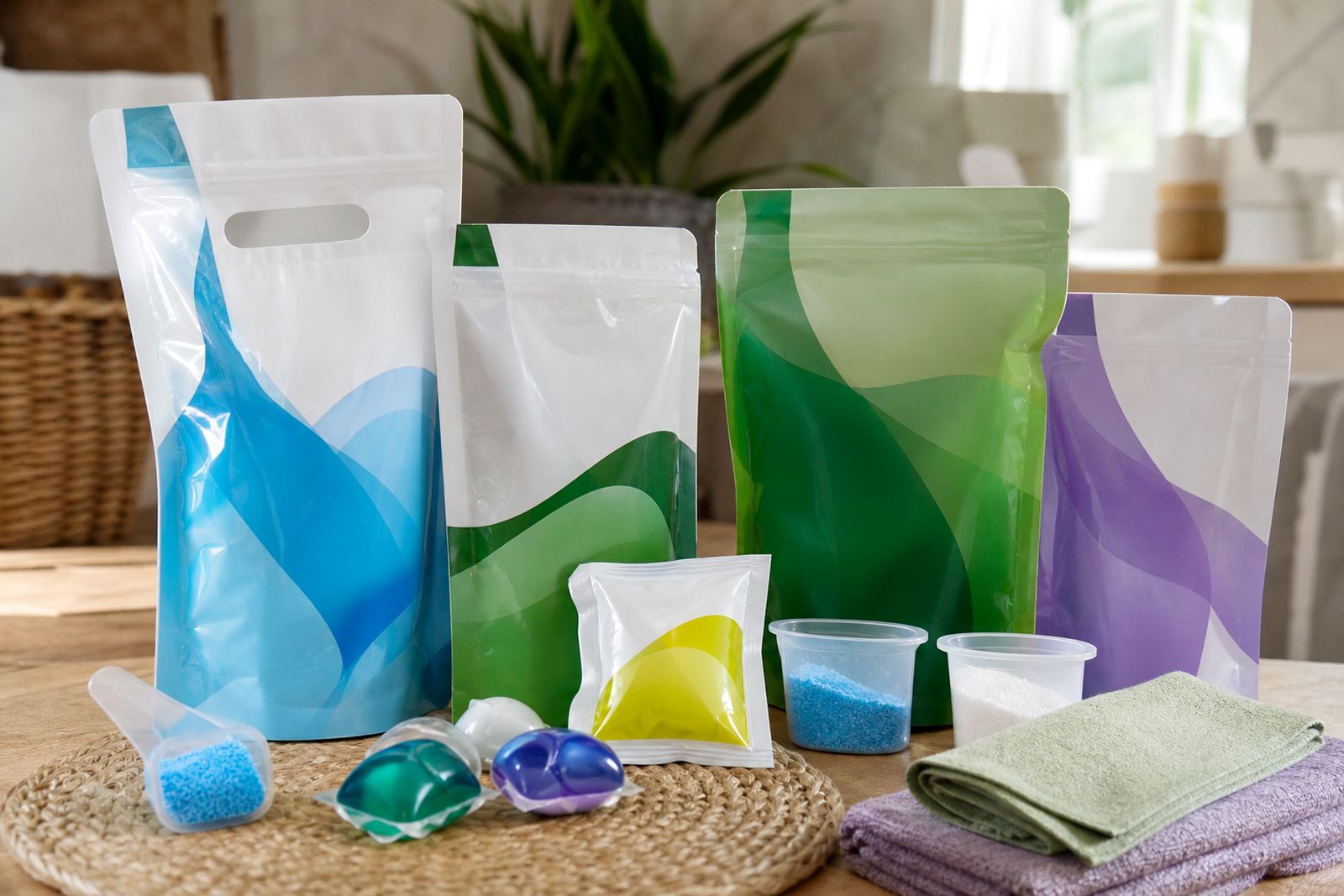
Homecare sachets are a practical choice when the product needs to be portioned for single use, trial packs, refill support, or compact retail display. They are often used for items such as detergents, surface cleaners, dishwashing liquids, air care liquids, fabric care samples, and other household applications where a small measured pack is more useful than a bottle or carton.
For local brands, the main advantage is simple handling. A sachet takes up less shelf space, packs well into cartons, and is easy to distribute through spaza trade, retail promotions, and regional rollouts. In KwaZulu-Natal, Gauteng, the Western Cape and inland routes, that smaller format also helps with transport costs and warehouse space. If the product is being moved through multiple depots or direct delivery runs, sachets are easier to manage than bulky packs.
We work with flexo printed flexible packaging in a range of sachet structures, depending on the filling method, storage conditions and the way the pack will be opened by the end user. For some products a straight 3 side seal is suitable. For others, a shaped top seal, tear notch or gusseted detail may be better. The right choice depends on product thickness, fill volume and how the sachet will be presented on shelf or in a bundle.
Typical production setup for homecare sachets
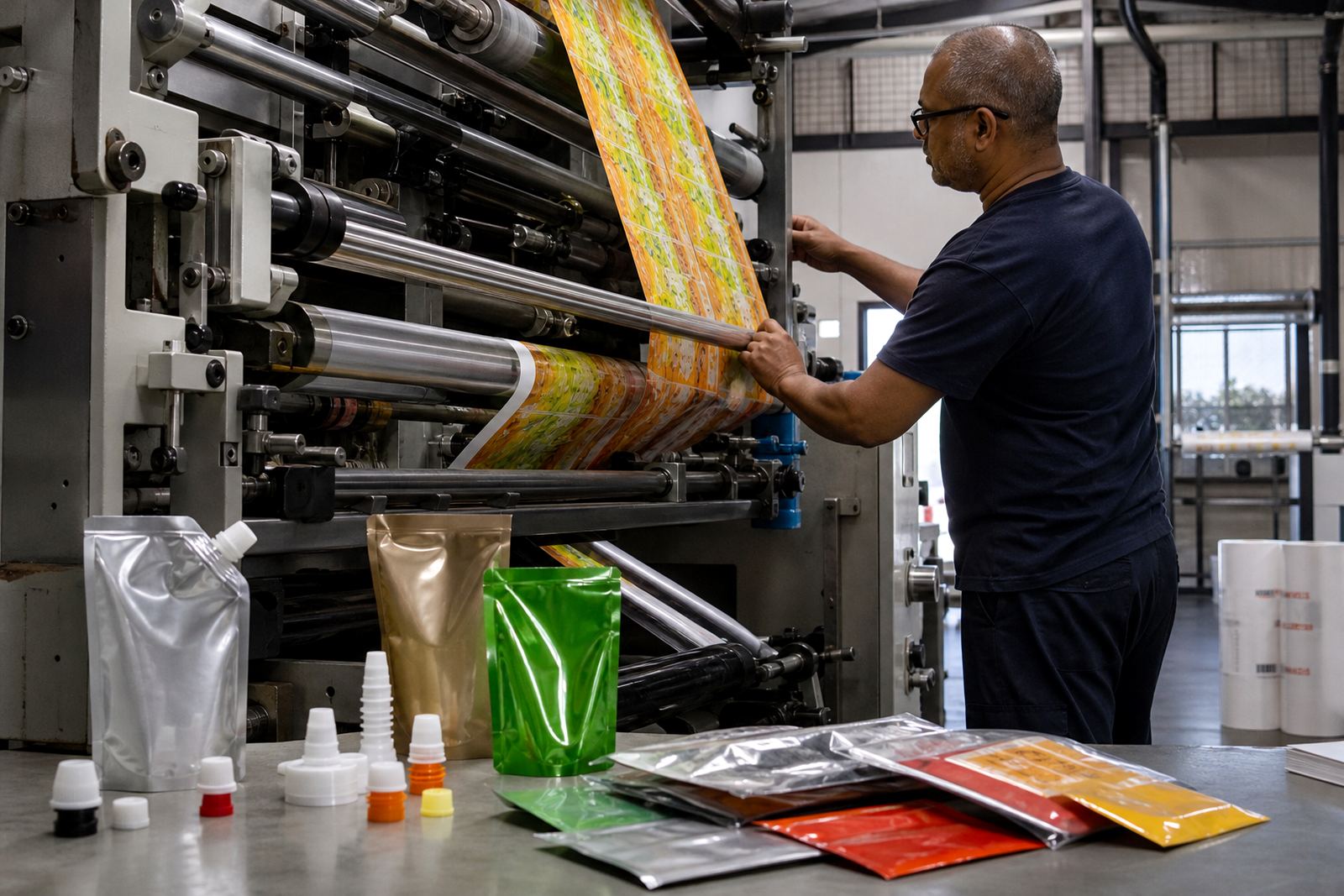
Homecare sachet production usually starts with the product format, then moves to artwork, film choice and the sealing method. A typical setup can include prepress file checking, colour matching, flexo print setup, lamination or film selection, pouch or sachet converting, and final dispatch coordination. Where repeat orders are planned, it helps to keep the artwork, print notes and pack dimensions consistent so the run can be repeated without avoidable delays.
In most cases, the product team should plan for the following before print starts:
- Net fill per sachet and whether the product will be liquid, gel or powder
- Desired pack size in millilitres or grams
- Seal type and opening method
- Whether the sachet will hang, stand, or be packed loose in cartons
- Batch coding space and legal text layout
- Carton count and transport packing for delivery to Durban, Johannesburg, Pretoria, Cape Town or Bloemfontein
When these details are fixed early, it becomes easier to avoid changes after plates and print set-up have started. That saves time and reduces waste, which matters on short run orders as well as repeat production.
Layout and planning advice before artwork is approved
Homecare sachets need more planning than many people expect. The pack face has to carry product name, usage instructions, caution notes, batch area and brand marks without feeling crowded. If the sachet is too small for the copy, the result is cramped type and weak shelf read. If the artwork is spread too thin, the pack can look unfinished. A good layout gives the user enough information at a glance and still leaves space for clean branding.
It also helps to think about how the sachet will sit in the hand. People often tear the top and pour quickly, sometimes in poor light or while standing at a basin or sink. That means instructions must be easy to read, with clear contrast and a sensible font size. Gloss levels, metallic effects and dark colour blocks can work well, but they should not interfere with legibility. In coastal areas like Durban and Ballito, packaging that faces humidity and transport heat should be considered carefully during material selection.
Useful planning points include:
- Leave safe margins so seals do not cut into text or logos
- Keep key instructions away from the tear path
- Allow room for barcode, batch code and expiry details if needed
- Use colour with care so the sachet still prints clearly across multiple runs
- Check that any translated text still fits the panel size
Common mistakes that cause delays or reprints
Most problems with homecare sachets start before printing. A common mistake is sending artwork that has not been checked for spelling, units, warnings or layout scale. Another is choosing a pack size that looks good on screen but cannot comfortably carry the required copy and seals in real life. Once the artwork is on press, those issues are costly to correct.
Another frequent problem is underestimating the product itself. Some homecare liquids are more aggressive on film than expected, while others need extra care because of smell, viscosity or seal behaviour. If the film and seal specification are not matched to the product, the pack may look fine on day one but give trouble later in storage or delivery. That is why packaging consultation matters before a full run is approved.
We also see brands run into trouble by switching between short run orders and repeat production without keeping a fixed reference sample. Even small changes in colour tone, seal width or artwork position can be noticed by retail buyers. Keeping one approved master copy helps the team in Pinetown and the receiving warehouse stay on the same page.
Budget ranges for sachet work in Rand
Budget depends on size, film structure, print coverage, run length and how much finishing is needed. For homecare sachets, smaller short runs are usually better for new product testing, while longer repeat runs suit established lines and regular dispatch. As a broad working guide, simple sachet projects can start from around R18 000 to R35 000 for smaller production needs, while more detailed or higher-volume work can move into the R40 000 to R120 000 range and beyond depending on the specification.
It is worth budgeting for the full job, not only the print. Artwork prep, proofing, colour matching, packing format changes and delivery coordination all affect the final number. If a product is going to Durban, Johannesburg or Pretoria on a tight schedule, transport timing and carton setup should also be included in the plan. A careful brief at the beginning usually saves money later, especially when the pack must be repeated across multiple branches or areas.
For brands comparing options, the best value is usually found in the pack that prints cleanly, fills correctly and reaches the end user without waste. The cheapest quote is not always the best one if it leads to seal issues, colour drift or rework.
Why local brands keep sachet production practical
Homecare sachets work best when the production plan is simple and the supply chain is steady. For local brands, that means clear communication, fixed artwork, sensible order quantities and dispatch that matches store or depot needs. Our team in Pinetown works with brands that need reliable repeat production, and the process is easier when the pack is planned with real handling in mind rather than only shelf appearance.
The team involved in a typical project may include the Managing Director, Sales Manager, Production Manager, Client Service Lead, Prepress Coordinator and Logistics Coordinator. That mix helps keep the process organised from first enquiry through to dispatch. If you are planning homecare sachets for retail, promotions or regional supply, it is better to sort the structure early and avoid last-minute changes. Small details can affect the full run, and a few minutes of planning often prevents a full day of delay.
When the format is right, sachets can be a practical part of a homecare range. They are neat to store, easier to bundle, and useful for customers who want a compact dose without extra bulk.