
What confectionery wraps need to do on shelf and on line
When you are packing sweets, the wrap is doing more than carrying a logo. It has to fold well, seal neatly, and keep print looking clean even when packs are handled in baskets, cartons, and shop shelves. For local brands in Pinetown and beyond, the main question is usually not just how the wrap looks, but whether it runs properly on packing equipment and stays consistent from one order to the next.
Confectionery wraps are often used for individually packed sweets, bar-style items, chew packs, and small multipacks. The format may be narrow and fast moving, so small layout choices matter. A slight change in panel size, seal area, or repeat length can affect how the pack folds and how much working room you have for copy, ingredients, batch detail, or barcoding. We help plan the format so it suits the product and the filling method, not just the artwork.
Typical set-up for sweets packed in singles or multipacks
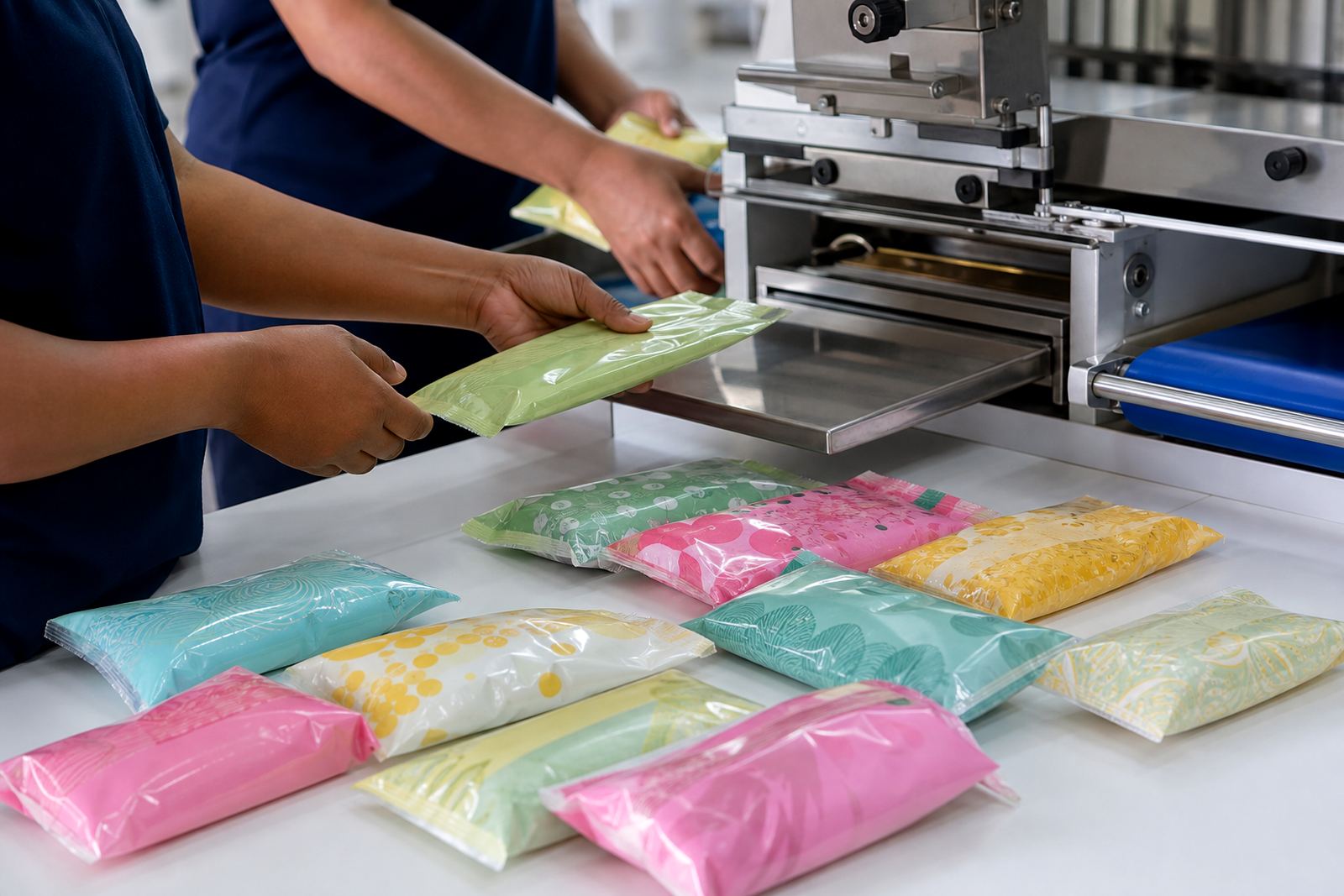
Most confectionery wrap jobs start with a clear view of the packing method. Some brands need a simple overwrap for a single sweet, while others need a printed wrap that sits inside a carton or forms part of a bundle pack. The film or paper laminate choice depends on how the product is handled, whether it needs extra barrier support, and how much machine speed matters.
Common equipment and production steps include:
- Flexo-printed rolls for automated wrapping lines
- Converting for slit rolls, finished widths, and repeat lengths
- Artwork prep for small text, legal copy, and pack variants
- Print proofing to check colour balance and panel placement
- Colour matching for brand consistency across repeat orders
- Material selection based on finish, stiffness, and handling
In many cases, the wrap is made to suit existing packing equipment, so we ask about roll direction, core size, web width, and the way the machine grips the film. That basic information saves time later and reduces waste on the production floor.
Artwork planning that avoids costly rework
Confectionery packs often carry a lot of information in a small space. That means artwork has to be planned with care from the start. Text that looks fine on a screen can become too small in print, and colours that seem rich in one file may print differently once they are placed on thin flexible material. If the pack is used in hot storage or humid coastal conditions, it is worth checking how the ink and substrate behave in real handling conditions.
A good layout should leave enough room for seal areas, folds, and cut lines. Keep important text away from the edge, and do not let fine lettering sit too close to the trim. If your packs come in several flavours or sizes, set up the structure so the changes are easy to manage. That way, repeat production is simpler and quicker, which matters when orders need to move through Durban, Johannesburg, Pretoria, Cape Town or Bloemfontein without delay.
- Keep barcodes and small legal text away from folds and seals
- Allow for slight movement in print registration on narrow wraps
- Use clear colour references for repeat jobs
- Confirm whether the pack will be hand packed or machine packed
- Plan for artwork revisions before the first production run
Common mistakes on confectionery wrap orders
Many wrap issues come from rushing the planning stage. A pack may look fine in the artwork file, then prove awkward once it reaches the packing table. One common mistake is using a layout that leaves too little space for seals or end folds. Another is choosing a material that feels nice in hand but does not feed well through the machine. In some cases, the repeat length is not checked properly, so the design does not land where it should on the finished wrap.
Another mistake is underestimating how much detail can fit into a small format. If the copy becomes crowded, the final pack can look busy and hard to read. This is especially important for confectionery products sold in tuck shops, cafés, school canteens, and wholesale channels where the pack has only a few seconds to catch the eye. It is better to keep the message focused and the information easy to scan, rather than squeezing everything onto the surface.
We also see orders that need urgent correction because the client changed pack size after artwork was approved. That can affect the repeat, the slitting, and the amount of material needed. A quick check at the start saves time and cost later, and it is usually cheaper to correct the file than to reprint a run.
Budget ranges in Rand for wrap printing jobs
Budgets vary by format, quantity, material choice, and how much setup is needed. Short run orders are useful when a brand is testing a flavour, updating a promotion, or needing smaller production volumes for a new retail route. Repeat production usually brings better unit value once the pack structure is already approved.
As a guide, smaller trial jobs and short runs can start from around R8 500 to R20 000 depending on roll width, number of artwork changes, and finishing needs. Mid-size repeat orders for confectionery wraps often sit between R20 000 and R65 000, while larger production runs can move beyond that if there are multiple versions or heavier converting requirements. Final pricing depends on material, print coverage, roll format, and dispatch planning. If the packs are going to several depots at once, we can also coordinate delivery so the schedule stays workable.
For brands managing cash flow, it helps to define the pack size, artwork status, and target quantity before asking for a quote. That gives a clearer view of what is possible within budget, and where trade-offs can be made without affecting the finished pack too much.
Working from Pinetown for nationwide delivery
Flexography Printing Co is based in Pinetown, KwaZulu-Natal, and we work with local brands that need confectionery wraps delivered across South Africa. Our team handles enquiry, artwork coordination, production, and dispatch from one point, which makes it easier to keep orders moving. That matters when stock needs to reach Durban, Johannesburg, Pretoria, Cape Town or Bloemfontein on time, especially when a promotion or seasonal run is already booked.
Our team includes Siyabonga Ndlovu, Priya Naicker, Marius van Wyk, Thandiwe Mkhize, Jason Petersen, and Lerato Molefe. Together they cover production planning, client communication, prepress, and logistics, so the job does not sit with one person alone. Clients usually start through the enquiry form on our contact page, then we work through the brief, the artwork, and the pack format step by step. For confectionery wraps, that practical process usually gives the best result, no fuss and less back and forth.
- Pinetown delivery for local production and collection planning
- Durban delivery for coastal and metro supply routes
- Johannesburg delivery for inland distribution
- Pretoria delivery for Gauteng trade routes
- Cape Town delivery for Western Cape orders
- Bloemfontein delivery for central South Africa distribution
- Pietermaritzburg delivery and Ballito delivery on request