
Why resealable closures matter on everyday packs
For many products, the first opening is only half the job. A pack also needs to close again, stay neat in the cupboard or toolbox, and protect what is left inside from dust, moisture and handling. That is where resealable features earn their keep.
On flexible packaging, closures are usually chosen for the way the product is used after opening. A snack pouch may be opened and closed many times over a week, while a dry ingredient or small hardware item may be accessed only now and then. The closure should suit the product, the pack size and the customer's routine.
In Pinetown and across KwaZulu-Natal, this matters on products that move through warm stores, delivery vans and coastal air. If a pack is awkward to reseal, customers often fold it over or clip it with whatever is nearby. That does not help presentation and it can shorten product life.
How closures influence pack shape and shelf appeal
A resealable feature is not just a function. It changes the top section of the pack, the seal area, and sometimes the way the pouch stands or hangs. A closure placed too high can reduce the usable fill area. One set too low can leave too little room for a proper seal.
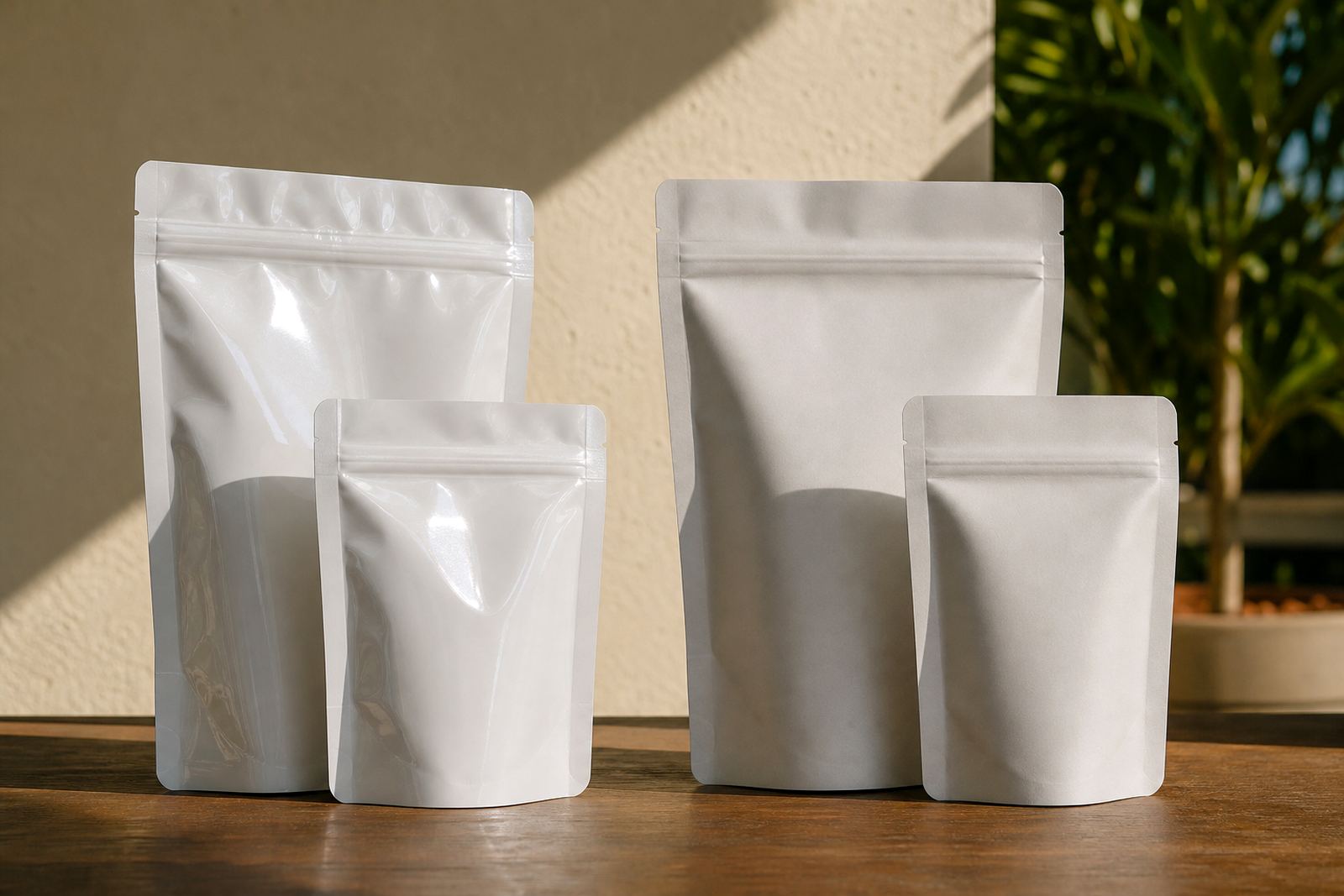
That balance affects the pack's shape on shelf. A clean top line and straight side seals help a pouch sit well in a display tray or stand-up format. If the closure creates extra bulk near the top, the pack may tilt or look uneven after filling. Small details matter here.
- Closure width must suit the pack size
- Top seal space must allow safe filling and closing
- The pack should still open cleanly without tearing
- Repeated use should not distort the front panel too quickly
For printed wraps and sachet-style formats, the principle is similar even when the closure is not a full zip. The aim is always to make the pack easy to use while keeping the presentation tidy and practical.
Choosing the right closure for the product type
Not every product needs the same resealable solution. The right choice depends on weight, texture, opening frequency and how the consumer handles the pack. A closure that works well for a light dry product may be a poor fit for a denser fill or a wider pouch.
At packaging planning stage, it helps to ask how the customer will open the pack, where they will store it, and whether the contents need frequent access. A family pack used over several days has different needs from a trial-size pack or a trade pack for repeat use on site.
- Dry foods may need easy close and reopen action
- Powders or granules benefit from a controlled opening size
- Small parts and accessories often need neat repeat access
- Heavier fills may require stronger seal structure around the closure
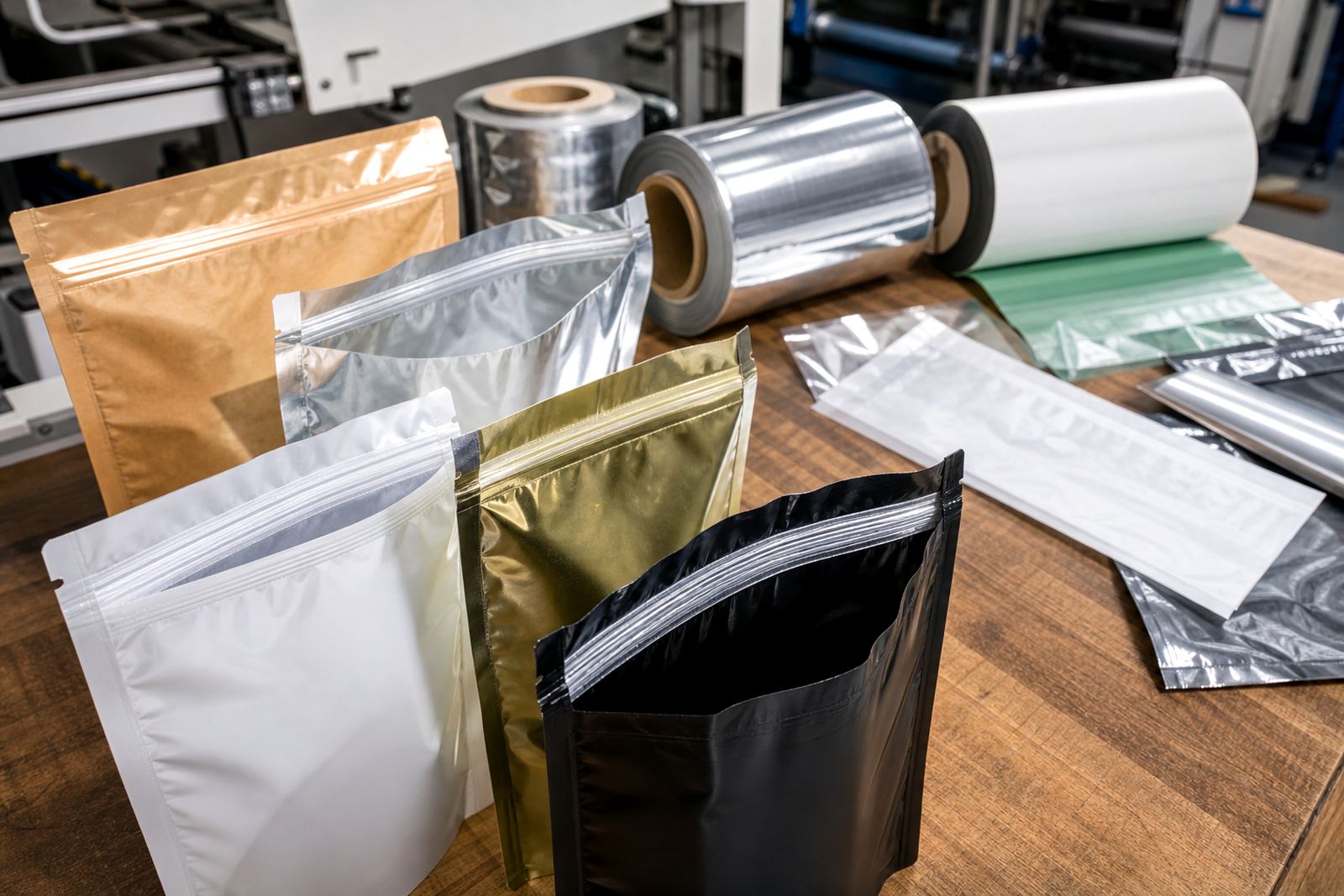
Material selection also plays a part. The film structure must work with the closure and the print method so the pack remains stable during converting, filling and dispatch. If the film is too stiff or too light, the resealable section can feel awkward in use.
Print, fill and closing need to work together
Good closure design starts before the pack gets to filling. Artwork, seal placement and the opening area all need to be planned together. If the printed panel is too busy around the top edge, the user may not quickly see where to open or close the pack. That can lead to poor handling and wasted product.
Colour matching and print proofing matter too because the closure area often sits near key branding. The design should leave enough clean space for the closure strip or zipper path without making the pack look crowded. On short run orders, this is even more important because changes in layout can affect the set-up and the repeat production plan.
For local brands shipping from Pinetown to Durban, Johannesburg, Pretoria, Cape Town or Bloemfontein, dispatch timing also matters. If a job is packed and sealed correctly, it is less likely to suffer during transport, especially when trucks stand in the sun or loads are handled several times before reaching the customer.
A practical example from KwaZulu-Natal distribution
Consider a dry pantry product packed in a resealable stand-up pouch for customers across Durban and Pietermaritzburg. The buyer wants the pack to open easily at home, close again after each use, and sit neatly on a kitchen shelf. The brand wants a clean printed face with enough room for product information and batch details.
In that case, the closure, pouch width and seal height must be planned as one unit. If the opening is too small the consumer may tear the top, and if the top seal is too tight the pack can be awkward to reopen. A better setup gives the right hand feel, a neat top line, and a pack that still looks presentable after several uses.
For customers near the coast, there is also the issue of humidity. Even when the product is dry, a poor closure can leave the pack feeling soft or untidy. A well-chosen resealable feature gives the user a simple way to keep the contents together without fuss.
What to check before you commit to a resealable pack
Before final production, check the pack from the user's point of view. Hold it, open it, close it and look at the seal line after repeat use. If the top edge catches or the closure feels too stiff, it may need adjustment before full production begins. A small change now can save a lot of waste later.
- Does the closure open without forcing the film?
- Can the user close the pack again with one simple action?
- Does the closure affect the stand-up shape after filling?
- Is there enough room for artwork, product details and batch coding?
- Will the pack still look tidy after transport and storage?
At Flexography Printing Co in Pinetown, resealable features are planned alongside flexo printing, pouch converting, sachet production and wrap printing so the finished pack suits the product and the way it will be used. That practical approach helps local brands keep their packs useful, neat and ready for repeat opening.