
Why stand-up pouches suit busy retail shelves
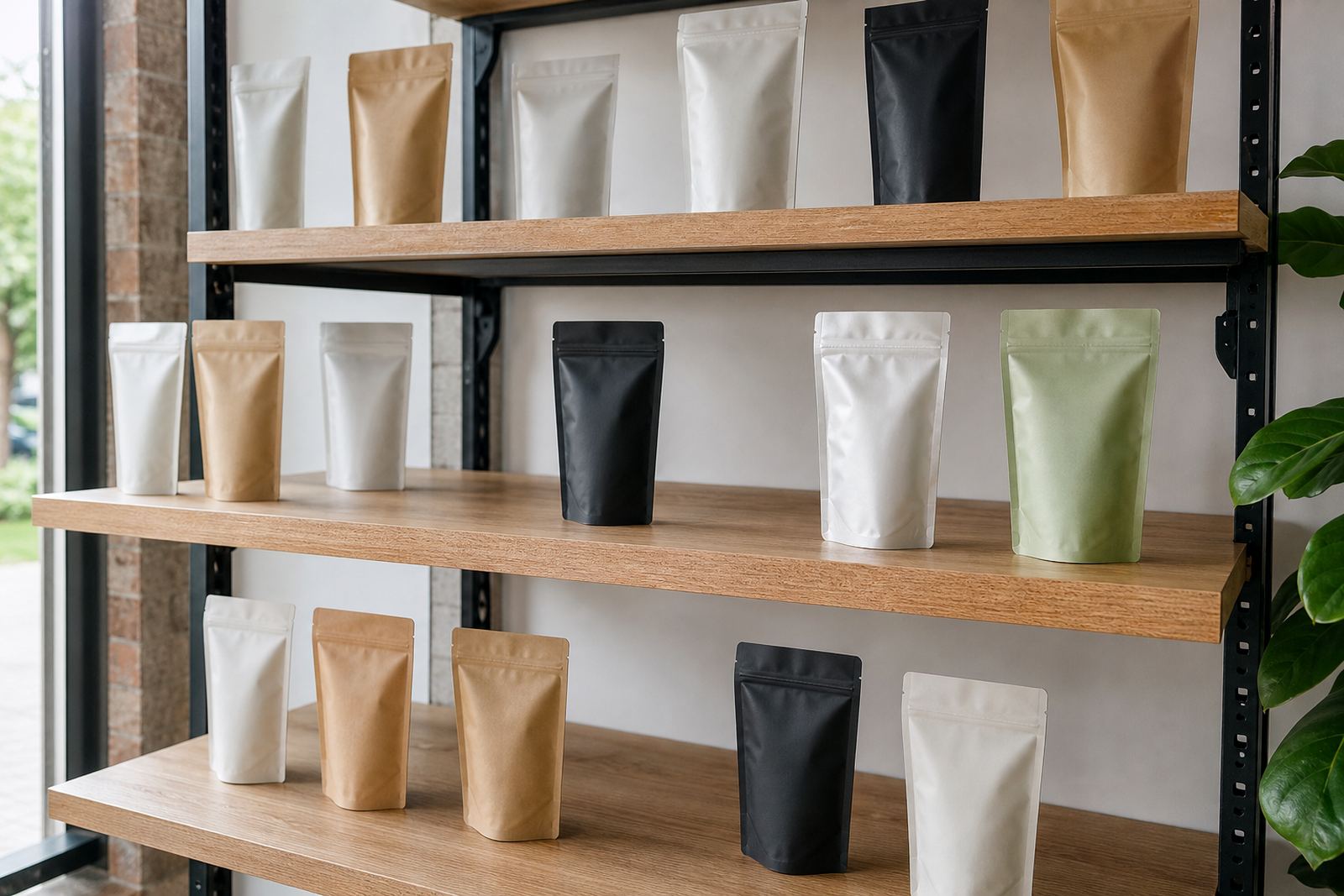
On a crowded shelf, the package has to do some of the selling before a customer even picks it up. Stand-up pouches create a taller front face than flat packs, which gives more room for your name, product details and key messages. That extra surface area can make a real difference in shops from Durban to Bloemfontein where products are often packed close together and visibility matters.
These packs also sit neatly upright, so they help products look orderly in displays and in back-of-house storage. For smaller local brands, that can be a practical way to present a clean range without needing large cartons or heavy rigid containers. It is simple, but it works.
Storage and transport advantages that matter in South Africa
One of the main reasons brands move to stand-up pouches is space saving. Compared with rigid packs, they can be shipped and stored more efficiently before filling, and that helps when warehouse space is tight or deliveries move between Pinetown, Johannesburg and Pretoria. Less wasted space can also mean easier stacking on pallets and in delivery vehicles.
For businesses dealing with inland heat or coastal humidity, the choice of material and seal area matters just as much as the format. Our team looks at how the pouch will be packed, transported and displayed so the final result suits the actual route your goods take. Load-shedding also affects planning, so repeat orders and production timing need a bit of forethought.
- Neater stacking in warehouse and dispatch areas
- Less wasted space in transit
- Good shelf standing without extra support
- Easier handling for retail staff and buyers
Where stand-up pouches are a sensible fit
Stand-up pouches are used across many product types, from dry goods and powders to small hardware items and general consumer packs. They are often chosen when a brand wants a cleaner presentation than a flat wrap but does not need a full rigid container. For local producers, this makes them useful for both short run orders and repeat production.
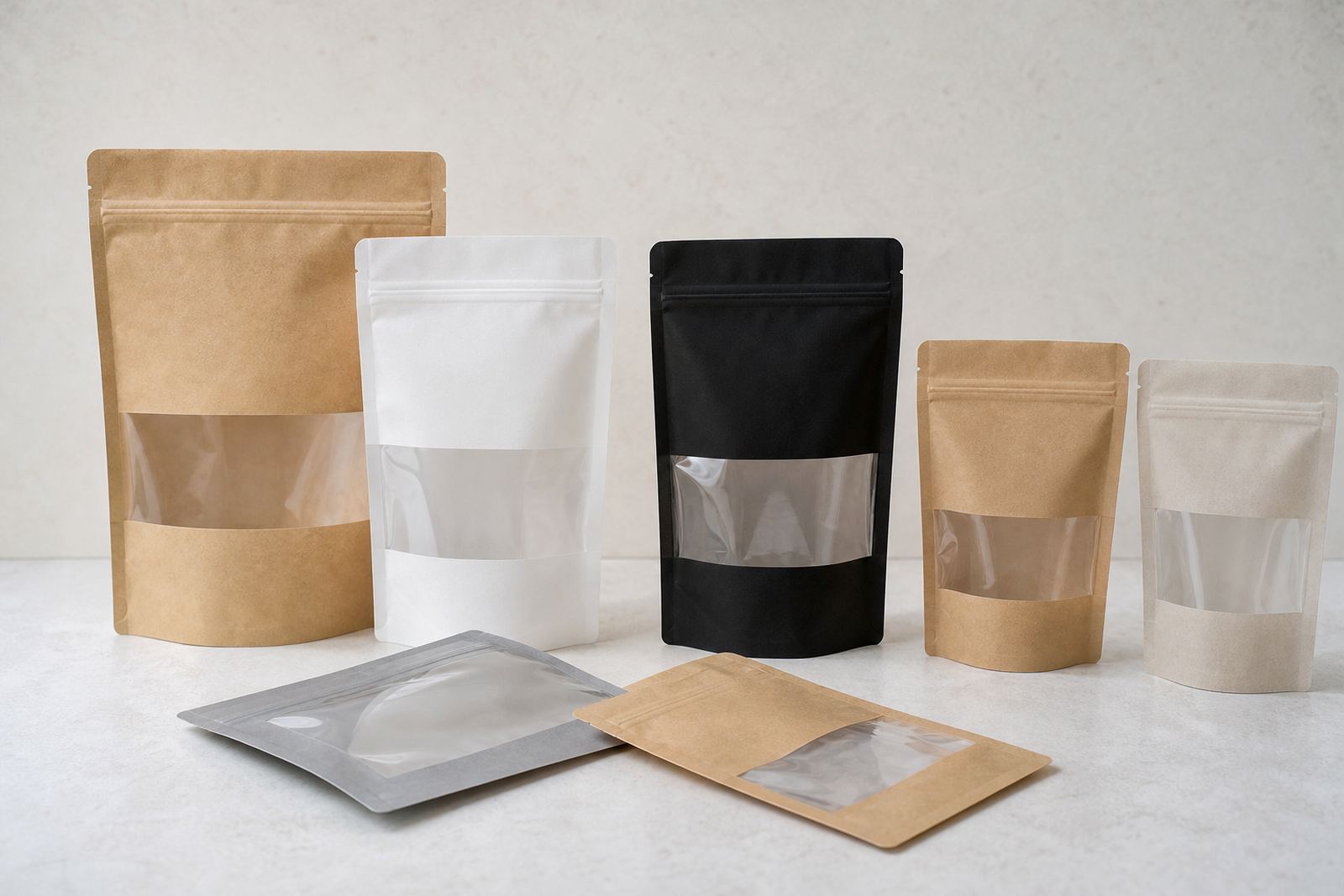
They also suit product lines that need different sizes in the same family. A 100 g trial pack and a 1 kg family size can share the same visual style, which helps the range feel organised. The packaging format can be adapted with zips, tear notches or plain heat seals depending on how the product will be opened and used.
- Trial packs for new products
- Refill packs for regular users
- Retail packs for shelf display
- Multi-size product ranges with the same look
Printing details that affect the final result
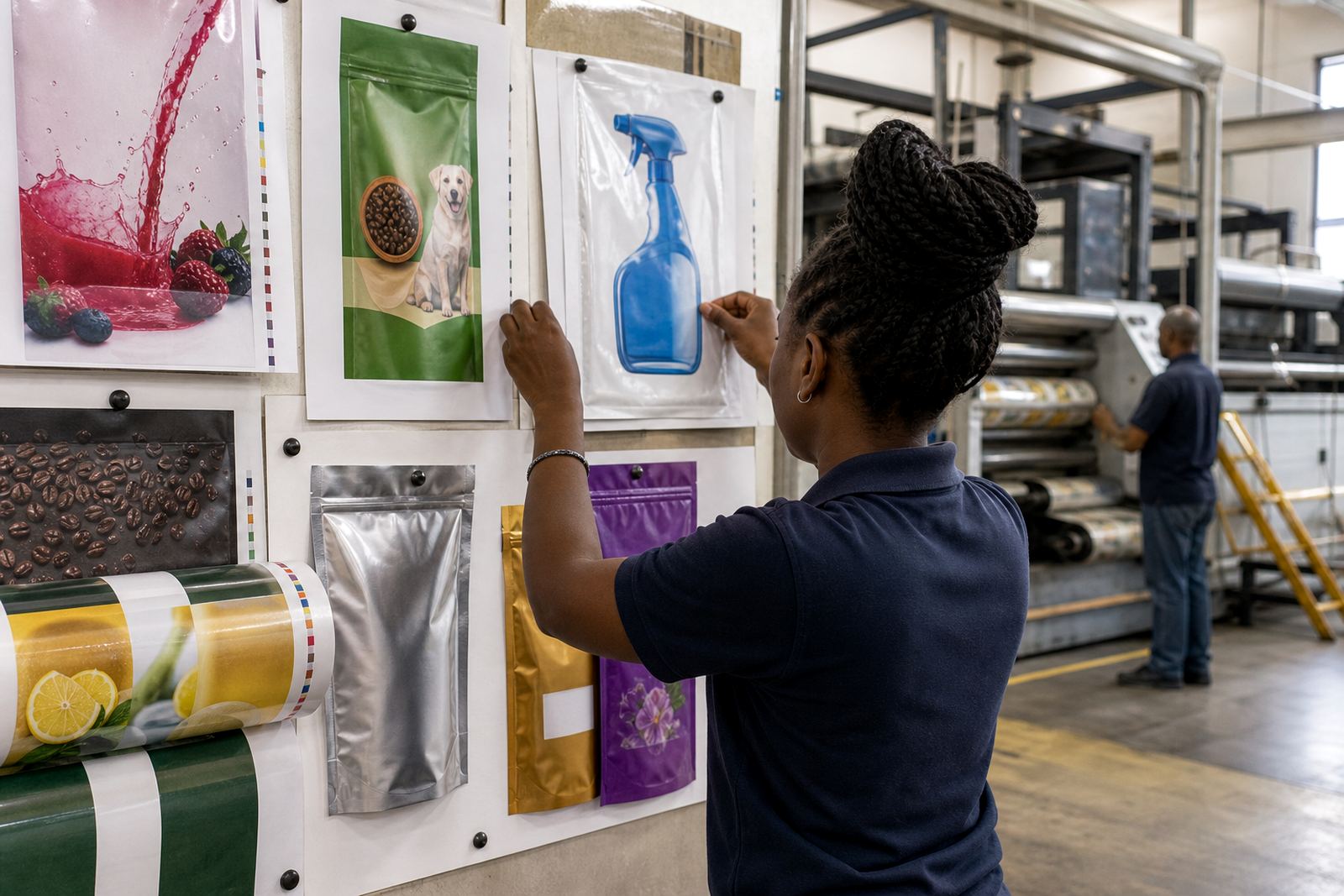
Good flexo printing is not just about colour on film. It is about how well the artwork sits on the pouch shape, how the panels line up and how consistently the colour holds across a run. At Flexography Printing Co, artwork prep, print proofing and colour matching are part of the process because stand-up pouches need careful layout to keep text readable and graphics balanced.
If a pouch has a gusseted base or a shaped top seal, the design has to respect those folds and contact points. That is where practical prepress work pays off. The artwork must account for barcode placement, front panel space and any copy that needs to remain clear after filling. Small details count here, especially when the product is going through retail distribution and not just hand sold at one point.
A local example from KZN distribution routes
Consider a Pinetown-based brand sending packaged products to Durban shops, then up to Johannesburg and Pretoria through wholesalers, with later deliveries to Cape Town and Bloemfontein. A stand-up pouch is easier to palletise than many loose formats, and it gives the brand a stronger face on shelf when the stock is unpacked. That matters when stores are working through fast-moving deliveries and want products that look tidy straight away.
For the same brand, a repeat production cycle can be set up once the artwork and colour are approved. That helps keep the look consistent across batches, even when orders are split between regions. Lerato Molefe in logistics coordination often sees how a clear pack format cuts down on handling and confusion during dispatch, which is worth a lot when goods are moving across provinces.
What to think about before choosing this format
Before you commit to stand-up pouches, it helps to be clear about the product, fill weight and how the pack will be used after opening. Some products need easy reclosure, while others are sold as single use packs. Material selection also matters because the film, seal type and print finish should suit the product and the route it travels.
Priya Naicker often helps customers work through the commercial side, while Siyabonga Ndlovu keeps the bigger production picture in view. The aim is not to choose the flashiest option, but the one that fits the product, budget and delivery pattern. A well planned pouch can save time later, and that is usually where the value shows up.
- Check the product weight and fill method
- Decide whether a reseal is needed
- Confirm the shelf position and display style
- Plan for repeat orders if the product takes off