
Start with the machine, not the artwork
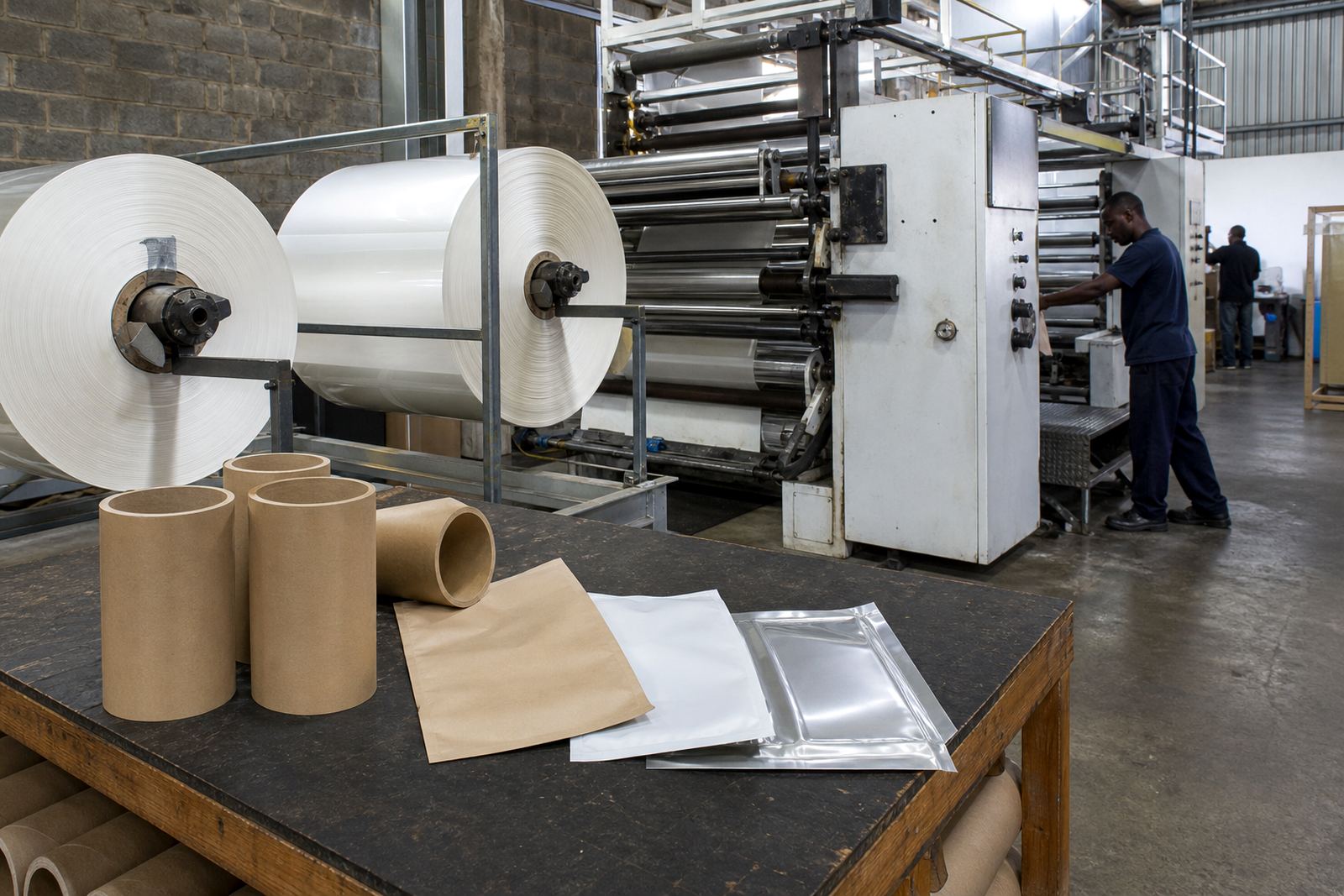
Before you talk about colour or finish, check what your filling and sealing equipment actually needs. The reel width, core size, unwind direction and roll length all have to match your line. If those basics are wrong, a neat design will not help much once the reels reach the packing floor.
It helps to have the machine details ready when you enquire. A supplier can then advise on what will run cleanly and what may need adjustment. In Pinetown and the wider Durban area, we often see businesses losing time because the reels were printed to the right look but the wrong spec.
- Confirm reel width in millimetres, not only the bag or pouch size.
- Check core diameter and whether the machine takes single or multiple reel positions.
- Note the unwind direction so the print faces the correct way on the line.
- Give the finished roll diameter your team can handle without stoppages.
Choose a structure that suits heat, handling and storage
Not every flexible pack performs the same once it leaves the warehouse. Some products need stronger seals, others need better moisture resistance, and some just need a film that feeds well in humid conditions. Around coastal KwaZulu-Natal, humidity can affect storage and handling, so the material choice matters even before production starts.
Your packing line, product type and storage space should all shape the order. If reels are likely to sit in a hot store room in summer, ask how the film and ink system will behave. If the product is being packed in Johannesburg or Pretoria, where conditions can be drier, the same spec may still work but the handling advice can differ a little.
- Match the film to the product weight and seal requirements.
- Ask about how the reel will behave in warm or humid store rooms.
- Check whether your line needs an easy peel or a stronger seal area.
- Keep the storage plan in mind if reels will move between branches.
Colour matching should be practical, not guesswork
Printed reels are often the first thing your customer sees before the pack is formed. That means colour consistency matters across repeat orders, especially if your brand sells through several packing runs in Durban, Cape Town and Johannesburg. A small shift in shade can make one batch look different from the next, even if the product inside is the same.
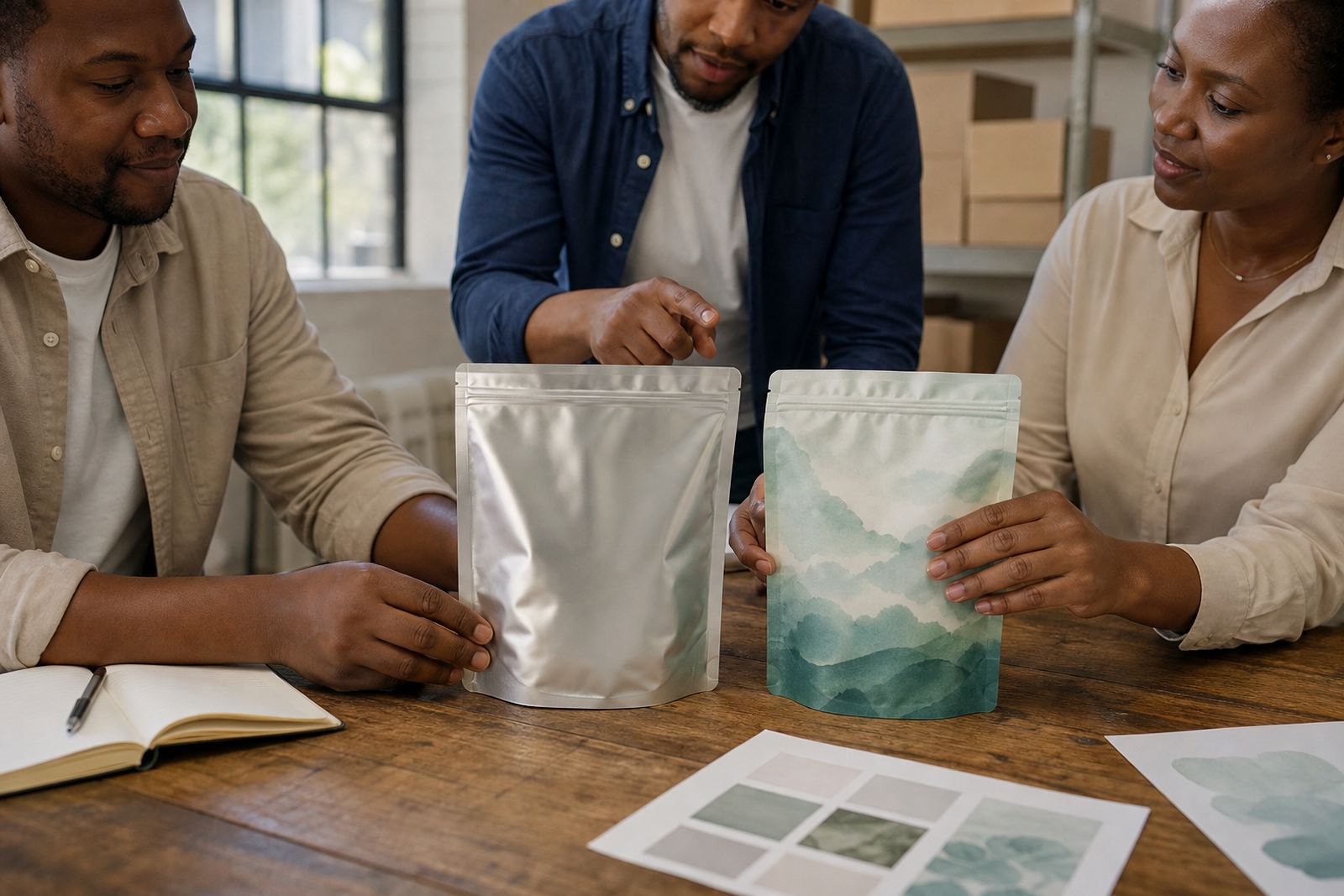
Good colour control starts with approved references and clear communication on what must stay consistent. If your logo uses a specific red or green, say so early. Also, if the pack has a dark background, think about how that will read on the line under factory lighting. It is worth checking the artwork under working conditions, not only on a screen.
- Provide a reference pack or previous approved sample if you have one.
- Agree on the main brand colours and any text that must stay highly legible.
- Ask for a proof before the full run starts.
- Keep an eye on how metallics, solid blacks and fine text will print on the chosen film.
Work out whether short runs or repeat production make better sense
Some businesses need smaller reels for trial packs, seasonal items or a new product line. Others want repeat production on the same spec so the line can keep moving without rechecking every detail. Both approaches can work, but the order should suit your stock plan and sales pattern.
If you are launching in one region first and then expanding to Pietermaritzburg, Ballito or the inland centres, short runs can limit risk. Once the pack settles in the market, repeat production usually saves time because the approved details are already in place. The main point is to avoid changing the spec more than needed, otherwise your packing team spends too much time adjusting settings.
- Use short runs when the product is new or demand is not yet settled.
- Use repeat production when the pack is established and the line setup is stable.
- Keep a written record of the approved reel width, artwork version and material spec.
- Plan ahead for seasonal peaks so you do not rush an order at the last minute.
Proofing should catch line issues before they become waste
A print proof is not just for checking spelling. It is there to confirm the layout, barcodes, registration, text size and how the pack will read once it is formed on the machine. If the information panel is too close to a seal area, or a barcode sits where the film folds, the pack can be harder to use and more wasteful on the line.
Ask for proofing that reflects how the reel will be packed and converted. This is especially important for sachets and narrow wraps where there is less space to work with. A clear proof process saves time at dispatch and helps your production team start with fewer surprises.
- Check all copy, batch space and any variable data positions.
- Confirm where seals, folds and cut lines will fall on the finished pack.
- Review the proof on the actual size, not only on a reduced image.
- Make sure the team signing off the proof understands the packing line needs.
Delivery timing matters as much as print quality
Printed reels are usually ordered to feed a live packing schedule, so timing is part of the spec. If the reels arrive late, the whole line can sit idle. In South Africa that is a real issue when transport delays, municipal traffic or load-shedding already put pressure on production windows.
Plan delivery with your warehouse and packing team in mind. Pinetown is a practical base for dispatch into Durban and the inland routes, but you still need a realistic timeline for proof approval, production and transport. If the reels are going to Cape Town or Bloemfontein, build in extra time rather than cutting it fine.
- Allow time for artwork review and proof sign-off before production starts.
- Share your required delivery date and the branch receiving the stock.
- Keep a small buffer in case a packing run starts earlier than expected.
- Ask for dispatch coordination if the reels must land at different sites.
A local example from a changing packing schedule
A food producer in the Durban area may start with one size of reel for a trial run, then move to a larger repeat order once sales pick up in Gauteng. The first order might need shorter lengths and simple colour control, while the second needs tighter repeat consistency and a more reliable delivery plan. That shift is common when a brand moves from one packing site to another.
In that kind of setup, the useful questions are practical: will the reel feed the line without slowing it down, can the colour stay consistent across multiple batches, and will the next delivery land before the current stock runs out? Once those are answered, the printed reel becomes a working tool, not just packaging stock.
That is the real test of packer ready reels. They should help the packing team keep moving with less waste, fewer stoppages and less rework.