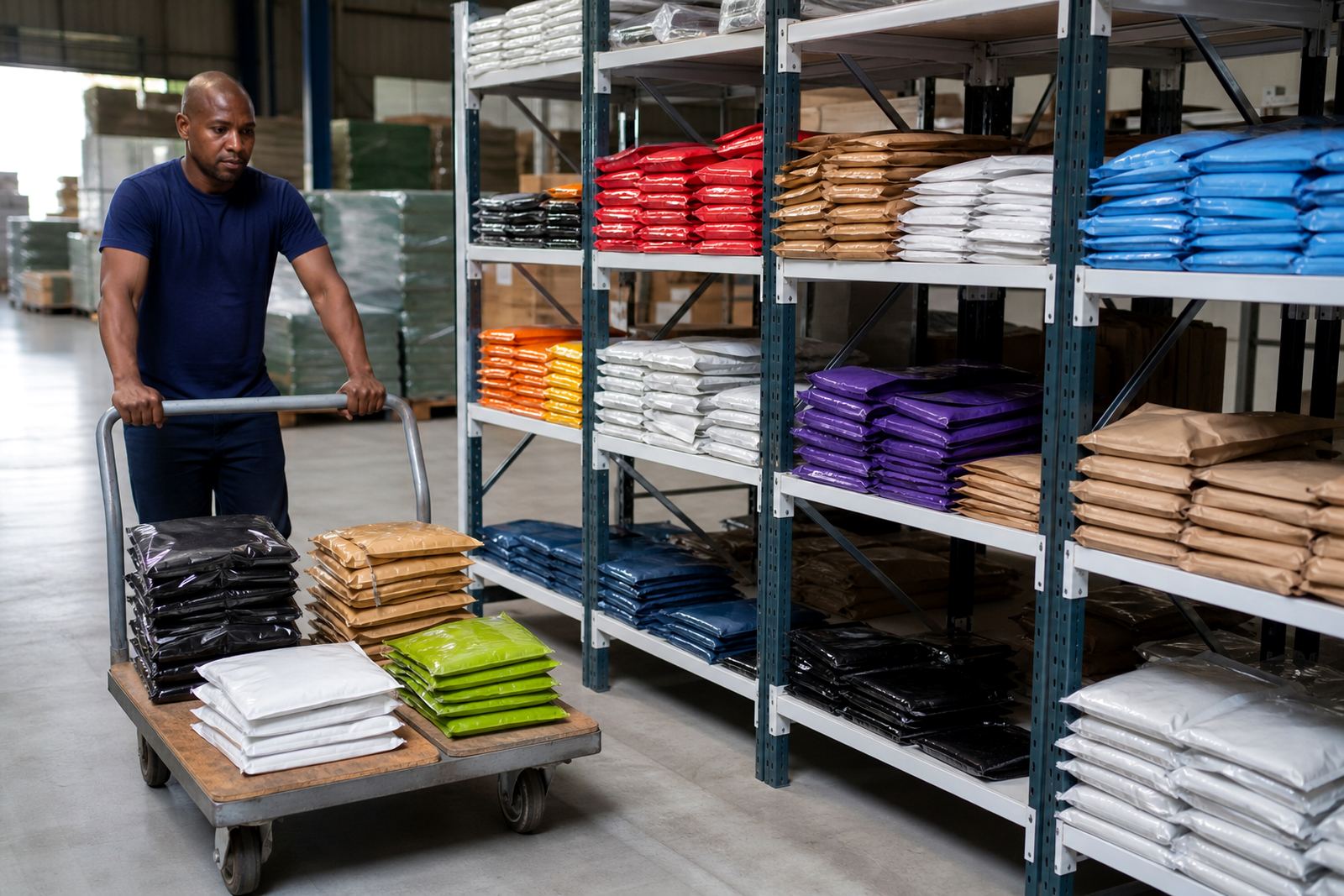

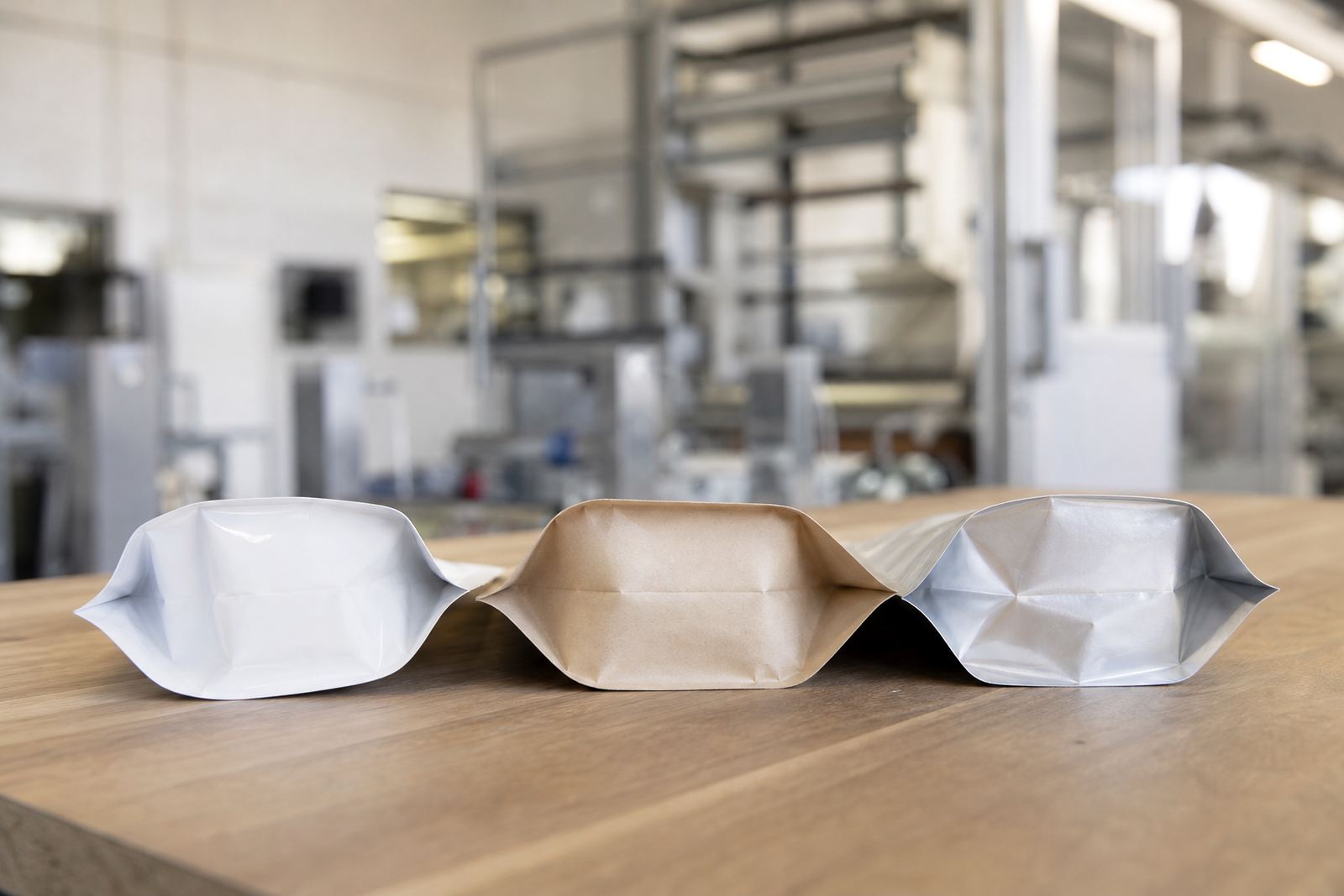
Why pouch base choice matters in packing rooms and on shelf
When people compare pouches, they often focus on size, colour and print finish first. The base shape matters just as much, because it affects how the pack behaves during filling, sealing, transport and display. A pouch that stands neatly in a retail box in Durban may not perform the same way on a warehouse floor in Pinetown if the product is heavier, finer or more sensitive to air.
For local brands, the right base also helps with handling in real conditions. Heat, humidity and repeated moving between factory, distributor and store can put strain on the pack. A base that suits the product means fewer problems with tipping, uneven fill and wasted packing time.
- Better shelf presentation for retail and trade counters
- More stable filling and packing on the production line
- Improved use of space in cartons and dispatch
- Less risk of packs leaning, folding or looking untidy
Bottom gusset pouches for practical everyday use
The bottom gusset is a common choice for brands that want a pouch that can stand and still stay fairly simple in structure. The base opens out when filled, giving extra room without making the pouch feel bulky. It works well for dry goods, powders, snacks and lighter items that need a neat shelf shape without a premium box-like look.
In day to day use, bottom gusset pouches are often a good middle ground. They are easier to pack than a flat bottom format and they usually use material efficiently. That can matter for short run orders, repeat production and dispatch planning when lead times are tight and the load-shedding schedule is changing. The shape is familiar, practical and suitable for many local brands selling across KwaZulu-Natal and further inland.
- Good for medium fill volumes
- Suitable for products that do not need a rigid base
- Works well for retail and wholesale packs
- Can be paired with zips, tear notches or heat seals
Flat bottom pouches for stronger shelf presence
A flat bottom pouch gives a more structured finish and usually stands with a cleaner face on shelf. It has a boxier shape, which can help with premium presentation and stacking. For products sold in supermarkets, farm shops or specialist outlets, this can make a real difference to how the pack reads from a distance.
This format is often chosen when the brand wants the pouch to hold its shape after filling. It can be a good match for products that are heavier or where the front panel needs to stay flat for artwork. The trade off is that it can use more material and may need more careful packing line control. If a business in Pietermaritzburg or Ballito is moving from a standard pouch to a more polished retail format, this is often the option worth testing first.
- Better standing stability for shelf display
- Cleaner front panel for artwork and labelling
- Useful for higher-value retail packs
- May need tighter control during filling and sealing
Standard pouch bases for simple, cost-conscious packaging
The standard pouch base is usually the simplest option and suits brands that want a straightforward pack for transport or sale. It may not stand as firmly as the other two formats, but it can be the right answer when the product is light, the budget is tight or the pack is meant for secondary use rather than strong shelf display.
For some products, especially where the pouch is going into a carton or outer sleeve, the base only needs to do a basic job. In those cases, the standard base can keep production simpler and help with repeat orders. It is often chosen for sachets, wraps and some short run pouch work where function matters more than presentation. That said, if the product needs to stand upright in store, it is worth looking at the other options before confirming artwork.
- Simple format for basic packing needs
- Can suit lighter fills and outer packaging
- Often easier to manage on smaller runs
- Less shelf impact than gusseted or flat bottom styles
How the product and filling method should guide the base
Choosing a pouch base is not only about appearance. The product itself should lead the decision. Granules, powders, snacks, liquid like fills and brittle products all behave differently in the pack. A base that works for one item may be a poor fit for another, even if the pouch size looks similar on paper.
The filling method matters too. If a product is packed by hand, a simpler base may be better. If a line is automated or semi automated, the pouch needs to run consistently through the fill and seal process. At times, the best result comes from testing two options side by side before placing a repeat order. That saves headaches later and helps avoid material waste.
- Match the base to product weight and flow
- Consider whether the pack must stand on shelf
- Check how the pouch behaves during filling
- Factor in storage, transport and retail display
A Pinetown example for brands shipping nationwide
Take a local food brand in Pinetown supplying stores in Durban, Johannesburg and Cape Town. If the product is going into a premium retail range, a flat bottom pouch may be the better fit because it displays well and keeps a neat front panel. If the same brand is launching a lower volume line for trade packs or seasonal promotions, a bottom gusset may give a better balance of cost and presentation. For a simple secondary pack, a standard base might be enough.
That is why pouch selection should be tied to the full packing and dispatch process, not just the artwork. A good choice helps with box counts, pallet stability and store display. It also makes repeat production easier when orders need to move quickly across South Africa, especially when delivery schedules are tight and everyone needs the same result each time. A quick sample review can save a lot of rework later, and it usually does.
- Use flat bottom for a stronger retail look
- Use bottom gusset for versatile everyday packing
- Use standard base for simpler, lower complexity needs
- Test before confirming a full production run