
Choose the Format for the Selling Space
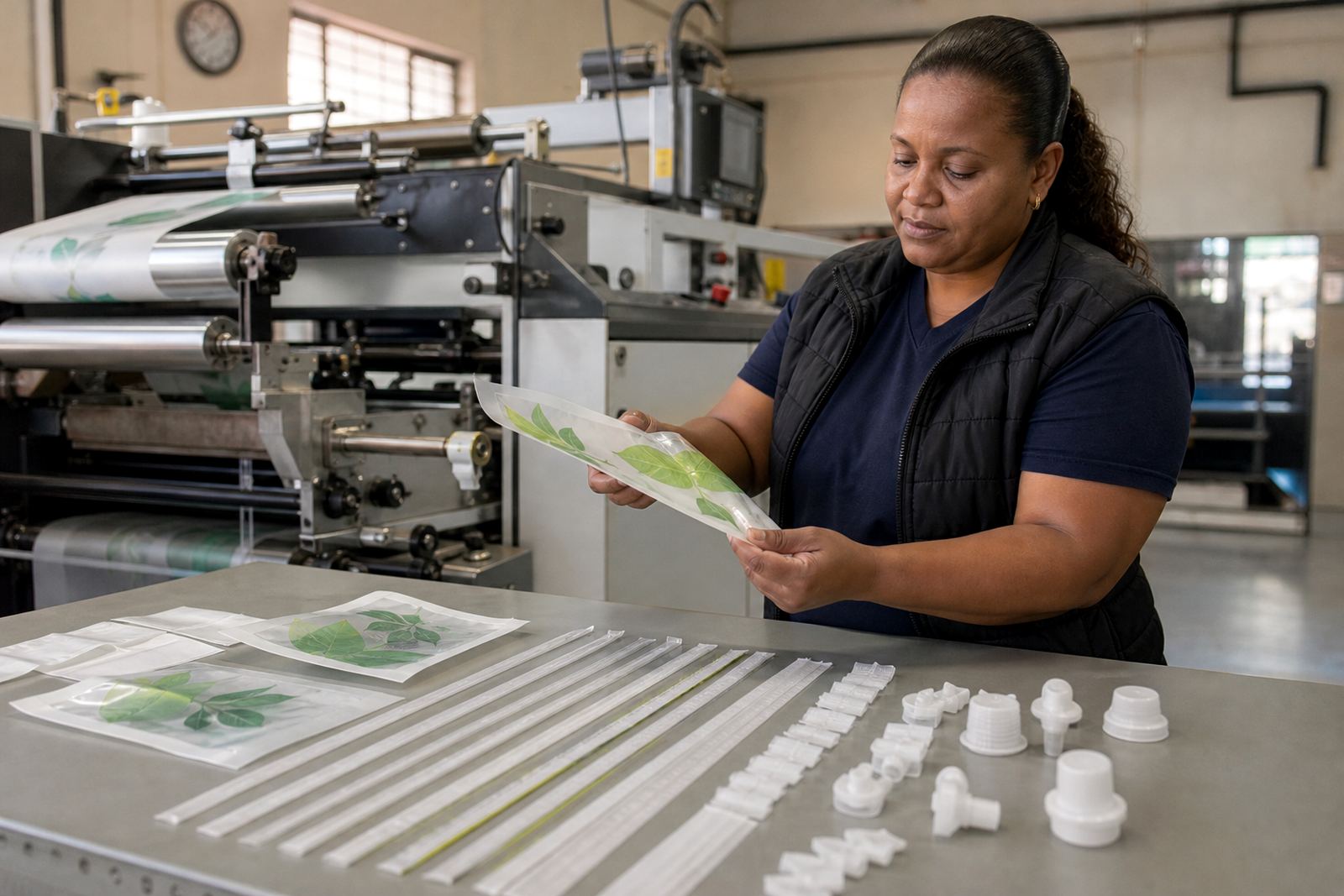
The first decision is the format itself. A pouch gives a neat front panel for product name, variant and size, while sachets suit single-use items, samples and portion control. Wraps are often chosen when a product needs to stay compact, stack well or move quickly through pack-out. In Pinetown and across KwaZulu-Natal, many brands work with a mix of formats so the retail pack matches the shelf space, the carton size and the way shoppers actually pick up the product.
Before you settle on a shape, think about where it will be sold. A narrow shelf in a pharmacy calls for a different pack footprint to a supermarket end cap or a hanging strip in a convenience store. If the pack is too wide, it may overhang the shelf edge. If it is too short, the artwork can feel crowded and hard to read from a distance. The right fit helps the product sit straight and makes facings easier to manage.
- Check the available shelf width, height and depth before artwork starts
- Decide whether the product will stand, lie flat or hang from a peg
- Match pack size to carton quantity for easy replenishment
- Allow space for legal copy, ingredients and batch coding
Use Finishing to Improve Shelf Presence
Finishing affects how a pack reads under store lighting and how it feels in the hand. A matt finish can reduce glare on bright shelves, which is useful when displays sit near windows or under strong LED fittings. A gloss finish can give stronger visual contrast and make colour blocks stand out. For local brands selling in Durban or coastal towns, it is also worth considering how the finish performs in humid conditions, because pack handling and storage can vary from store to store.
Special finishing should support the product, not fight with it. Heavy effects can make the pack look busy if the product information is already detailed. Clear zones for the brand name, flavour or variant and pack count help the eye move quickly. If the product hangs on a peg, the top seal and header area need to stay clean and readable so the pack does not look untidy once it is punched and displayed.
- Use contrast that can still be read from 1 to 2 metres away
- Keep the top area clear if the pack needs a hanging hole
- Choose a finish that suits the store lighting and product category
- Check that codes and dates remain legible after production and handling
Plan for Hanging Displays and Peg Hooks
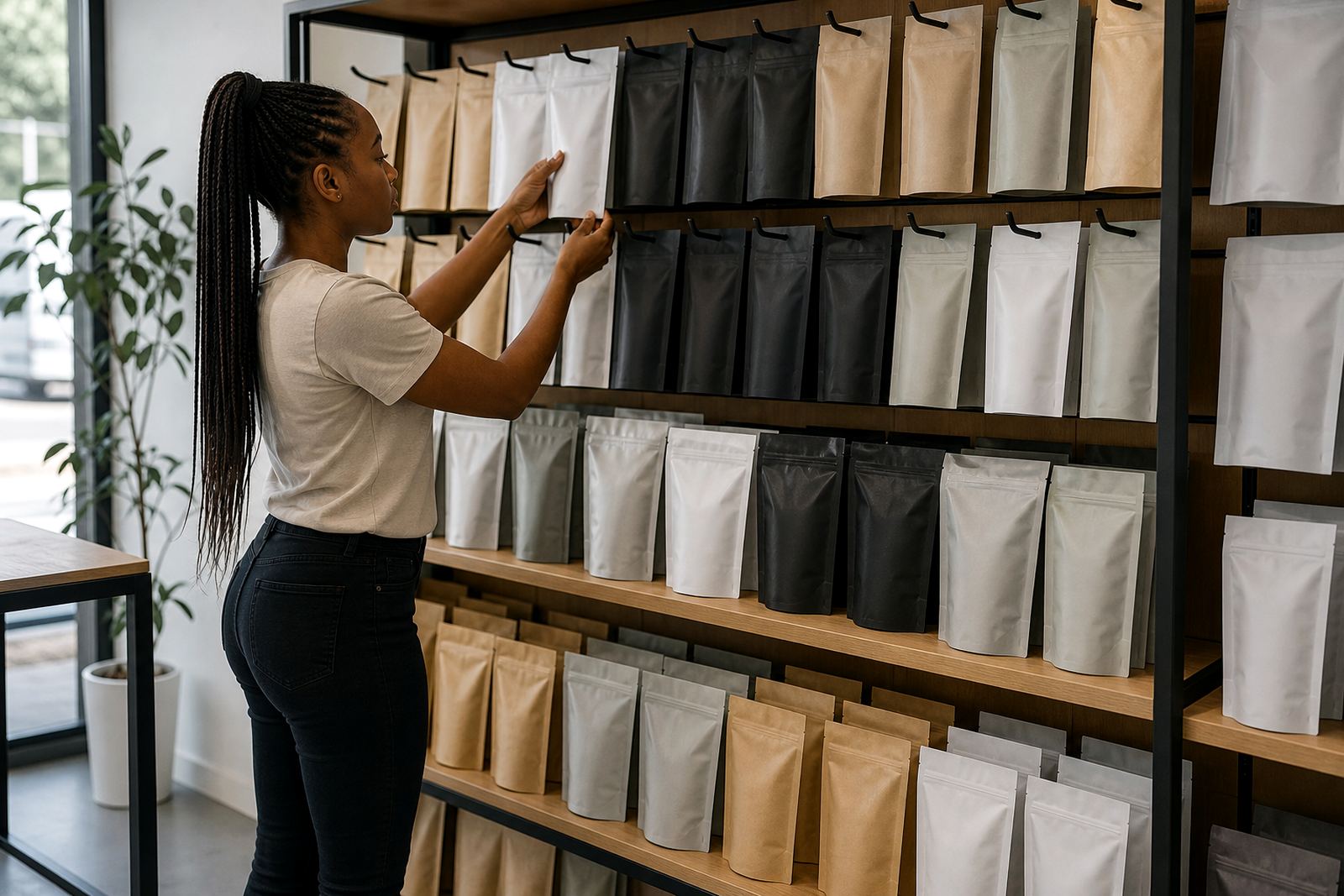
Many retail displays depend on hanging packs. Sachets and small wraps often sell well when they are grouped on a strip or hook, especially for impulse items near tills. In this setup, the top of the pack does a lot of work. It must hold the perforation or hole cleanly, stay aligned during packing and remain strong enough not to tear when store staff restock the shelf.
Good hanging design also makes life easier in stores with limited space. In Johannesburg and Pretoria, where floor space can be tight in some outlets, hanging packs help use vertical space without cluttering the aisle. The pack should open easily for the shopper, but it should not split too close to the product or leave exposed edges that catch on other stock. A neat seal line and consistent cut position keep the display orderly.
- Confirm the hole position before final artwork and print proofing
- Leave enough margin above the product area for punching and sealing
- Use repeatable pack sizes for better tray and strip planning
- Test how the pack hangs once filled, not only when flat
Keep Pack Organisation Easy from Carton to Shelf
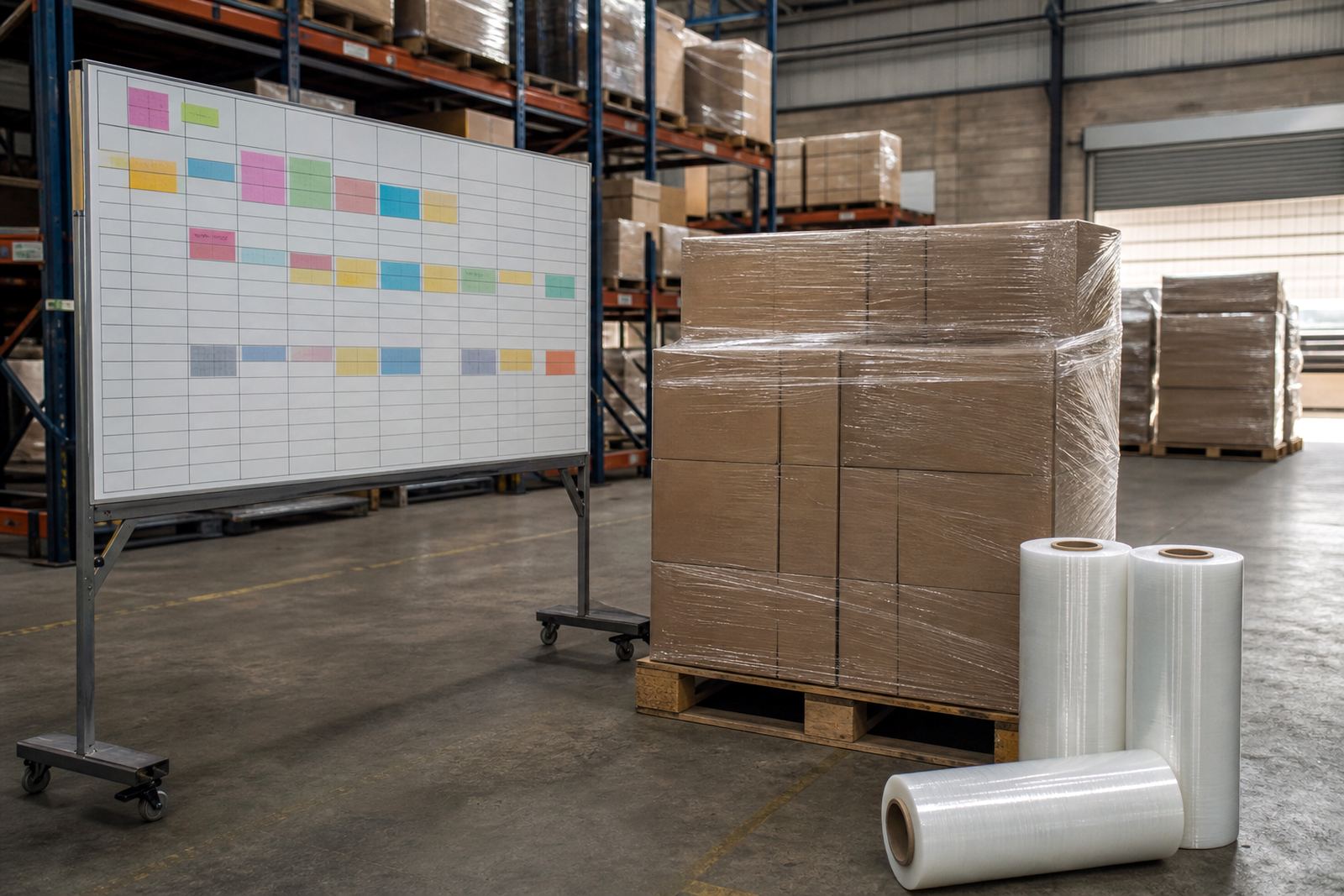
Retail display is not just about the final shelf look. It starts with how the pack is organised in cartons, sleeves or bundles. If packs are uneven, difficult to count or mixed across variants, store staff waste time during receiving and replenishment. That can lead to crooked displays, damaged units and slower turnover. For suppliers delivering to Bloemfontein, Cape Town and across South Africa, good pack organisation helps reduce handling delays and keeps the product looking consistent when it reaches the shelf.
Short runs and repeat production both benefit from the same discipline. Clear variant separation, consistent pack counts and easy-to-read coding make dispatch smoother. If your products move through several branches or wholesalers, it helps to keep each format clearly identified so the right item goes into the right display. That is especially useful for ranges with multiple flavours, sizes or limited editions.
- Keep counts consistent within each carton and outer case
- Separate variants clearly before dispatch
- Use simple coding that store staff can read quickly
- Plan the carton size around the display pack to reduce repacking
Match the Artwork to the Retail Job
Artwork should support the packaging format and the store setting. On a pouch, the front face needs the most important details to sit where the shopper looks first. On a sachet, space is tighter, so the layout must stay clean and direct. On a wrap, the design should work across the full length without losing key information in folds or seal areas. Colour matching is important here because an off-tone batch can make a range look uneven on shelf.
Before production, review how the design looks at actual size. What seems clear on screen may become too small when printed across a narrow panel or broken by a side seal. Artwork prep and print proofing should check text size, contrast, panel positioning and any carryover between repeats. If the pack has to sit beside other products, make sure it still stands out without looking crowded. The aim is clarity first, then visual pull.
- Check text legibility at final pack size
- Keep variant names in a fixed position across the range
- Review colour matching against the full product family
- Allow for folds, seals and gussets in the artwork layout
Use a Simple Checklist Before You Place the Order
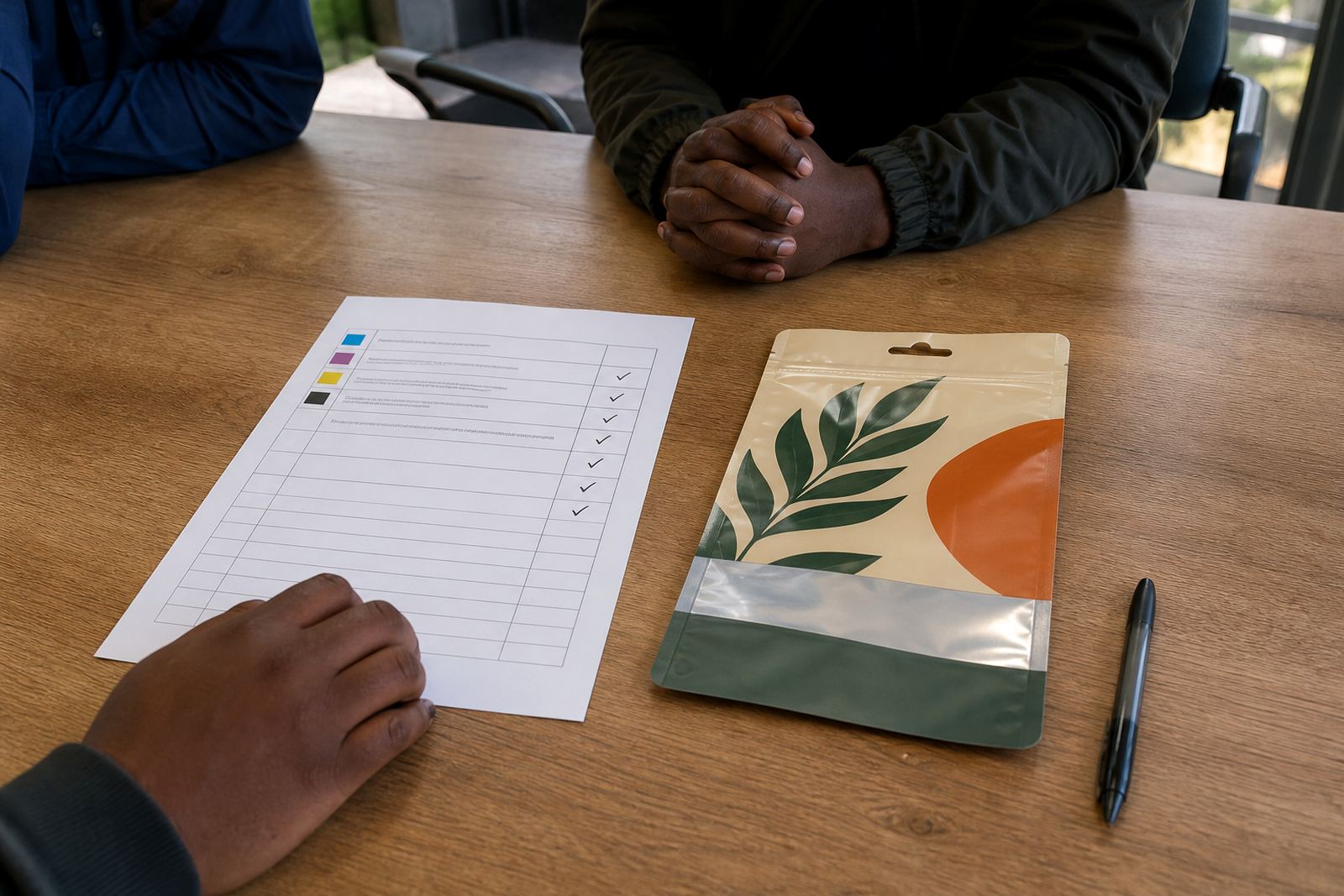
A practical checklist saves time and helps avoid rework. Whether you are launching a new retail range or repeating an existing one, the same basics apply. Confirm the format, final dimensions, quantity, artwork version and packing method. If the product will be distributed from Pinetown to Durban, Johannesburg, Pretoria, Cape Town or Bloemfontein, factor in storage conditions and delivery timing as well. Load shedding, hot depots and coastal humidity can all affect how careful the pack needs to be before it reaches the shelf.
Once the specification is set, keep everyone aligned. Sales, production, dispatch and the client service team should all be working from the same details. That helps with repeat orders too, because a small change in size or finish can affect shelf fit and hanging position. A clean sign-off process keeps the whole run moving properly, and it makes the next order easier to repeat.
- Format confirmed: pouch, sachet or wrap
- Display method confirmed: shelf, hanging or mixed
- Artwork checked for size, colour and legal text
- Pack counts and dispatch details confirmed
- Repeat order reference filed for future production
Retail display works best when the pack is designed for the real shop environment. If the format, finish and organisation all support the sale, the product is easier to place, easier to restock and easier to keep looking tidy on the shelf.