
Start With the Product and the Filling Method
Before you choose a closure, look at what will go inside the pouch or sachet and how it will be packed. A dry powder, granules, liquid, paste or snack item all place different demands on the seal area, tear point and opening style.
For local brands in Pinetown and across KwaZulu-Natal, we often check whether the pack will be filled on a small manual line or a faster production setup. That affects where the opening should sit, how much headspace is needed and whether the closure must be resealable or single use.
- Check product form: powder, liquid, granules or solids.
- Confirm fill temperature and whether the pack will be hot filled.
- Decide if the pack must be opened once or several times.
- Allow enough area for sealing without product contamination.
Common Closure Choices for Pouches
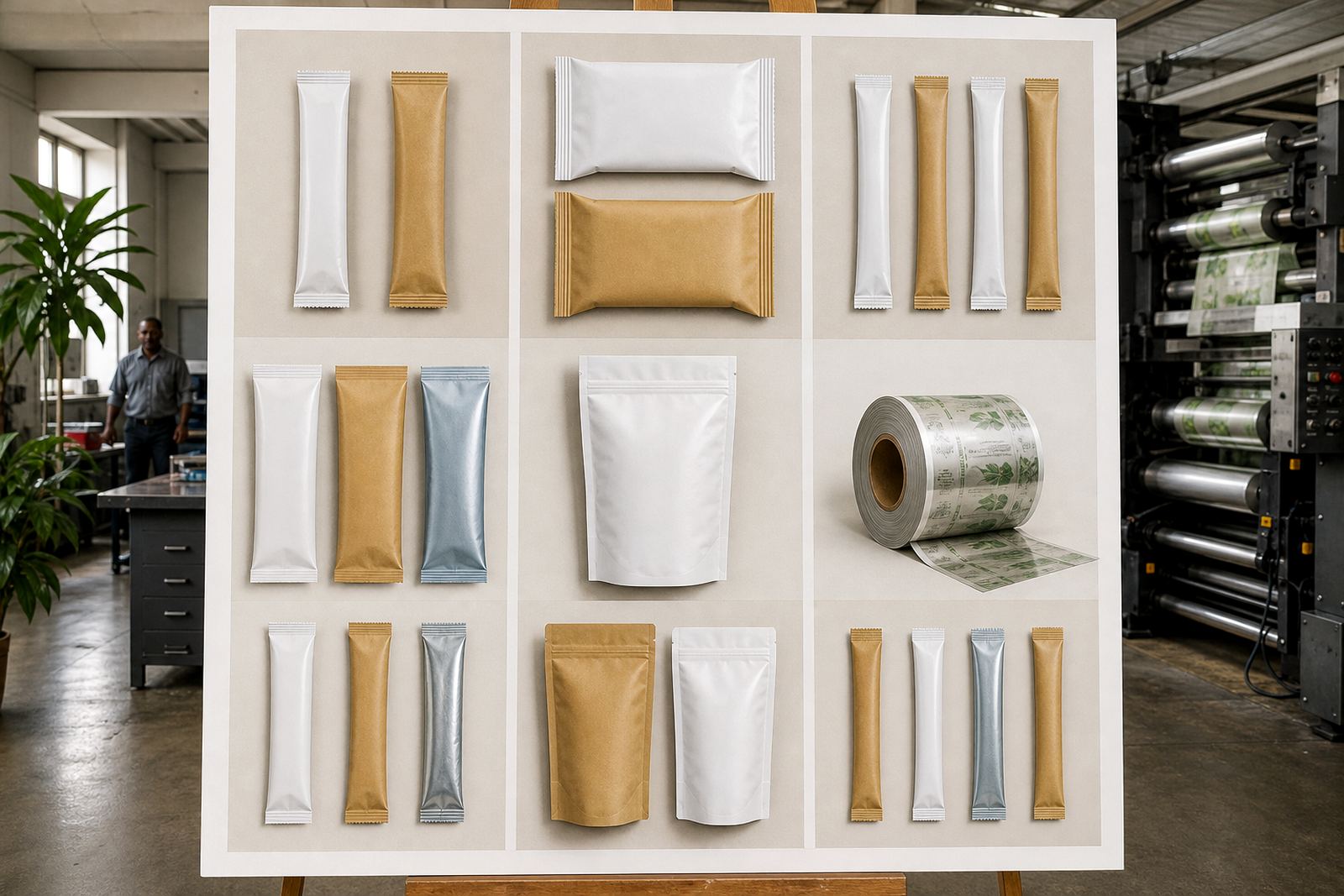
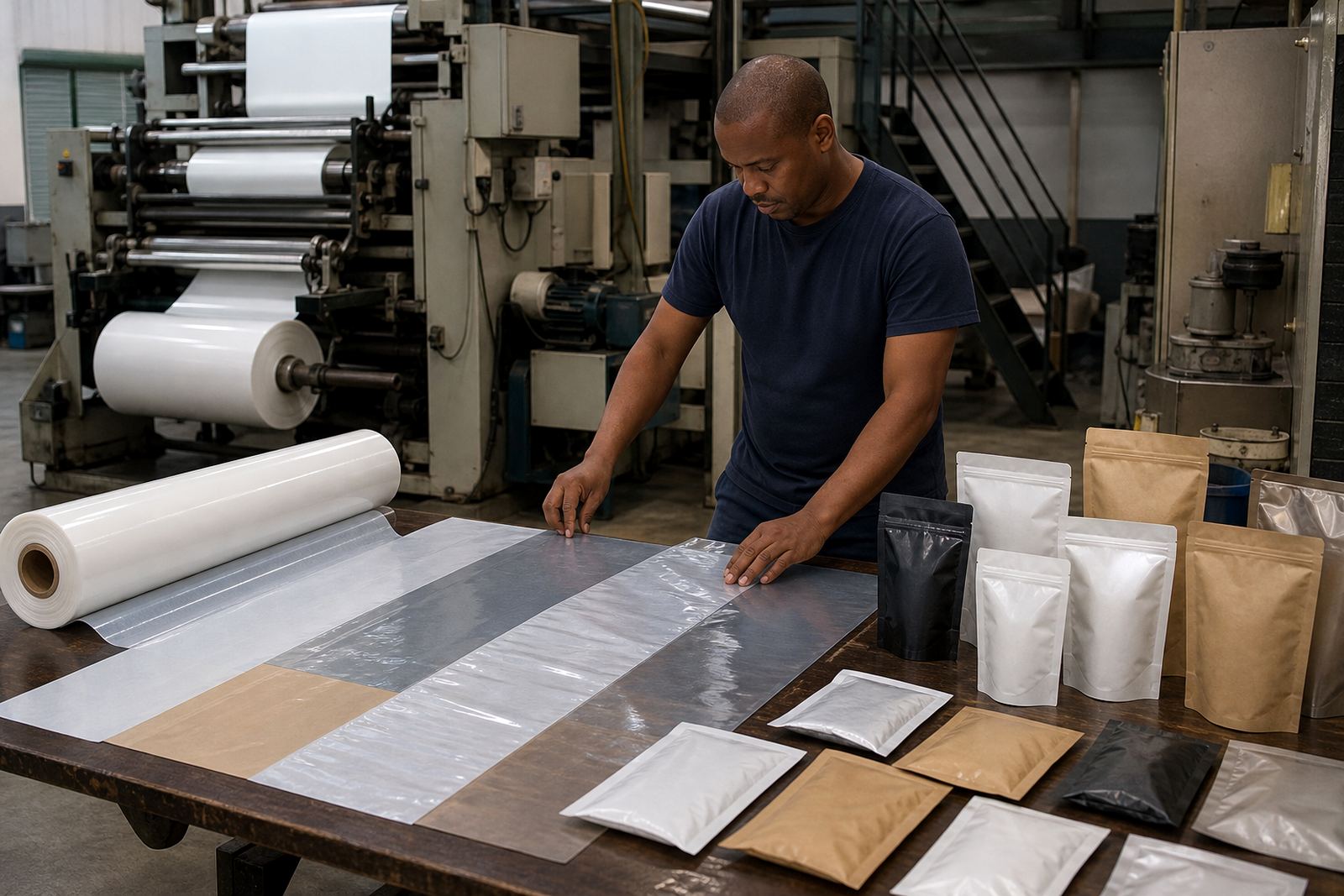
Pouches can be supplied with several closure features depending on the product and the way the customer will use it. Some brands need a simple heat seal only, while others prefer a recloseable feature for repeat use at home or on site.
The most suitable option depends on shelf life, convenience and pack size. In humid coastal areas like Durban and Ballito, a stronger seal structure may also help keep moisture out when packs are handled in stores or during transport.
- Heat seal only for simple, low-cost packs.
- Reseal feature for products used over a few days or weeks.
- Notch or easy-tear detail for cleaner opening.
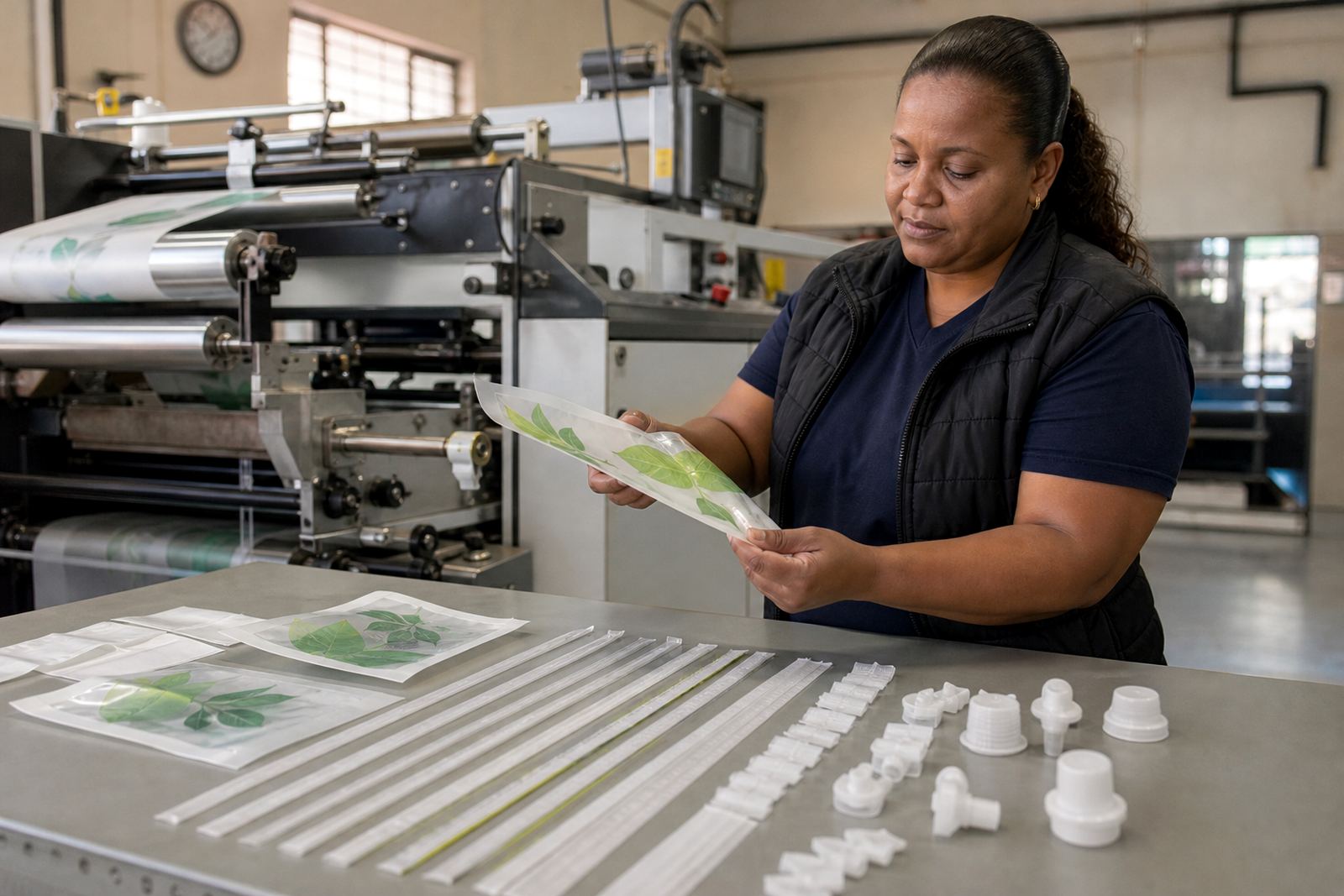
- Spout or fitment style for pourable products where required.
Easy-Open Sachets Need a Clear Tear Path
Sachets should open cleanly without forcing the customer to tear the print area or split the side seam. A good easy-open design uses a defined tear notch and enough unsealed space near the top edge to guide the opening.
For single use sachets, the goal is quick opening with as little waste as possible. If the contents are sticky or oily, the tear feature needs careful testing so the packet does not open unevenly or leave product on the seal line, which can cause handling issues on the line.
- Use a visible tear notch where the user will naturally grip the pack.
- Keep print away from the main tear path where practical.
- Test the opening force with the actual product inside.
- Check that the sachet opens in one clean motion, not in strips.
How Wraps and Flow Packs Handle Opening Points
Wraps are often chosen for products that need fast packing and neat presentation. If the pack must be opened by the end user, the seal layout should still be planned around that first opening point. A poorly placed seam can make the pack awkward to tear or open without scissors.
When planning wraps for delivery to Johannesburg, Pretoria or Cape Town, we look at transit, storage and how the pack will be stacked. The closure or opening feature should keep its shape through handling and not become too weak near the edges.
- Keep the main opening point away from folded corners.
- Allow for handling during transport and retail display.
- Confirm whether the customer opens from the top, side or end.
- Match the opening style to the pack weight and contents.
Proofing Checks Before Production Starts
Artwork and pack structure should be checked together before the job moves into production. The placement of tear notches, seal areas, reseal strips and opening text must line up with the final pouch size and converting method. A small shift on proof can change how the pack opens in real use.
Our prepress and production teams check these points with the brand team so there are no surprises later. That includes colour matching around the closure area, correct panel layout and enough room for barcodes, batch details and other print marks. It saves rework, especialy on repeat orders.
- Confirm the final pack size and seal margins.
- Check the position of notches, zips or tear lines.
- Review how the customer will hold and open the pack.
- Approve a print proof before full production.
A Simple Selection Checklist for Your Next Order
If you are planning a new pouch or sachet order, use a short checklist before you brief the job. This helps the team choose the right closure and opening feature without back-and-forth delays.
At our Pinetown base, we support local brands with short runs, repeat production and dispatch across South Africa. Whether the order is for Durban, Bloemfontein or elsewhere, the right closure choice should suit the product, the filling method and the customer experience.
- What is the product and how will it be filled?
- Does the pack need to be resealed after opening?
- Will the customer tear by hand or use scissors?
- Is the product sensitive to moisture, dust or heat?
- Do you need a sachet, pouch or wrap format?