1. Start with the artwork basics
Before you look at colour or finish, check that the proof shows the correct artwork version. Make sure the product name, flavour, weight, barcode, ingredients or instructions are all in the right place and spelled correctly. A small typo on a pouch or sachet can mean a costly reprint, so it is worth reading every line slowly.
Also confirm that the proof matches the intended pack size. A design that looks fine on screen may sit differently once it is scaled to a 50 ml sachet or a larger retail pouch. If your artwork was adapted for multiple formats, review each version separately and do not assume they will all carry over in the same way.
- Check the latest artwork file and version number
- Confirm the product name, variant and net content
- Read all legal copy, usage notes and warning lines
- Check that barcode numbers are correct and clear
- Look for missing accents, spacing errors or cut-off text
2. Check size, fit and panel layout
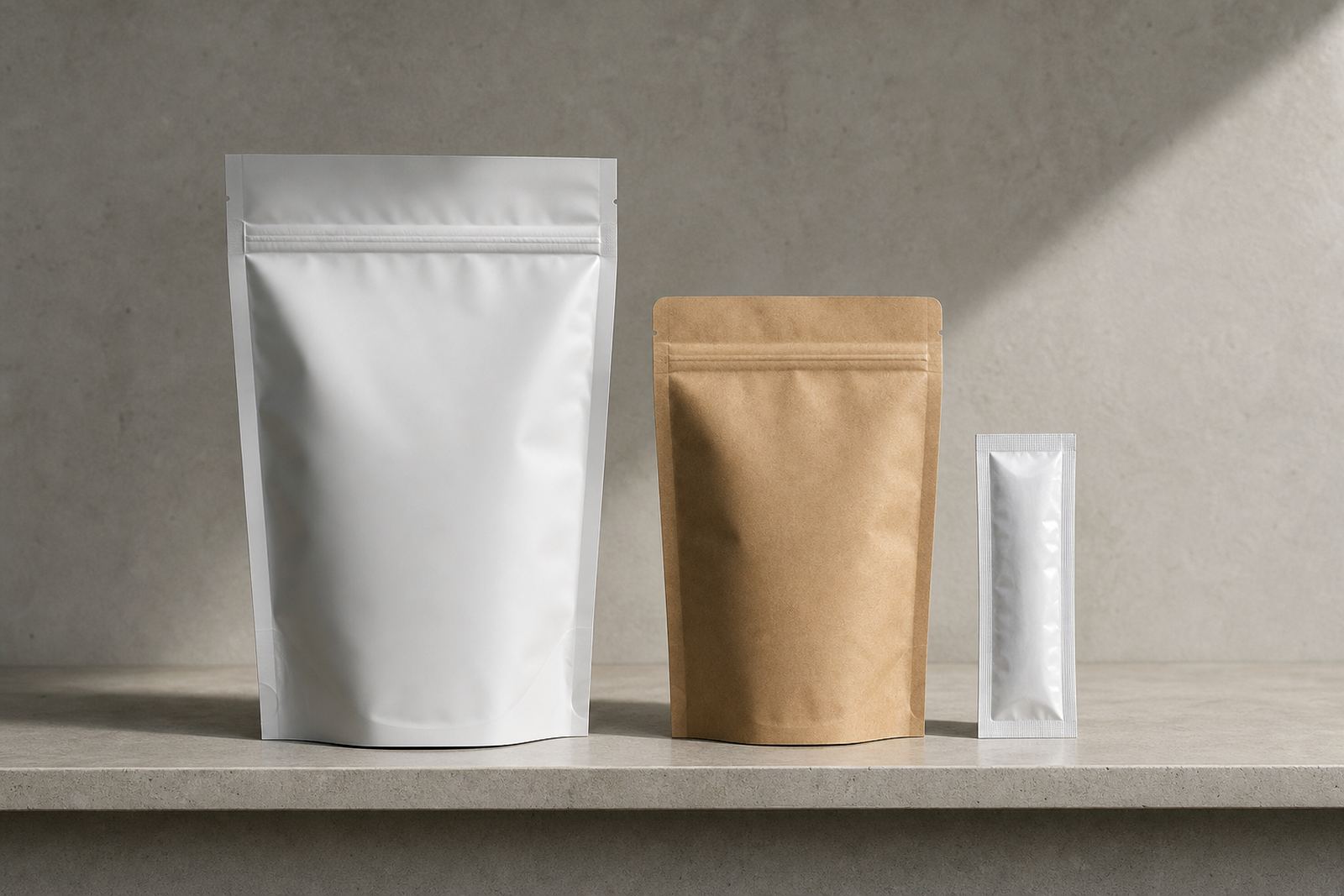
Flexible packaging needs enough space for the film structure, seals and machine registration. Your proof should show the correct dimensions, trim lines, seal areas and any gusset or zipper positions where relevant. If the pack is a stand-up pouch, flat pouch, sachet or wrap, the layout must suit that format and not crowd the edges.
Ask whether there is enough room for product details without pushing text too close to folds or heat seals. On wraps, check that repeat panels line up properly. On sachets, make sure the front and back copy remains legible even when the pack is small. For local brands sending stock across South Africa, this matters because packs may be handled a lot in transit, from Pinetown to Durban warehouses or further inland.
- Confirm width, height and repeat length
- Check seal margins and safe text zones
- Review panel order, front, back and gusset placement
- Make sure barcodes sit on a flat, scannable area
- Look for folds, creases or hidden artwork near seams
3. Review colour with real print conditions in mind
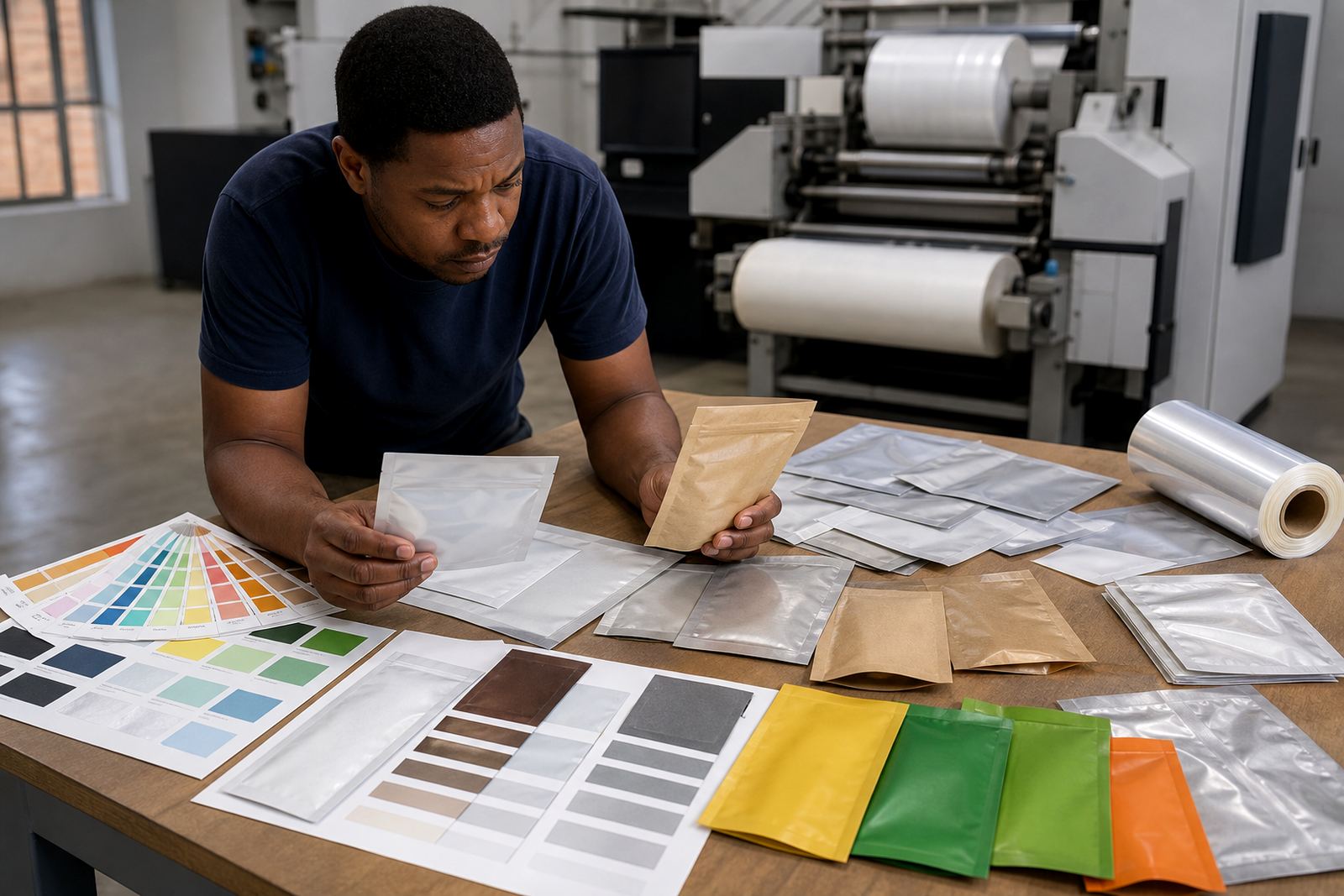
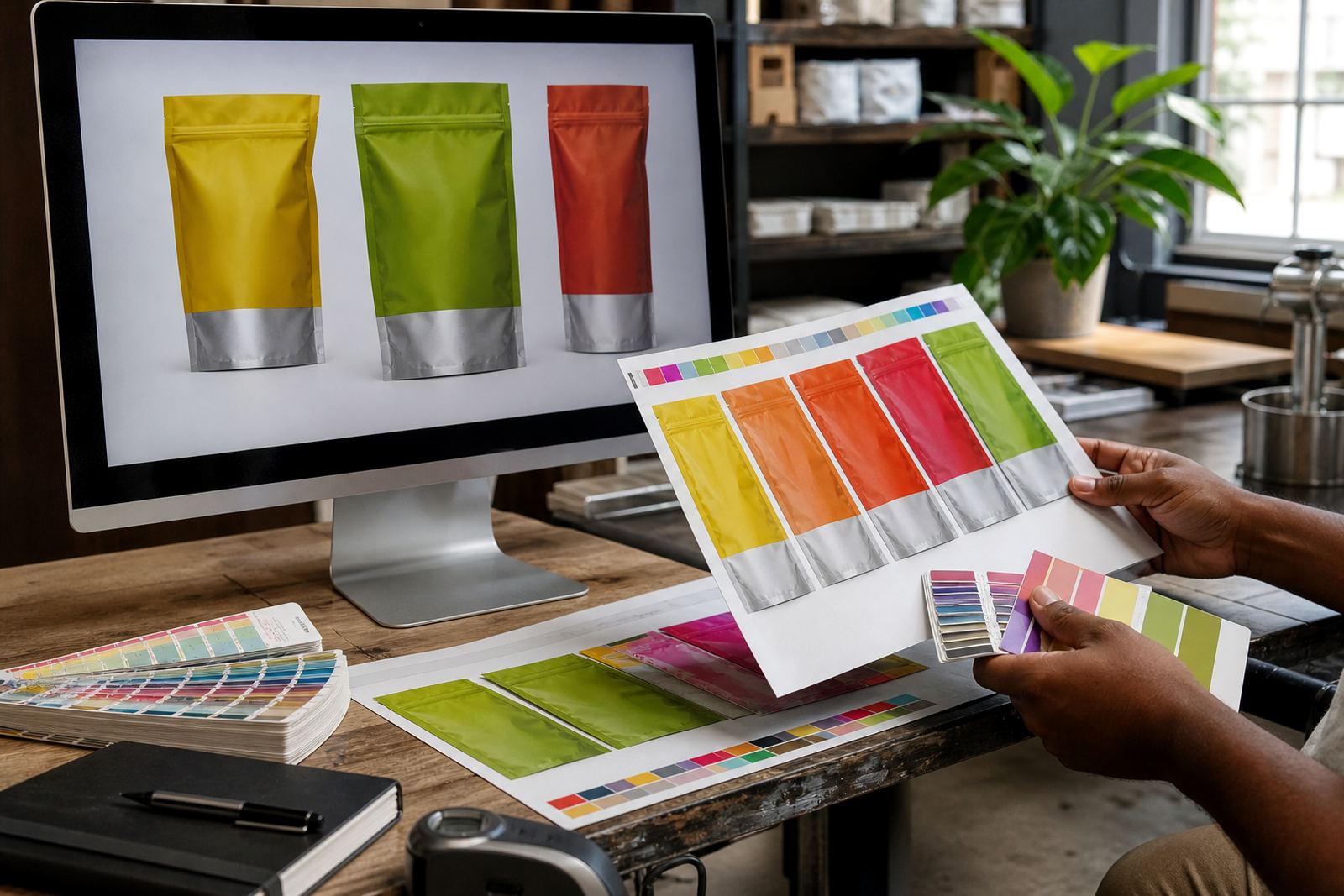
Colour on a proof should be checked against your expected print result, not only against a computer screen. Flexo printing can show slight shifts depending on the substrate, ink build and the type of image or solid block being used. If your brand relies on a specific shade, compare it carefully with your approved reference under good light.
It helps to view the proof in daylight and then under indoor lighting, because packs are seen in both settings. In coastal areas such as Durban or Ballito, humidity can also affect storage conditions, so ask how the material may behave once packed, stacked and delivered. If you are using strong brand colours, check that they are consistent across all pack sizes and across repeat orders as well.
- Compare colours with a printed reference or approved swatch
- Check solids, gradients and fine detail for clarity
- Ask about ink limits on dark or metallic-looking areas
- Confirm that whites, blacks and backgrounds are even
- Review the proof in both natural and indoor light
4. Confirm copy, codes and compliance details
Every proof should be checked line by line for the information that customers and retailers rely on. This includes product description, batch coding space, storage notes, contact details shown on pack and any symbols or instructions required for the product. If a line is meant to be added later, make sure there is a clean space for it and that it has not been lost in the layout.
For brands selling through different channels, it is wise to check whether one pack version needs regional wording or distributor details and whether the same artwork will be used in Johannesburg, Pretoria, Cape Town, Bloemfontein or locally in KwaZulu-Natal. A proof should also reflect any municipal or retailer requirements for recycling marks, disposal notes or packaging identification if these apply to your product.
- Check all copy for spelling, grammar and punctuation
- Confirm date fields, batch space and traceability markings
- Review any required icons, usage notes or disposal wording
- Make sure nothing important is hidden by folds or graphics
- Check that contact details on pack are current and correct
5. Test the proof against your production plan
A good proof is not only about appearance. It must also suit the way the job will run on the press and on the packing line. Check whether the film choice, finish and pack format work for the filling method, sealing method and dispatch plan. If you need short runs, repeat production or several variants, ask that each version be checked on its own merits.
Load-shedding and delivery timing can affect production planning too, so it helps to approve promptly once the proof is right. Delays at this stage can push back packing, dispatch and store launch dates. If you are planning stock for Durban, Johannesburg or Cape Town, build in enough time for proof review, printing and transport. A day saved in approval can make a real difference to the delivery schedule.
- Check that the material suits the filling and sealing process
- Confirm lead times for repeat orders and reorders
- Make sure the proof matches the intended dispatch date
- Ask if any artwork changes may affect machine setup time
- Keep one person responsible for final sign-off
6. Use a final sign-off checklist before approval
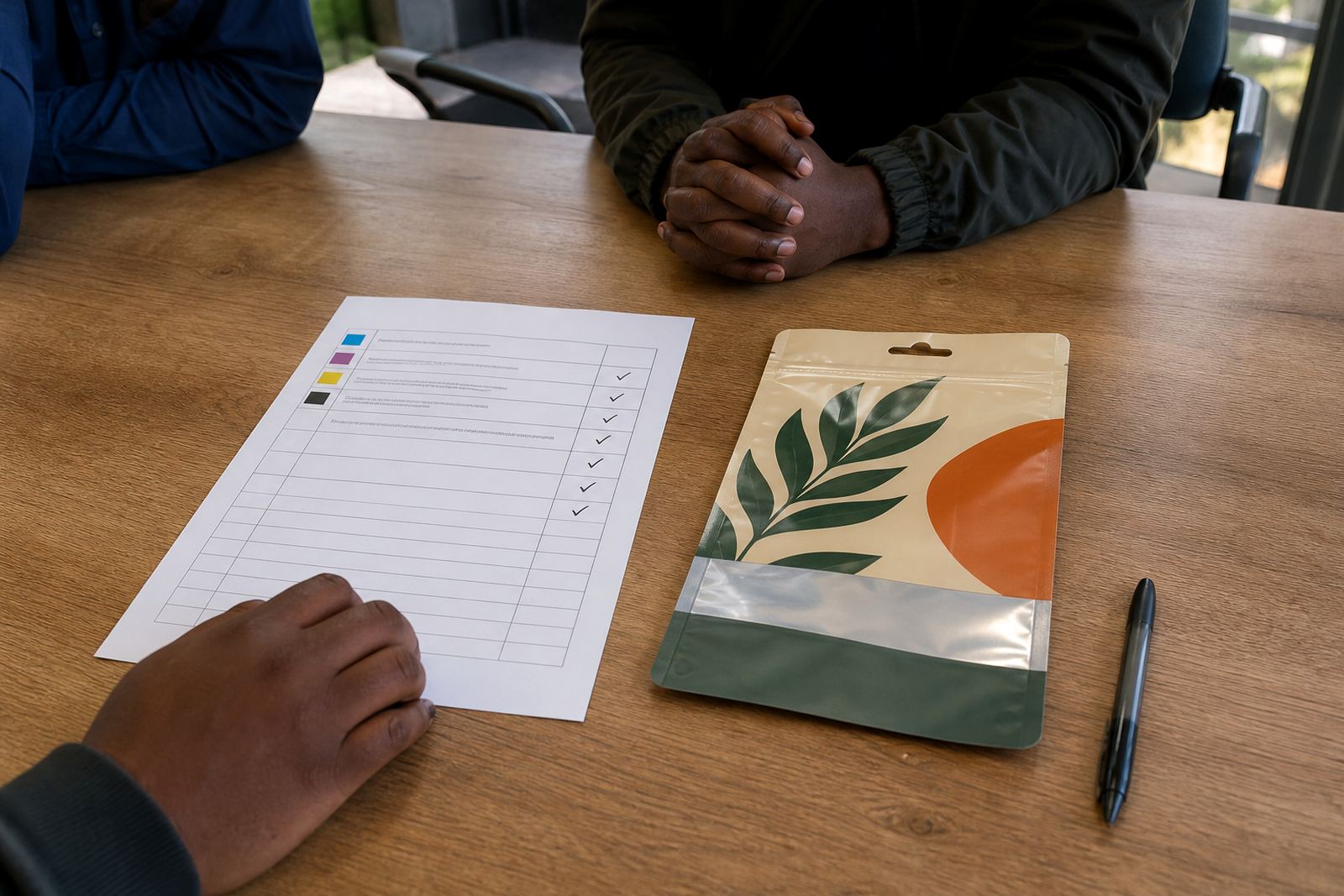
Before you approve, take one last calm pass through the proof and mark off every item. If more than one person needs to sign off, make sure everyone is checking the same version. It is best to resolve open questions before the job starts, rather than after the press is running and material is already committed.
At this stage, ask for any final clarification you need on colours, measurements, repeat length or delivery instructions. Once approved, the proof becomes the reference for production, so treat that sign-off as a final business decision. A careful last check now is much cheaper than fixing a pack that has already gone into cartons.
- Artwork version is correct
- Sizes and panel layout are correct
- Colours match the approved reference
- All copy, codes and dates are correct
- Material, finish and format are confirmed
- Delivery details and quantity are right
- Final sign-off is recorded clearly
If you are unsure about any part of the proof, ask for clarification before approval. A careful review protects your brand and keeps the production run on track.