

1. Start With the Pack Format That Fits the Product
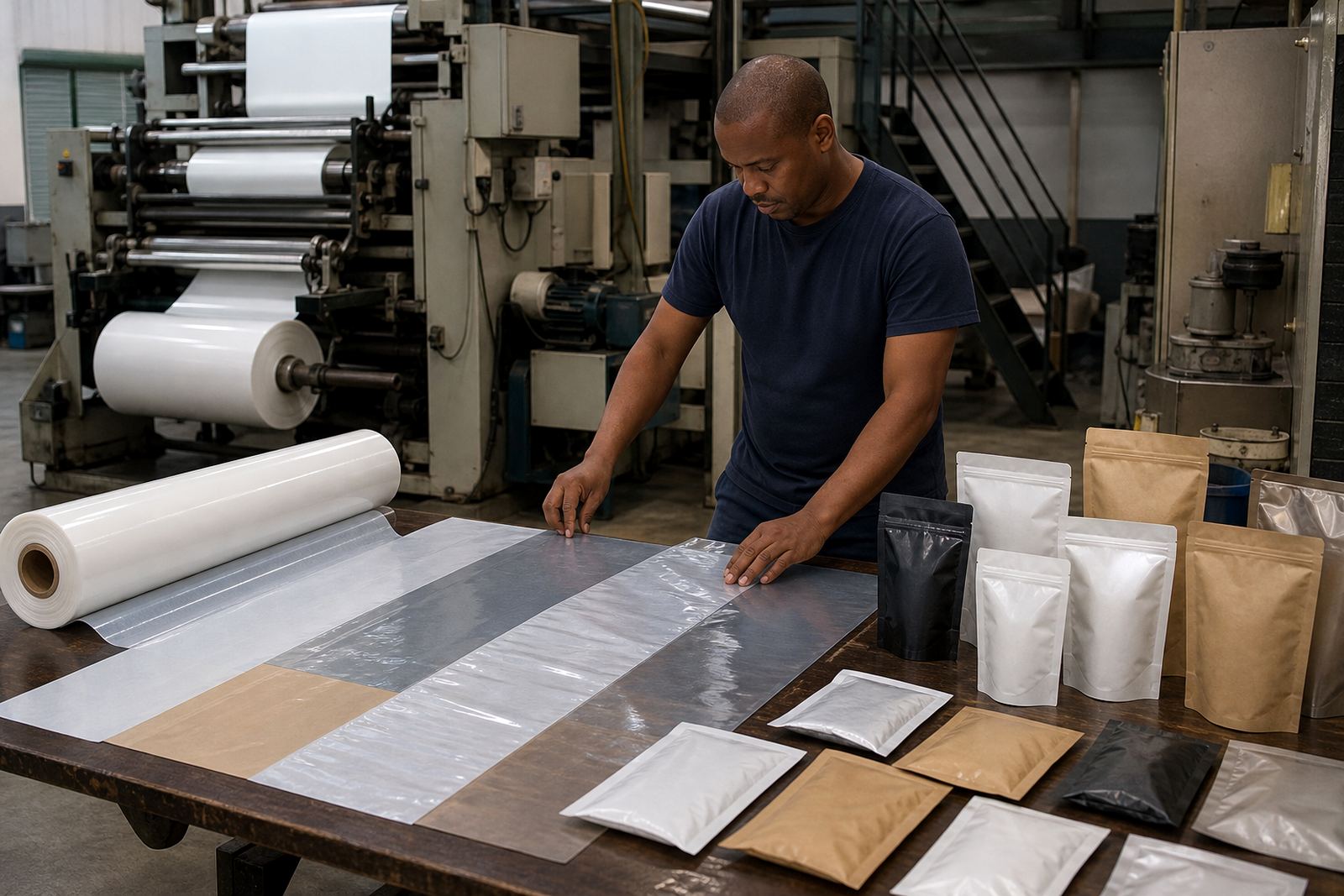
Before artwork starts, decide whether the range needs pouches, sachets or wraps. The product size, fill method, shelf life and retail display all affect the choice, and a format that looks right on paper can still fail in the packing room. A dry ingredient may suit a sachet or wrap, while a heavier or more visible product may need a pouch with more structure.
In Pinetown and across KwaZulu-Natal, many launches are timed around retailer intake dates and transport into Durban, Johannesburg, Pretoria, Cape Town and Bloemfontein. It helps to work backwards from the first delivery date so the pack structure, print run and dispatch plan all line up, especially when power interruptions or machine downtime could slow one part of the process.
- Confirm the product weight or fill volume
- Check how the pack will be sealed and packed into cartons
- Decide whether the range needs a short run or repeat production
- Set the first delivery date before final artwork is approved
2. Build the Artwork Around the Reality of Flexo Printing
Good packaging artwork has to work on press, not only on a screen. Flexo printing uses repeatable plates and set colour builds, so type size, barcodes, fine lines and solid colour areas need to be planned with care. If the range includes several flavours, variants or pack sizes, keep the layout system consistent so each version is easy to identify on the line and on shelf.
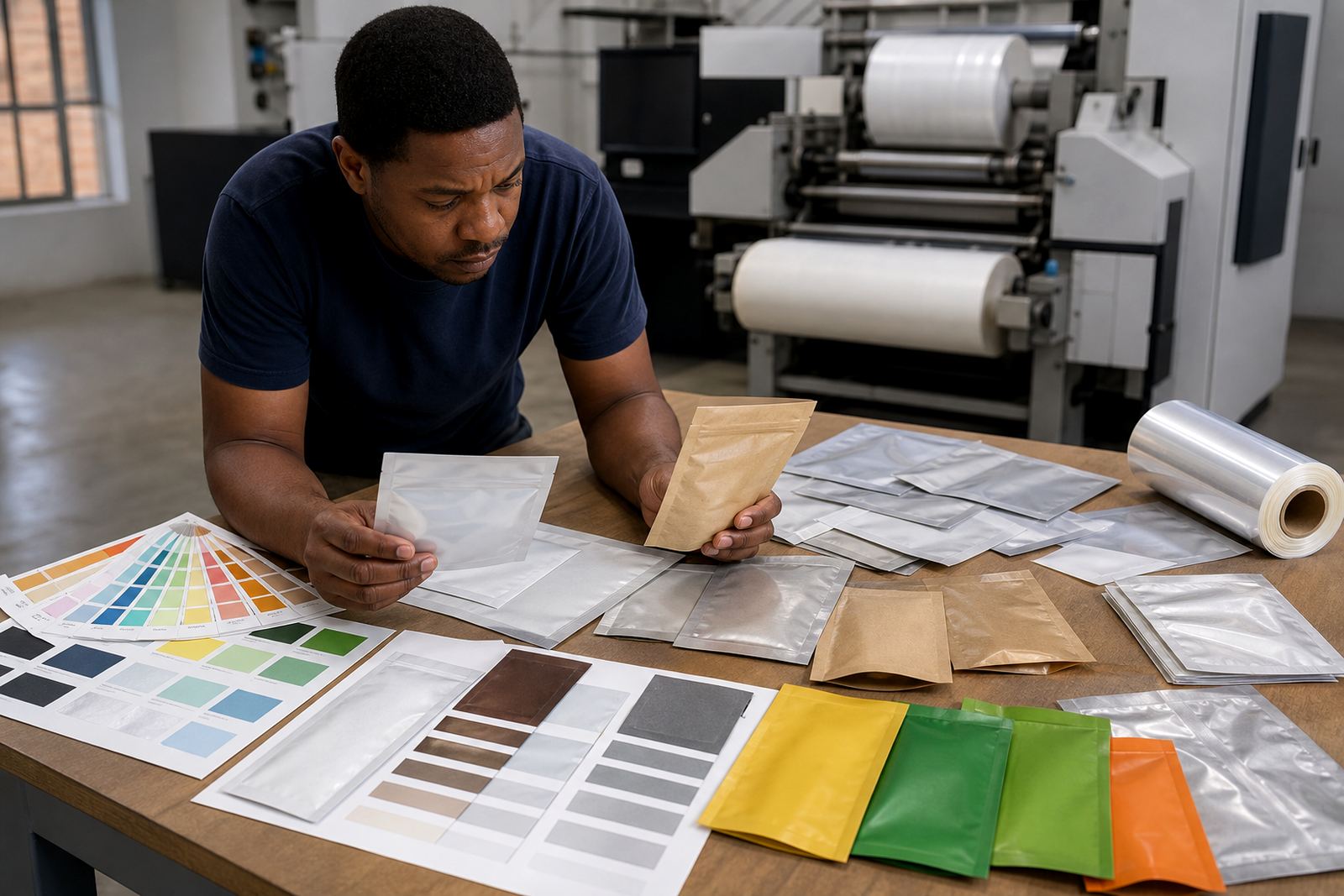
Artwork prep should also account for the material selected for the pack. Some films take ink differently, and colour can shift if a layout is too busy or the contrast is too low. A clean structure usually prints better than trying to fit too much onto one panel, and it reduces rework later on.
- Use a clear hierarchy for product name, variant and weight
- Leave enough space for required codes and batch information
- Keep repeated elements in the same position across the range
- Check colour against the chosen substrate before print approval
3. Match the Material to Storage, Handling and Retail Conditions
Material selection is not only about appearance. A pack that performs well in a cool warehouse may behave differently in a warm store room, on a delivery truck or near the coast where humidity is higher. For launches in Durban, Ballito or Pietermaritzburg, that matters. If the material is too light or too stiff, it can affect sealing, stacking and the way the final pack sits on shelf.
For flexible packaging, the right film needs to support the product, the print and the end use. Some products need better barrier support, others need a lighter wrap, and some work better in a sachet format for sampling or single serve sales. The practical test is simple: will the pack still look and handle properly after transport, handling and storage? If not, the material choice needs another look.
4. Use Proofing to Catch Problems Before the Run
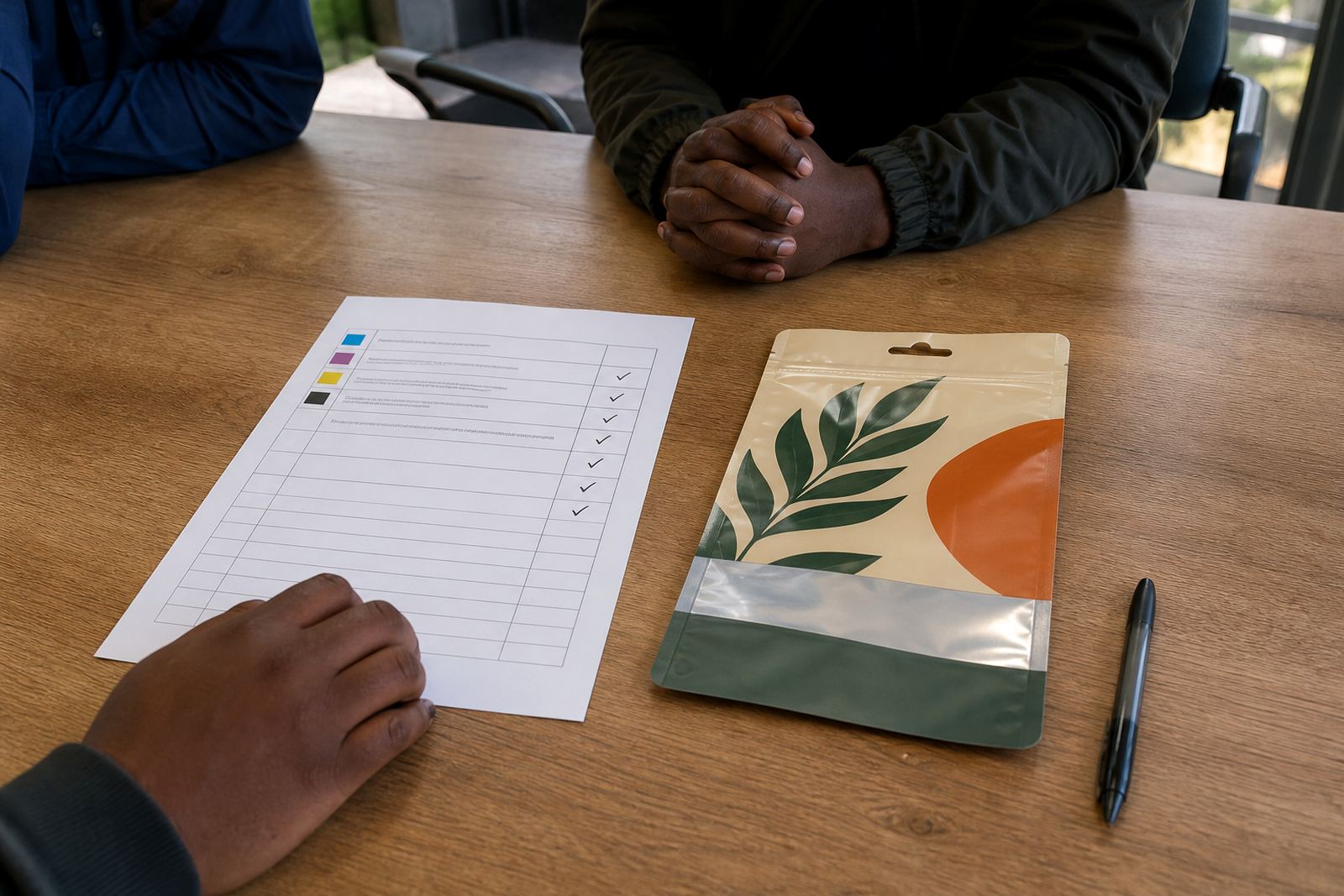
Proofing is where many launch issues can be avoided. It is the stage to check spelling, colour balance, panel order and whether the finished pack still makes sense when folded, sealed or cut. A clean proof saves time later and helps the team avoid unnecessary changes after plates are already made.
At this point, the packaging consultation should include print direction, pack dimensions and any special handling needs. If the range has more than one SKU, make sure each proof is labelled clearly so there is no mix-up between sizes or flavours. One small error here can affect the whole launch, and fixing it after the run has started is rarely simple.
- Check the proof against the final pack size and seal area
- Confirm all variant names, weights and panel positions
- Review barcode placement and scan clarity
- Approve one version before releasing the full set
5. Plan the First Run and the Repeat Run at the Same Time
A new range often begins with a short run, but the packaging plan should already allow for repeat production. This is useful when a product takes off faster than expected or when the same pack needs a second batch a few weeks later. Keeping the original job records, approved artwork and colour notes together makes the next run quicker and more predictable.
Short runs can also help if a buyer wants to test different pack sizes, or if the launch is rolling out to multiple towns in stages. The key is to keep the same print standard across the first and second runs so the range looks consistent in store, on pallets and in customer hands. Small changes in colour or trim can make the packs look mismatched, which is not ideal.
6. Coordinate Dispatch So the Launch Reaches Every Area on Time
Once printing and converting are complete, dispatch coordination becomes part of the launch plan. Packaging needs to leave the site in the right sequence, with clear quantities for Durban, Johannesburg, Pretoria, Cape Town, Bloemfontein and surrounding delivery points. A range launch can stall if the cartons arrive out of order or if one SKU is missing from a pallet load.
Good dispatch planning also helps when municipal traffic, weather or load-shedding affects turnaround time. A practical checklist keeps the handover tidy and reduces the chance of delays at receiving. It is worth confirming carton labels, pallet counts and delivery notes before the truck leaves, because a missing detail can cost a whole day.
- Group cartons by SKU and delivery area
- Confirm pallet counts and quantities before loading
- Match dispatch notes to the approved production list
- Allow extra time for inland and coastal delivery routes
7. Keep the Launch Notes for the Next Production Cycle
After the first release, capture what worked and what needs tightening. Maybe the colour held well, maybe the seal area needs a slight adjustment, or maybe one pack size moved faster than the rest. Those notes matter because they turn a first launch into a repeatable process for future ranges.
For local brands, especially those building a wider product line, a simple record of artwork changes, material choice and production settings can save a lot of time. It also helps the team answer future reprint requests with less back and forth, and makes the next launch run smoother than the first one.