
Start with what the product needs to do
Before looking at pouch shapes, work out how the product behaves. A dry snack, powdered mix, liquid sauce or granular product each places different demands on the pack. Some products need easy pouring, some need a stronger seal, and others need a front panel that stands up well on retail shelves in Durban or Johannesburg.
Think about shelf life, handling, moisture exposure and whether the pack will be opened and closed more than once. If the product is going into warm storerooms, coastal humidity or long-distance transport, the material choice becomes just as important as the size. For many local brands in Pinetown and across KwaZulu-Natal that first decision saves time later.
Match the pouch style to the fill method
The way your product is packed usually narrows the choice quickly. Manual filling works well for smaller production runs and simpler pouch styles, while faster lines often need a format that feeds neatly and seals consistently. If the product is filled by weight or volume, allow extra room for the fill and any settling after packing.
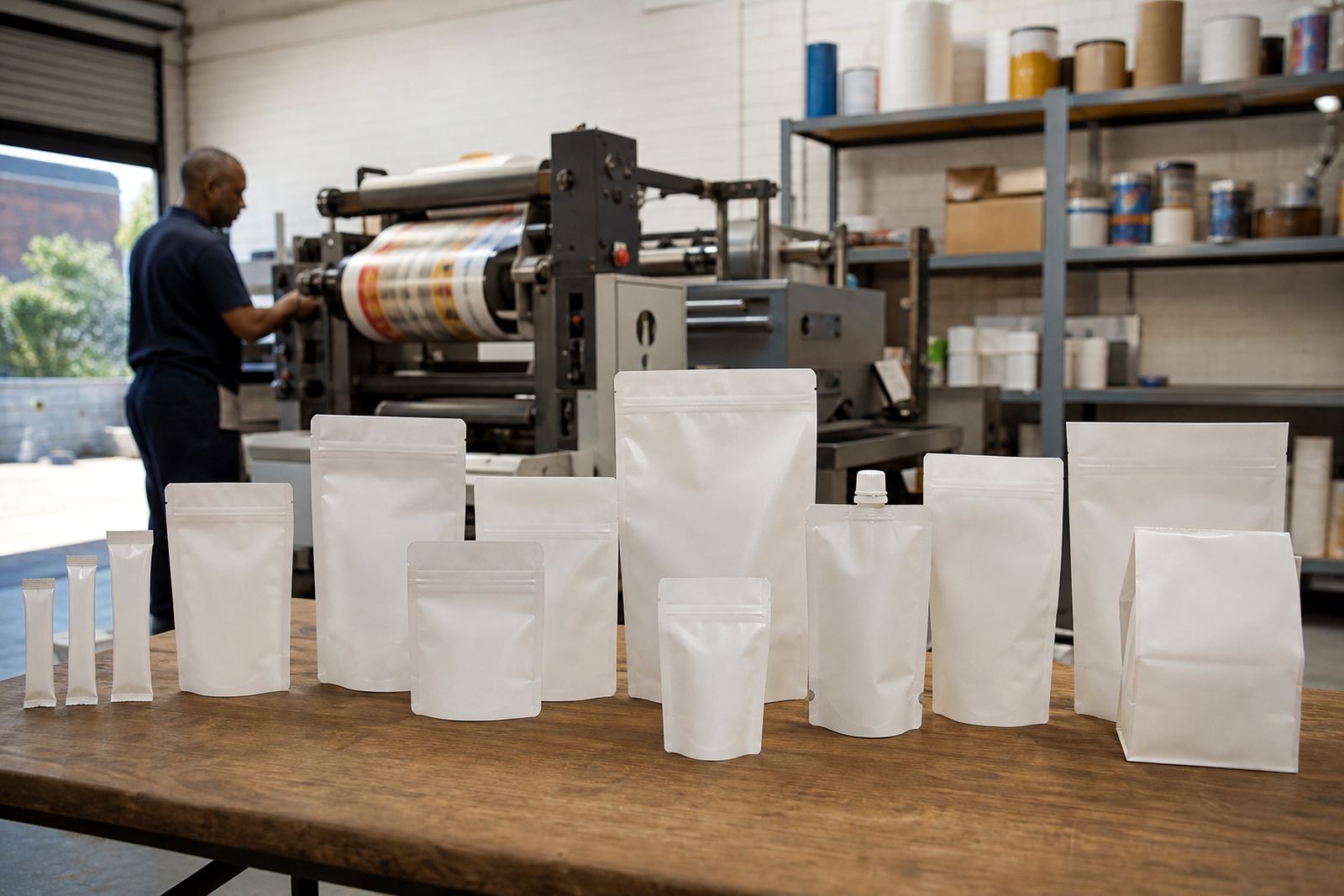
- Use a flat pouch for smaller packs that need a neat face and simple sealing.
- Choose a stand-up pouch when the product must sit upright on shelf.
- Consider a spout style for liquids, sauces or products that are poured in stages.
- Use a sachet when the fill is single use and the pack must be compact.
When the fill method is not fixed yet, it helps to share the product sample early so the pouch spec can be matched to the line instead of forcing the line to fit the pack.
Decide how the pack should look on shelf
Display matters, especially when your product is competing in a busy retail environment. A pouch can carry a full colour print, a clear window or a more restrained look depending on the product and the brand position. The front panel should make the product easy to identify from a distance, while the reverse side should give enough room for practical information and batch details.
For food and household products alike, many buyers want a pouch that stands upright, stacks neatly and keeps a clean face after transport. In stores from Cape Town to Bloemfontein, a good display pack should keep its shape well and not sag once filled. That is where the structure of the pouch matters as much as the print finish.
Select the pouch features that support use
Once the product and display needs are clear, look at the extras that help the pack work better in use. A tear notch makes opening easier. A zipper can help with repeat use. A euro slot can help with hanging display. The right corner shape and seal position also make a difference when packs are boxed, stacked or shipped nationally.
- Tear notch for quick opening without scissors.
- Reseal feature for products used over several servings.
- Rounded corners for a cleaner retail finish and easier handling.
- Suspension slot when the product will be displayed on hooks.
- Bottom gusset or stand-up base for shelf presentation.
These details seem small, but they affect how the pack feels in the hand and how it moves through production, packing and retail handling.
Keep print, colour and artwork practical
Flexo printing works best when the artwork is planned with the pouch structure in mind. Strong contrast, clear type and sensible colour choices help the pack remain readable once it is folded, sealed and filled. If your brand uses repeat orders or several pack sizes, keep the core layout consistent so the range stays recognisable across different formats.
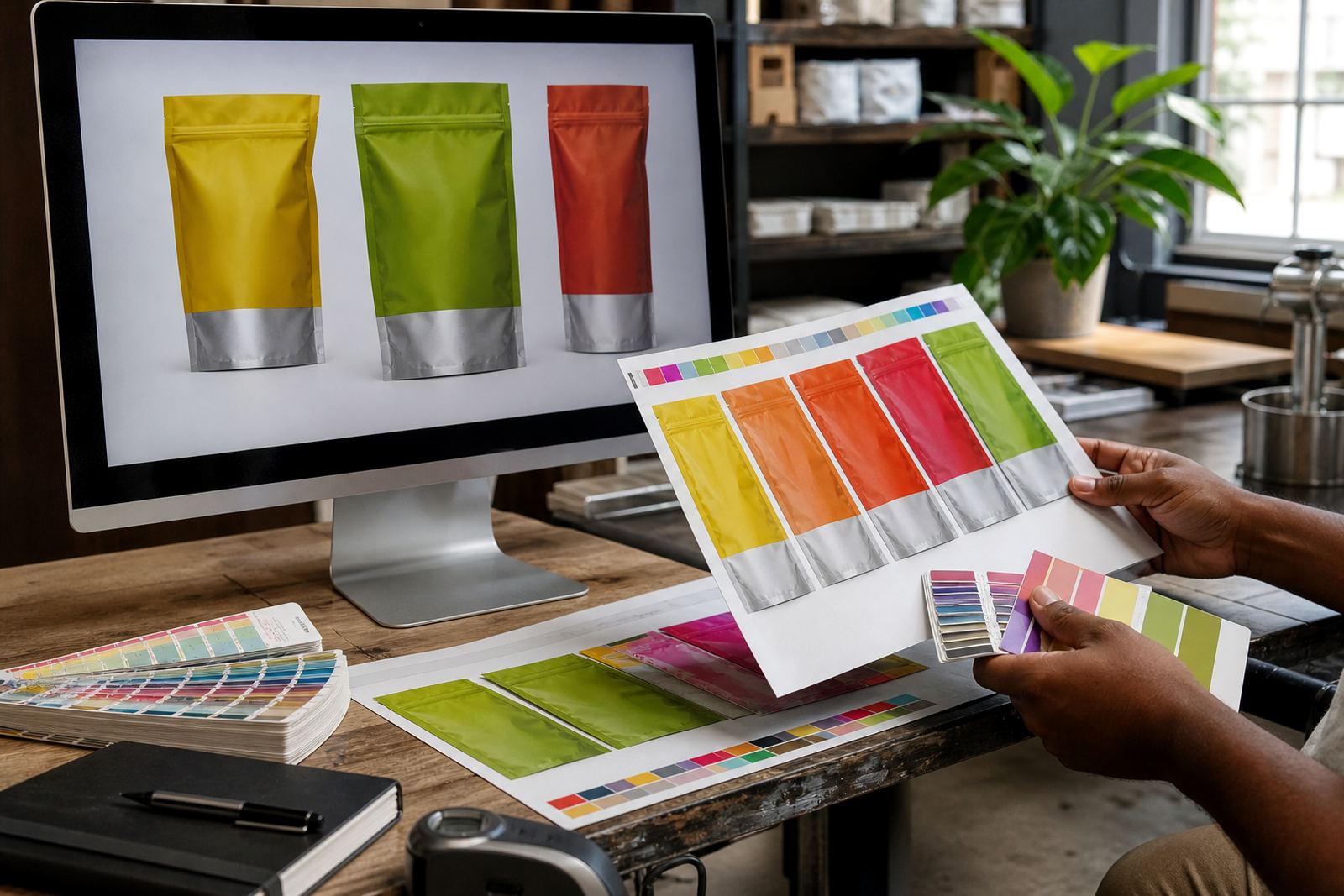
Artwork prep and print proofing are worth doing carefully, because small changes in panel size can affect what fits where. Colour matching should also be checked against the actual material, not only on a screen. A cream background on one substrate can read differently on another, and a small shift can show up more than expected under shop lights.
Use this checklist before you place the order
A simple checklist helps avoid delays and makes sure the pouch suits the product and the filling plan. It also gives the production team the details needed for short runs or repeat production. If you are sending packs to Durban, Pretoria or further afield, final pack dimensions and dispatch timing should be agreed early so the order moves smoothly.
- What is the product and how does it behave?
- How will it be filled, by hand or on a machine?
- Will it stand on shelf or lie flat in transit?
- Do you need a zipper, tear notch or hanging slot?
- How much space is needed for print, batch marks and product details?
- Will the pack travel through heat, humidity or long-distance delivery?
If you are unsure between two pouch styles, start with the product use case and work backwards. That approach usually gives the right result faster and keeps the packing line practical from the first run.