
Start with the product, not the format
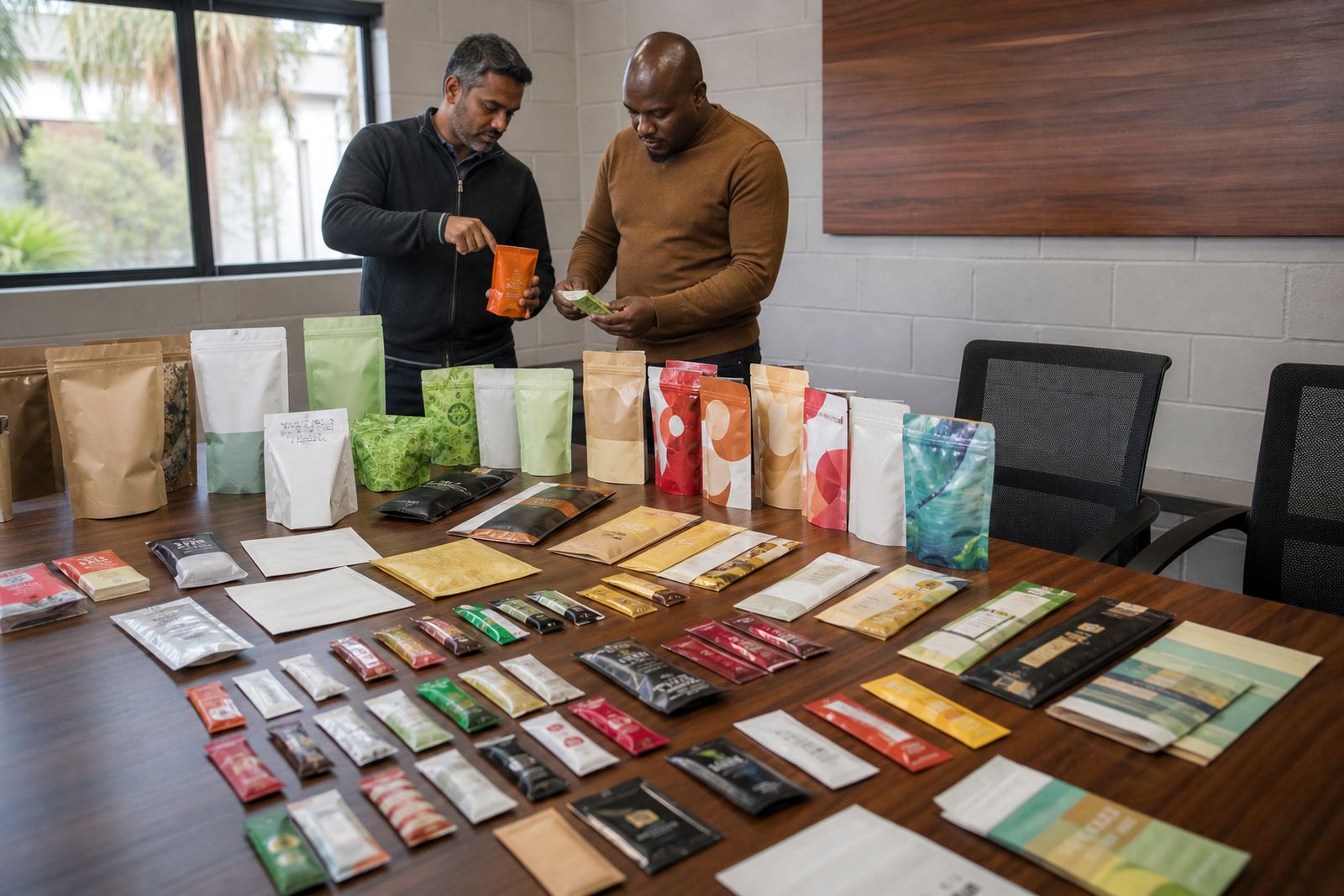
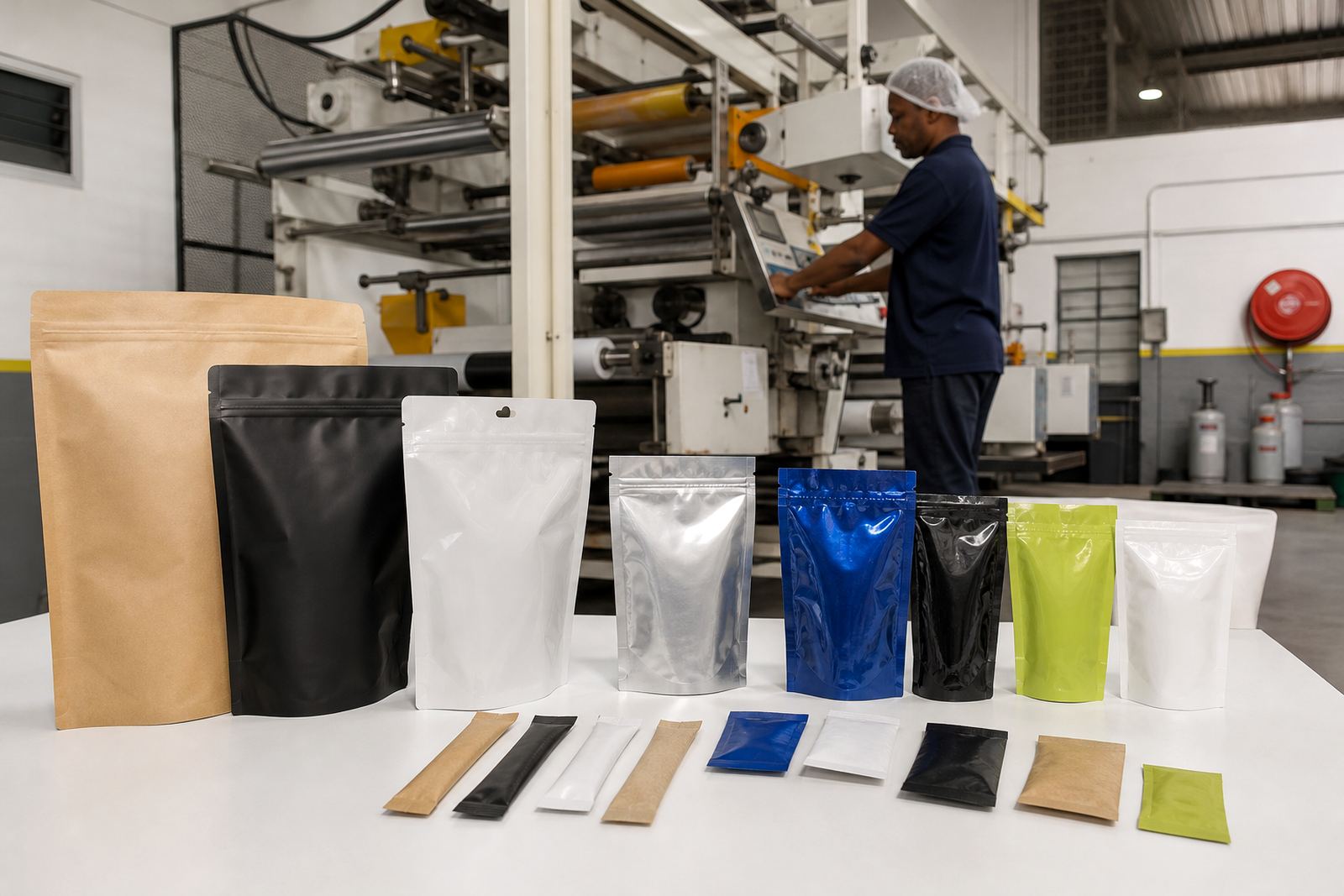
The quickest way to choose between pouches and sachets is to look at what the pack must do on the shelf and in the hand. A pouch is usually the better fit when the product needs more space, a stronger presentation or a resealable style. A sachet suits small, single use or trial quantities where convenience matters more than display size.
In practical terms, a pouch gives you more room for fill, branding and product protection. A sachet is compact and efficient, which makes it useful for creams, powders, sauces, condiments, sample mixes and other portion controlled products. Both formats can be flexo printed, but the print area and structure must match the use case from the start.
For brands in Pinetown, Durban and the wider KwaZulu-Natal market, the choice often comes down to speed, cost and how the pack will be opened by the end user. A good match between format and product keeps waste down and makes dispatch easier, especially when orders are split across Gauteng, the Cape and inland routes.
Where pouches work best for local brands
Pouches are the stronger option when the product needs a fuller pack size, better shelf presence or repeat use. They are common for dry goods, blends, pet products, snacks and other items where the customer may open the pack more than once. In some cases, a pouch with a tear notch or zipper style closure can help with storage after opening.
For local brands selling through retail stores, farm shops or direct delivery, a pouch gives more room for brand detail and instructions. That extra space is useful when you need to show ingredients, usage directions, batch coding areas or handling notes. It also helps when the product is sold in multiple sizes, because the same layout can often be adapted for a range of fills.
- Better for medium to larger fill weights
- Useful when shelf display matters
- Allows more space for artwork and product information
- Can support reclose features where needed
- Often chosen for products that move through retail and wholesale channels
In humid coastal conditions around Durban and Ballito, the material choice also matters. A pouch format can be planned with the right laminate or film structure for the product and the route it travels, whether it is going to a store in Pietermaritzburg or a warehouse in Johannesburg.
Why sachets suit portion control and sampling
Sachets are small, efficient packs designed for one use or a controlled portion. They are widely used where convenience matters more than shelf size. That can include sample packs, condiment portions, powder mixes, liquid portions and trial sizes for promotion or introduction into the market.
Because sachets use less material than larger packs, they are often selected when the product needs to be light, easy to transport and simple to hand out. They suit bulk distribution too, especially where a brand wants to reach many customers without carrying the cost of a full pouch. For events, trade counters and promotional packs, sachets can be practical and cost aware.
- Good for single serve or sample applications
- Easy to include in promotional packs
- Lightweight for distribution across South Africa
- Suitable for controlled portions and trial use
- Helpful when storage space is limited
Sachets do require careful planning because small packs leave less room for artwork, handling notes and legal copy. If the product needs clear preparation steps or dosage guidance, the layout must be tight but still readable. That is where artwork prep and print proofing become important before production starts.
Print quality and colour on flexible packaging
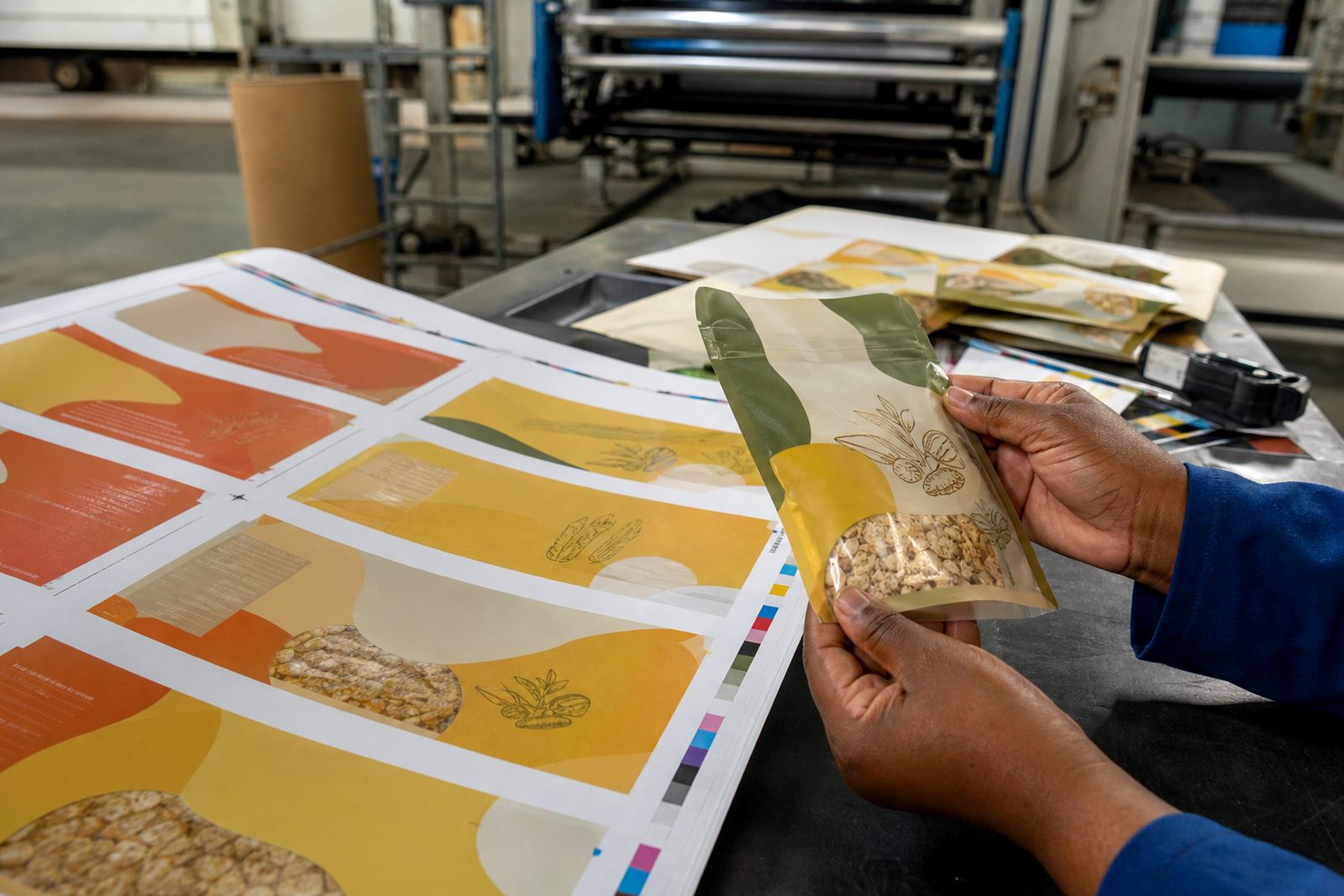
Whether you choose a pouch or a sachet, flexo printing has to work hard on small and large packs alike. Colour matching, material selection and proofing all affect how the final pack looks in store or when delivered to a customer. A good print result should stay consistent across repeat production runs so the same product looks familiar every time.
Pouches often give a wider canvas for brand colours, logos and product images, while sachets need a more disciplined layout. In both cases, the artwork must be set up correctly for the format, seals and cut lines. If the design is rushed, text can land too close to a seal or image panels may not line up as intended.
Load-shedding, storage conditions and transport can also affect production planning. A supplier working from Pinetown needs to keep dispatch timing in mind, particularly for urgent deliveries to Durban, Pretoria or Cape Town. That is why short run orders, repeat production and dispatch coordination matter just as much as the print itself.
Choosing between a pouch and a sachet in practice
A useful rule is simple. If the customer needs more product, more shelf presence or repeated opening, start with a pouch. If the customer needs a small portion, sample or single use pack, start with a sachet. The right answer depends on how the product is sold, how it is used and how it moves through your supply chain.
For example, a spice blend sold through a retailer in Bloemfontein may need a pouch for the main product pack, while the same brand could use sachets for sampling at market stalls or trade promotions. That gives the brand both visibility and reach without forcing one format to do every job.
It also helps to think about filling and sealing. A pouch may need different handling from a sachet line, and the material must suit the product weight and closure type. If you are planning repeat orders, it is worth keeping the same core layout so artwork changes are limited and production stays efficient.
How Flexography Printing Co supports format selection
Based in Pinetown, KwaZulu-Natal, we work with local brands that need practical flexible packaging advice, not guesswork. Our team handles flexo printing, pouch converting, sachet production and wrap printing, along with artwork prep, colour matching, material selection, print proofing and packaging consultation. We also coordinate short runs, repeat production and dispatch so orders can move across South Africa with less friction.
For clients comparing pouches and sachets, the starting point is usually the product size, target market and route to delivery. From there, we look at how the pack will be filled, stored and opened. Our team includes Siyabonga Ndlovu, Priya Naicker, Marius van Wyk, Thandiwe Mkhize, Jason Petersen and Lerato Molefe, each focused on a part of the process that affects the final pack.
Clients reach us through the enquiry form on our contact page, which keeps the process simple for businesses in Durban, Johannesburg, Pretoria, Cape Town, Bloemfontein, Pietermaritzburg and Ballito. If you need packaging for a local launch or repeat supply, the right format choice at the start can save time later and avoid costly changes once production is underway.
In packaging, size is not the only question. The real question is what the pack must do for the product and the customer.