
When a hanging pouch beats a shelf-standing pack
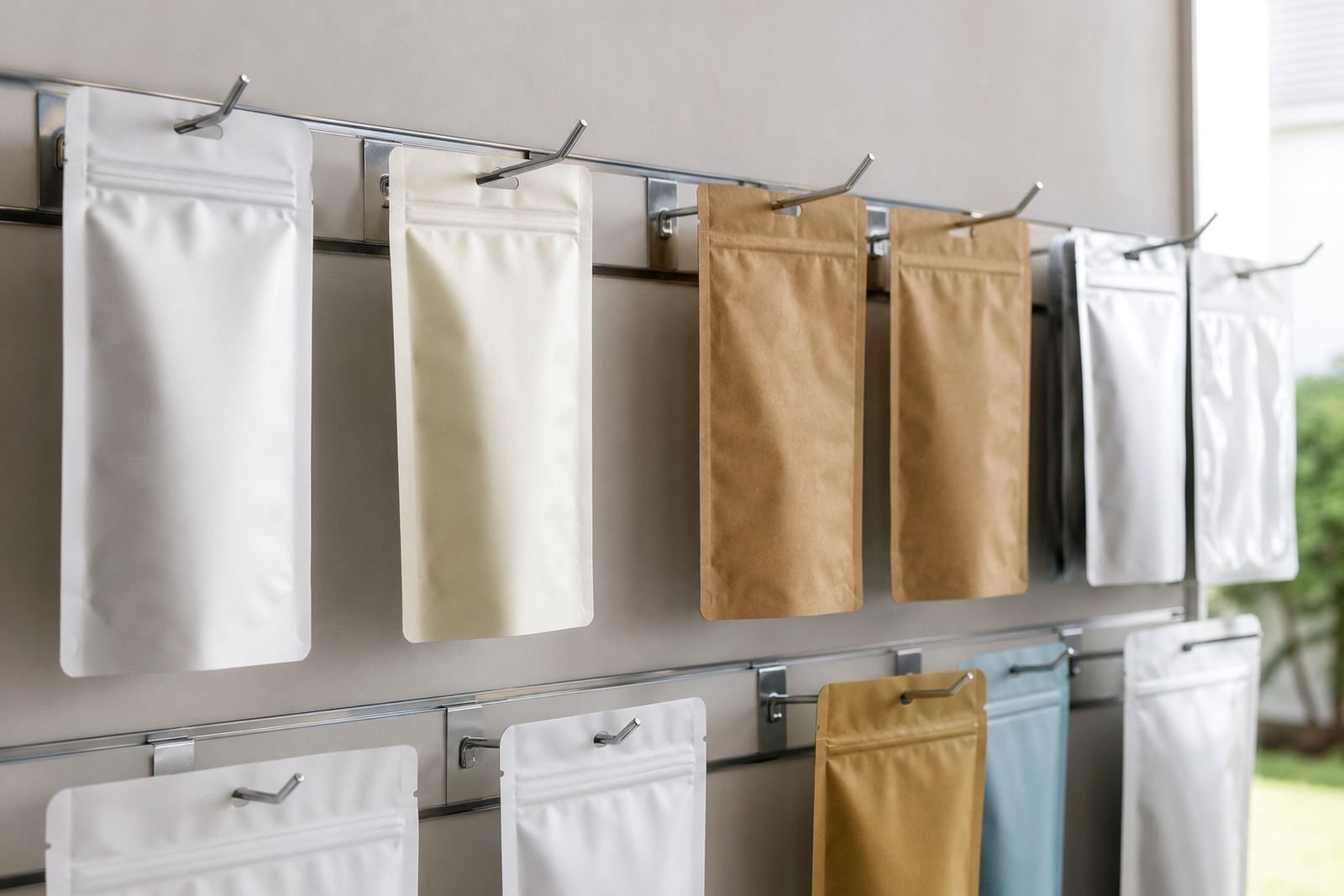
Not every product belongs on a shelf base. In small supermarkets, pharmacies, hardware counters and forecourt shops, hanging pouches can free up valuable shelf space while keeping the item at eye level. A euro slot or similar hanging format makes sense when the product is light enough to suspend, the pack needs strong visibility and the retailer wants to use hooks or display rails rather than flat shelving.
For local brands in South Africa, this often comes down to shop layout. A compact retail aisle in Pinetown or Durban may already be tight with chilled items, specials and seasonal stock. Hanging packs help when the product needs to face the customer clearly, without taking up a full shelf bay.
What display hanging pouches are used for
These pouches are commonly used for dry goods, accessories, refill products, promotional packs and smaller portions that must stay neat in store. The format can suit a wide range of items, from sample sizes to light retail units. If the product is not meant to sit upright on its own, a hanging pouch gives the retailer a simple way to present it neatly.
- Spice mixes, seasoning sachets and small food items
- Sample packs and trial sizes for new launches
- Accessories, consumables and light hardware items
- Promotional bundles for seasonal campaigns
- Short-run packs for test markets or new stock lines
Because the pouch is suspended, the front face stays visible. That gives more room for branding, product details and pricing. It also makes front-of-store promotions easier to manage when space is limited.
Why euro slots matter on the shop floor
The euro slot is a practical detail, but it changes how a pack performs in store. A clean slot at the top of the pouch lets staff hang the product quickly and keeps the presentation consistent across a range of hooks. In busy retail environments, that matters. Packs are easier to face up, easier to count and easier to move when stock needs to be topped up.
A good hanging pouch also has to cope with daily handling. Shops in coastal areas like Durban and Ballito deal with humidity, while inland routes to Johannesburg and Pretoria can mean longer transit times and warmer storage conditions. The material choice, seal strength and pouch structure all need to match the product and the journey.
How flexo printing helps the pack work harder
Flexo printing is well suited to repeat packaging runs and practical retail packaging work. It allows brands to print clear panels, consistent colour and the type of product information retailers need to see at a glance. For hanging pouches, the printed design has to do more than look attractive. It needs to communicate the flavour, variant, size and any handling notes without crowding the front panel.
Artwork also needs to allow for the slot position, seals and the area around the hook hole. That is where careful prepress work helps. If the layout is not set correctly, critical details can sit too close to the top edge or the seal area and the finished pack will feel cramped.
- Front-of-pack branding that stays clear from the hook area
- Colour matching for repeat production across batches
- Artwork prep that allows for seals, trims and slot placement
- Proofing to check copy, colour and positioning before print
Choosing the right material and finish for retail use
The right pouch structure depends on the product, the route to market and the store conditions. Some products need a lighter pack for value lines, while others need a stronger structure for longer shelf life or frequent handling. The film choice also affects how the pouch hangs. If the material is too soft the pack can wrinkle, while a poorly chosen finish may show scuff marks after transport.
For brands selling across South Africa, this becomes a practical decision. A pack delivered to Cape Town, Bloemfontein or Pietermaritzburg may travel through different temperatures and storage conditions before it reaches the shelf. Material selection should support the product through that journey, not just look good on approval.
- Check product weight before deciding on the hang format
- Allow enough top space for the euro slot and seal area
- Choose a finish that suits handling and display light
- Match the pack to the store fixture, hook depth and retail height
A local example from Pinetown to the national shelf
A small brand based in Pinetown may need a hanging pouch for a promotion going into Durban supermarkets, Johannesburg speciality stores and selected forecourt outlets. In that case, the pack has to be simple to hang, easy to price and strong enough for courier delivery. The same artwork might need to work across multiple towns, with dispatch handled in a way that keeps the cartons tidy and the packs flat.
That is where short-run orders and repeat production both have a place. A launch pack can start with a smaller quantity for testing, then move into regular production once the retailer confirms the format works. It saves waste and gives the brand a clearer read on what customers pick up first.
What to check before approving a hanging pouch run
Before a run goes to print, the pack should be checked for function as well as appearance. Retailers are often more practical than brand owners expect, and a pack that looks good in the office can fail on the hook if the slot is too close to the seal or the pouch is too heavy for the fixture.
Useful checks include how the pouch opens, whether the top hangs level, whether the design can be read at arm’s length and whether the barcode or price label fits the retail workflow. A proper proof helps avoid unpleasant surprises, especially when a brand is shipping to multiple regions at once.
- Confirm the hanging hole position and pack balance
- Check seal zones and trim allowances
- Review colours under retail lighting, not just under office light
- Make sure the copy is readable from a normal browsing distance
Done well, display hanging pouches give local brands a tidy retail presence without taking up unnecessary shelf space. They are practical, easy to merchandise and well suited to stores where every centimetre counts.