
Why smaller packs suit everyday buying habits
In South Africa, a lot of buying happens on the move. A shopper may be stopping in Pinetown on the way home, loading groceries in Durban after work, or sending stock to a reseller in Johannesburg who needs units that are easy to pack, carry and display. Compact flexible packs fit that reality. They take up less room in a trolley, in a delivery crate and on a shelf, which makes them practical for products that move quickly through shops, salons and spaza-style trade channels.
Smaller pouches, sachets and wraps also make it easier for brands to offer an entry point. Instead of asking a customer to commit to a large pack straight away, you can place a trial size in front of them. That lowers hesitation and gives the product a fair chance. For local brands, especially those still building awareness, this can be a useful way to get product into more hands without changing the core formula or message.
There is also a storage advantage. Compact packs are easier to stack in a storeroom, load into a delivery vehicle and keep tidy on the shop floor. That matters when space is tight and stock must turn quickly. In humid coastal areas like KwaZulu-Natal, keeping packaging neat and protected from handling damage is practical, not just neatness for its own sake.
How pouches, sachets and wraps each serve a different purpose
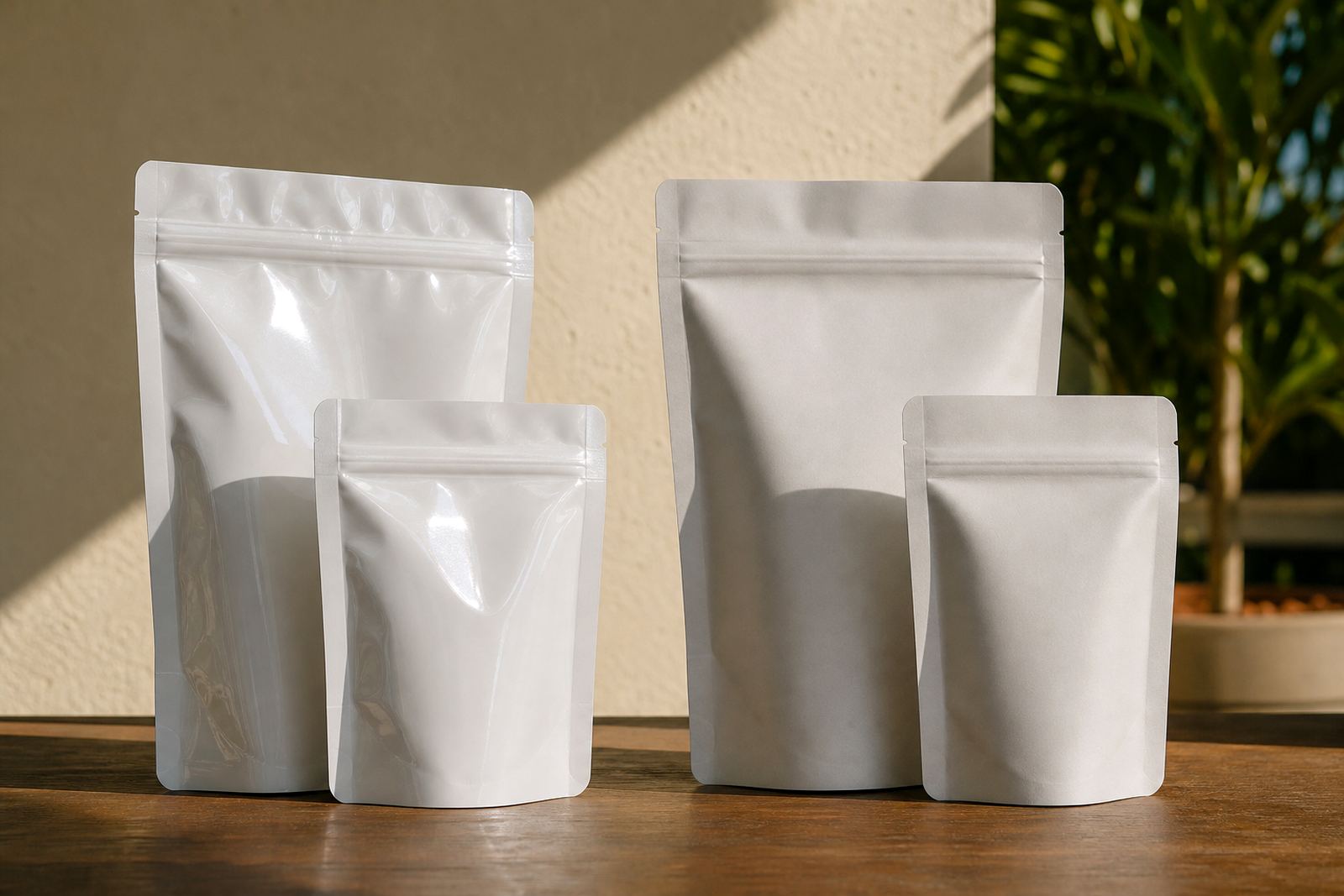
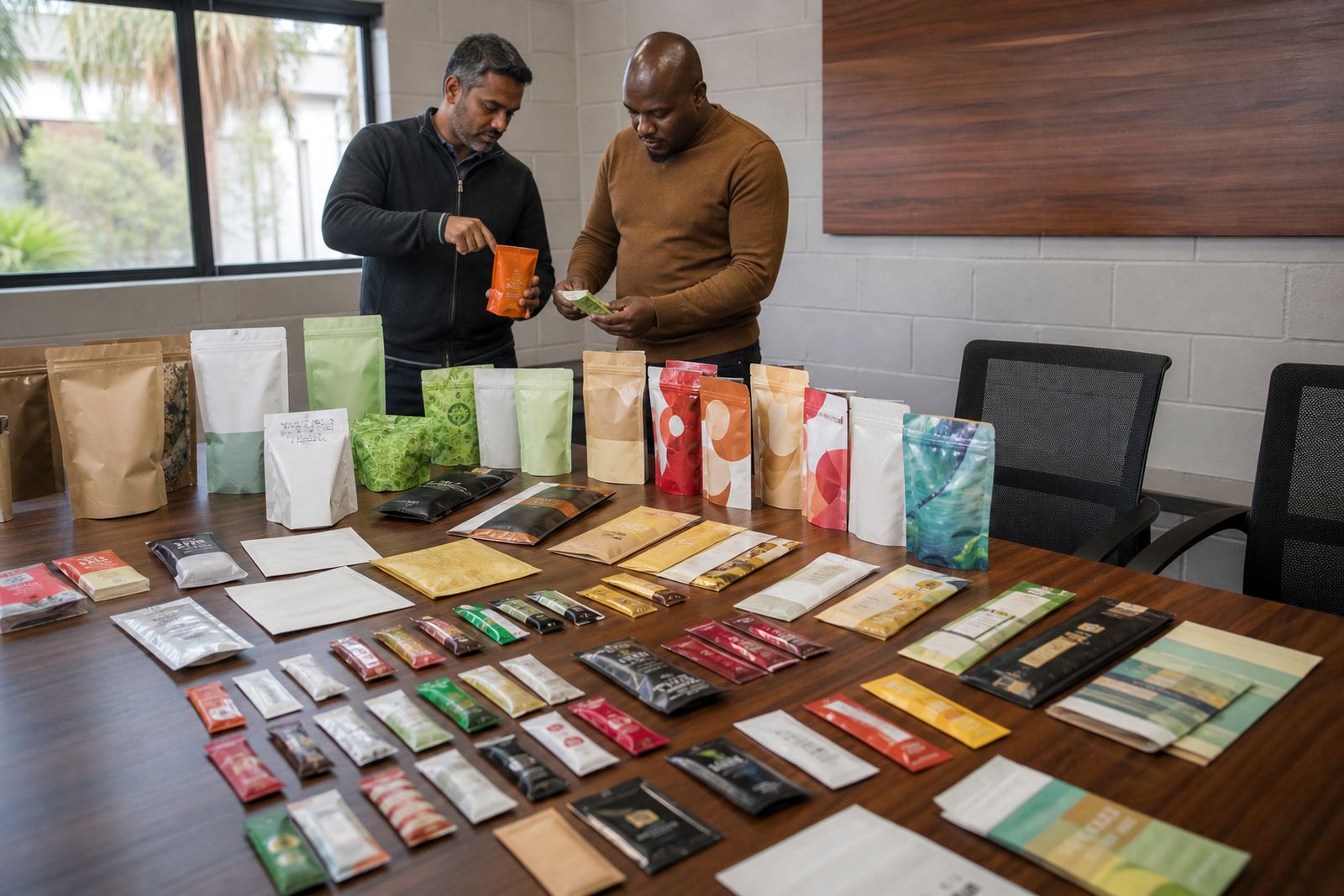
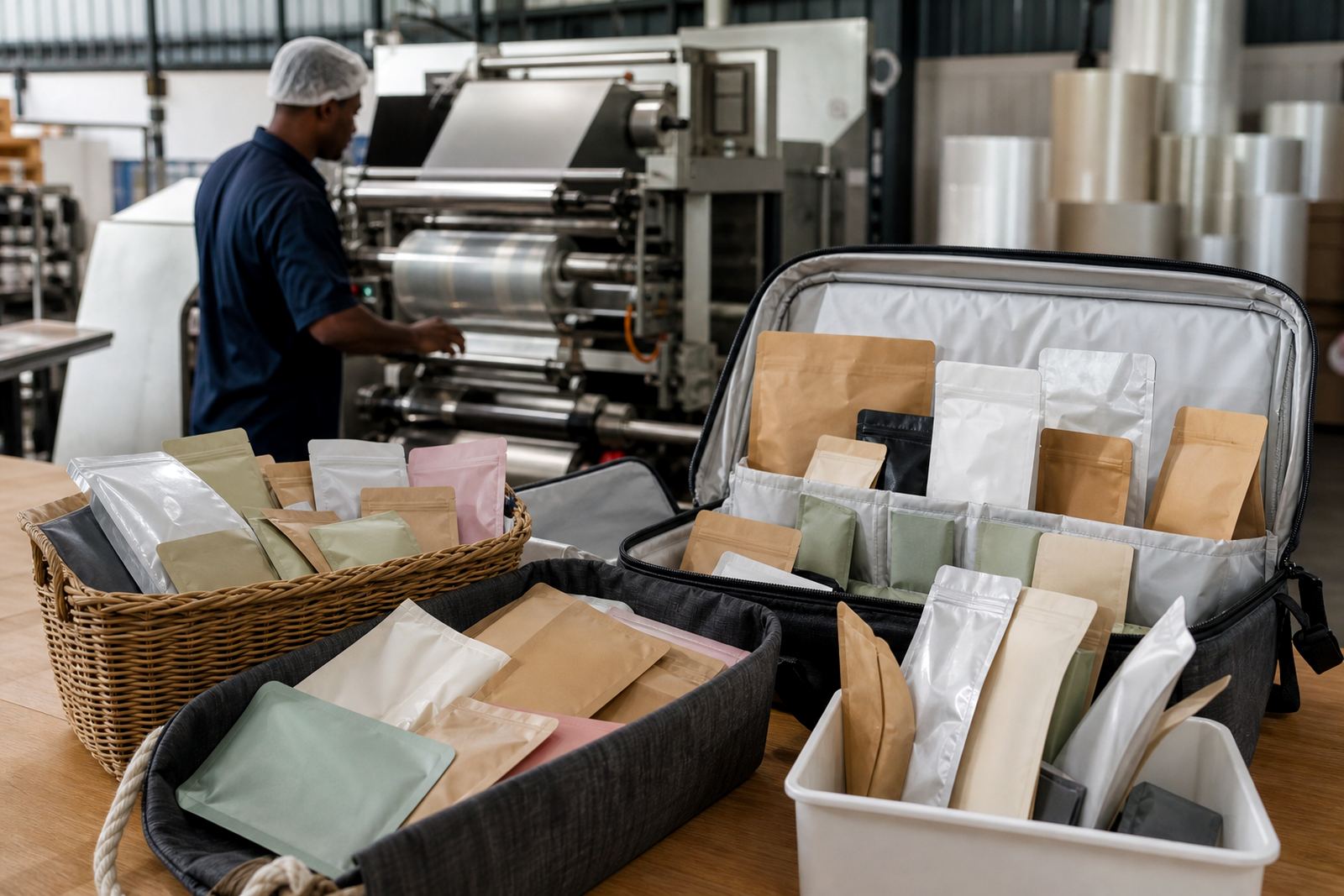
Not every product needs the same format. A pouch works well when the pack needs to stand neatly, hold more product or present a premium feel. Sachets are useful for samples, single-use servings and small portions. Wraps suit products that need a flat, efficient format with clear branding and straightforward handling. Flexo printing allows these formats to be produced with consistent artwork and repeatable results, which helps when a brand wants the same look across multiple pack sizes.
Choosing the right format starts with how the product will be used. A granulated item, powdered mix or dry snack may suit a sachet or wrap depending on dose and shelf presentation. A liquid, paste or free-flowing item may need a pouch with a fit-for-purpose closure or seal structure. The pack has to work in real use, not only on paper. That is where practical packaging advice is useful, because the wrong format can create wastage, spills or unhappy customers.
- Pouches are useful for retail packs, refill packs and products that need better shelf presence.
- Sachets are well suited to samples, testers and controlled portions.
- Wraps are efficient for flat pack presentation and easy distribution.
- Shorter formats can help when launch budgets are tight and volumes are still being tested.
Trial packs can support faster customer uptake
When a product is new, smaller packs can reduce the barrier to first purchase. Many customers want to see whether the taste, texture, smell or performance suits them before buying a larger size. A compact pack gives them that option without forcing a big spend. For local brands in competitive categories, trial size is often a practical sales tool rather than a loss leader.
It is also easier to place trial packs in more channels. Pharmacies, salons, convenience stores, markets and event stalls often prefer packs that are simple to hand out, ring up and carry away. In Bloemfontein or Pretoria, where buyers may be comparing several products in one visit, a compact format can be the one that gets picked up first. The pack does part of the selling by making the offer feel manageable.
Smaller packs can also support promotion. A brand might use a sachet for a sampling campaign, then move successful items into a pouch or wrap once repeat demand is visible. That keeps packaging aligned to the stage of the product. It is a practical way to learn what the market wants before committing to larger volumes.
Convenience matters in transport, storage and display
Convenience is not a soft benefit. It affects handling costs, shelf life, breakage and customer experience. When packs are smaller, they are easier to load into cartons, sort for dispatch and store in back rooms with limited floor space. This is useful for distributors delivering from Pinetown across South Africa, because every extra centimetre in pack size adds pressure to transport planning and warehouse space.
Compact packaging also reduces mess on the shelf. A neat sachet strip or a well-made pouch can sit cleanly in a display tray, while wraps can be packed tightly without wasting space. For retailers, that means fewer damaged packs and less time spent tidying stock. For brands, it means the product stays looking presentable from dispatch through to sale. In warm coastal conditions, well chosen material selection and print preparation can help packs hold up better through handling and changing temperatures.
- Less storage space is needed at the factory, in transit and in retail back rooms.
- Smaller packs are simpler to count, bundle and dispatch.
- Customers often find them easier to carry in hand or in a shopping bag.
- Compact formats can reduce damage from squeezing and rough handling.
Print quality still has to do the hard work
A compact pack only works if the print remains clear and the information is easy to read. On smaller formats there is less room for artwork, ingredient text, use instructions and legal details, so layout has to be planned carefully. That is where artwork prep, print proofing and colour matching matter. A label that looks fine on screen can become unreadable once reduced to sachet size, so the artwork must be checked before production starts.
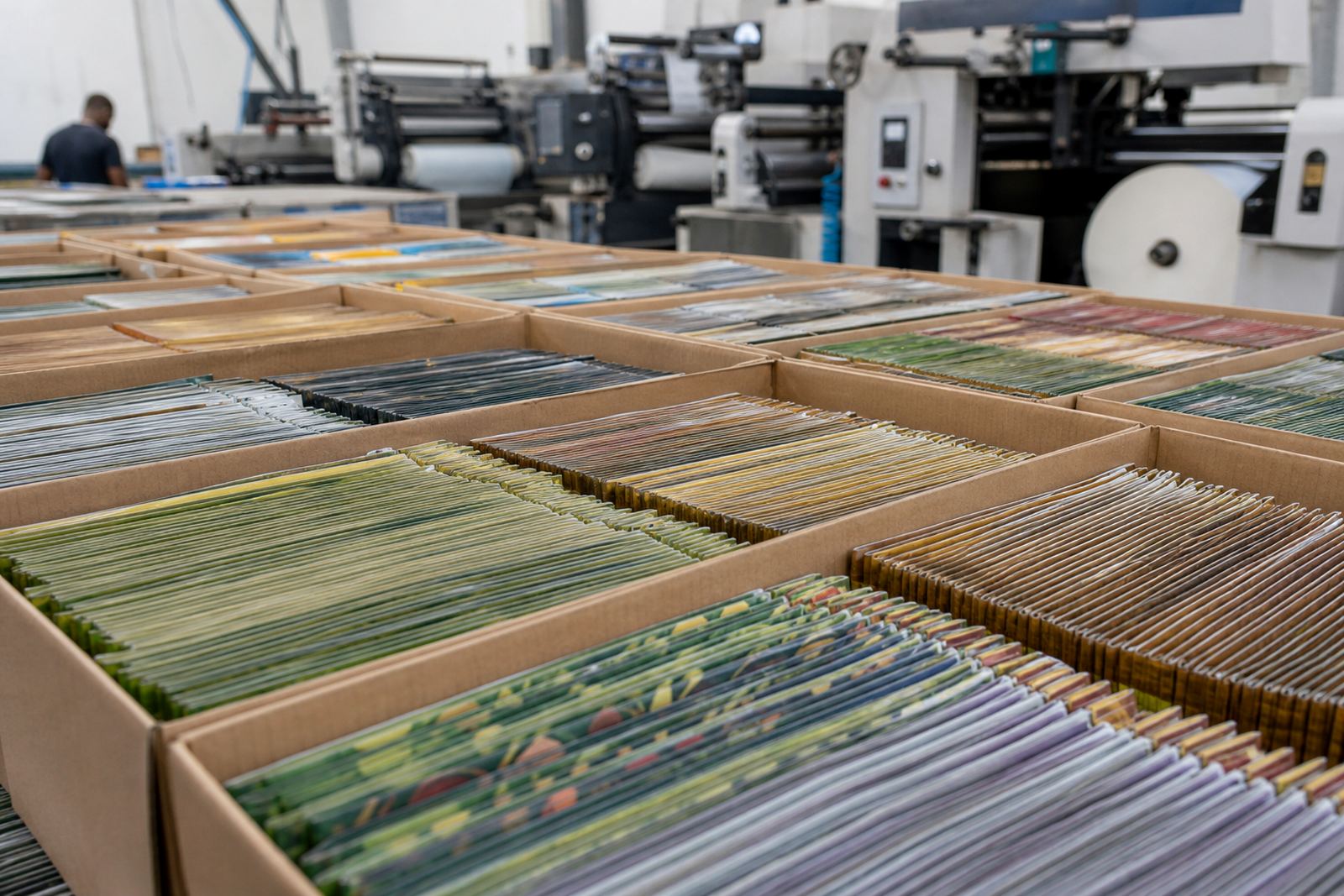
Flexo printing is well suited to repeat production when a brand wants a steady look across several pack formats. A good proof helps prevent issues with shade variation, cut position and text legibility. It also gives the team a chance to check whether the design suits the material and the final pack shape. Simple changes early in the process can save a lot of wasted stock later, especially when orders need to move quickly.
For local brands, print consistency is part of the product promise. A customer who buys a trial pack in Cape Town and then a repeat pack in Johannesburg should see the same colour, same branding and same practical information. That consistency builds trust over time, even if the pack itself is small.
A Pinetown example of small packs doing bigger work
Think of a KwaZulu-Natal brand launching a new dry mix aimed at cafés and home users. The business does not want to start with only one large format. Instead, it tests a sachet for single serves, a small pouch for retail and a wrap for promotional bundles. The sachet gets the product into more hands, the pouch gives a better shelf look, and the wrap supports bulk distribution to resellers. Each format serves a different buying moment.
That approach suits the pace of local trade. Orders can be adjusted as feedback comes in, and repeat production can follow once the preferred size becomes clear. With dispatch coordination in place, the packs can move from Pinetown to Durban, Pietermaritzburg, Ballito, Johannesburg, Pretoria, Cape Town and Bloemfontein without changing the core packaging plan every time. It keeps the process practical and easier to manage.
Smaller flexible packs are not only about looking compact. They help brands make products easier to try, easier to carry and easier to stock. For many South African businesses, that is what turns a good product into one that people actually buy again.