
A Verulam brief built around speed and shelf consistency
The client was a confectionery producer in Verulam, KwaZulu-Natal, supplying sweet products for local retail and wholesale channels. Their packaging brief was clear: they needed flow wraps for single units and multipacks that looked consistent from carton to carton, packed well on the line and held up through handling in warm, humid conditions around Durban and the north coast.
The work had to suit a busy production rhythm. They were not looking for fancy changes every week, only a dependable format that could run regularly, with artwork that stayed readable and product panels that lined up properly. The wraps also had to fit the product size closely so the packs did not sit loose or waste film. That matters when a line is moving quickly and the team is checking finished packs by hand as well as by machine.
- Product type: confectionery flow wraps for single units and multipacks
- Location: Verulam, KwaZulu-Natal
- Format focus: neat presentation, repeatable pack size, reliable sealing
- Distribution: local use with supply into KZN and other South African regions
What made the packaging job tricky
Several practical points shaped the job. The packs needed a film structure that could handle wrapping without tearing at the folds, while still giving a clean surface for print. The client also wanted the print to remain clear after sealing and stacking, because some of the pack area would be seen straight away on display and some only when cartons were opened. In sugar and confectionery work, even small shifts in registration show up fast, so we kept the artwork setup tight from the start.
Load-shedding and production timing were also part of the discussion. The client needed a packaging supply plan that would not leave them short if a run had to be paused or restarted, so we worked with repeatable settings and a production order that could be scheduled sensibly. We also allowed for the fact that in coastal KZN, film and stored packs can behave differently in higher humidity. That meant keeping material selection practical and choosing a wrap spec that would stay manageable in day to day factory conditions.
- Need for stable print registration on a repeated run
- Film behaviour considered for warm and humid conditions
- Packaging needed to work with line speed and hand packing
- Schedule needed to allow for local production interruptions
Our supply and production approach
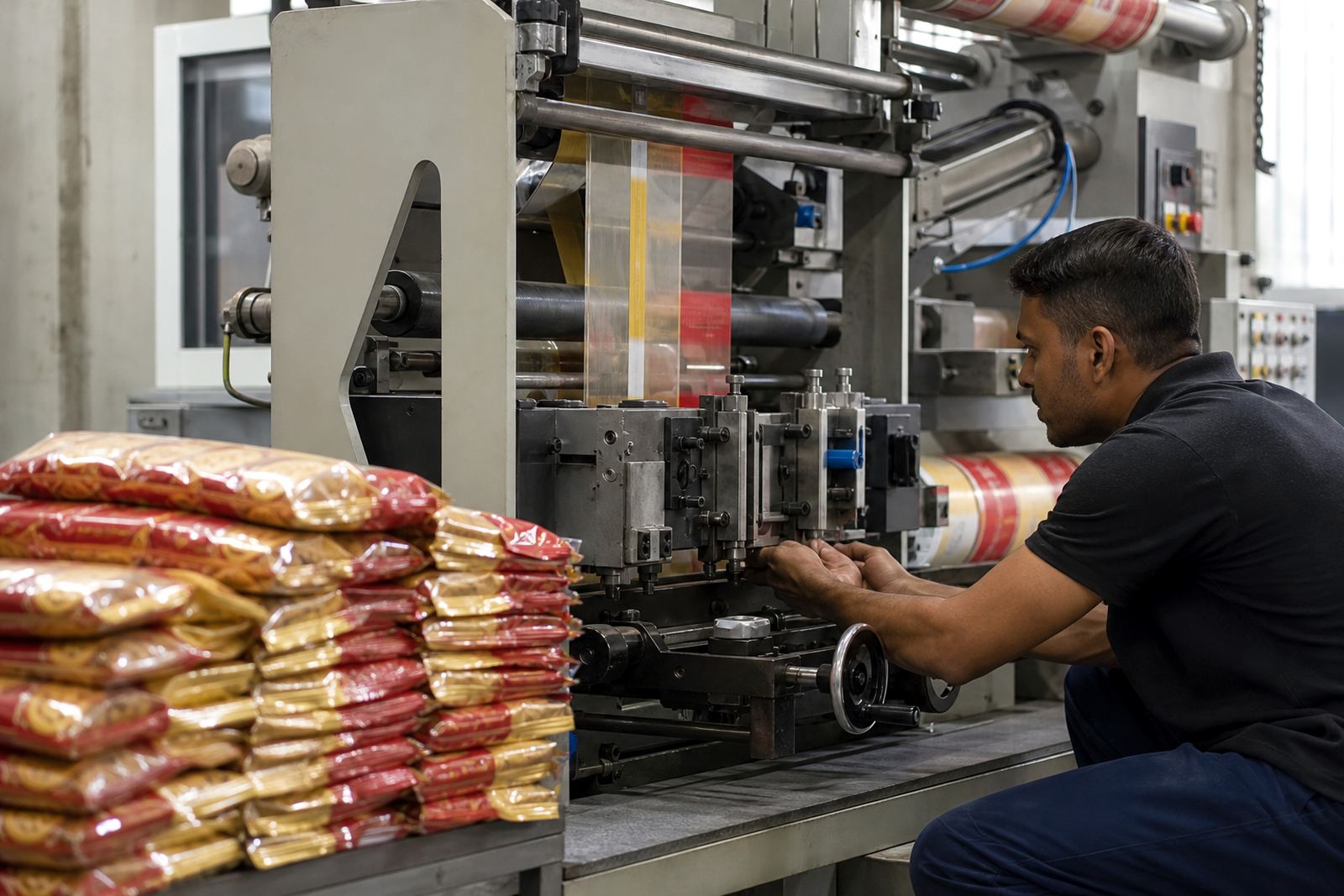
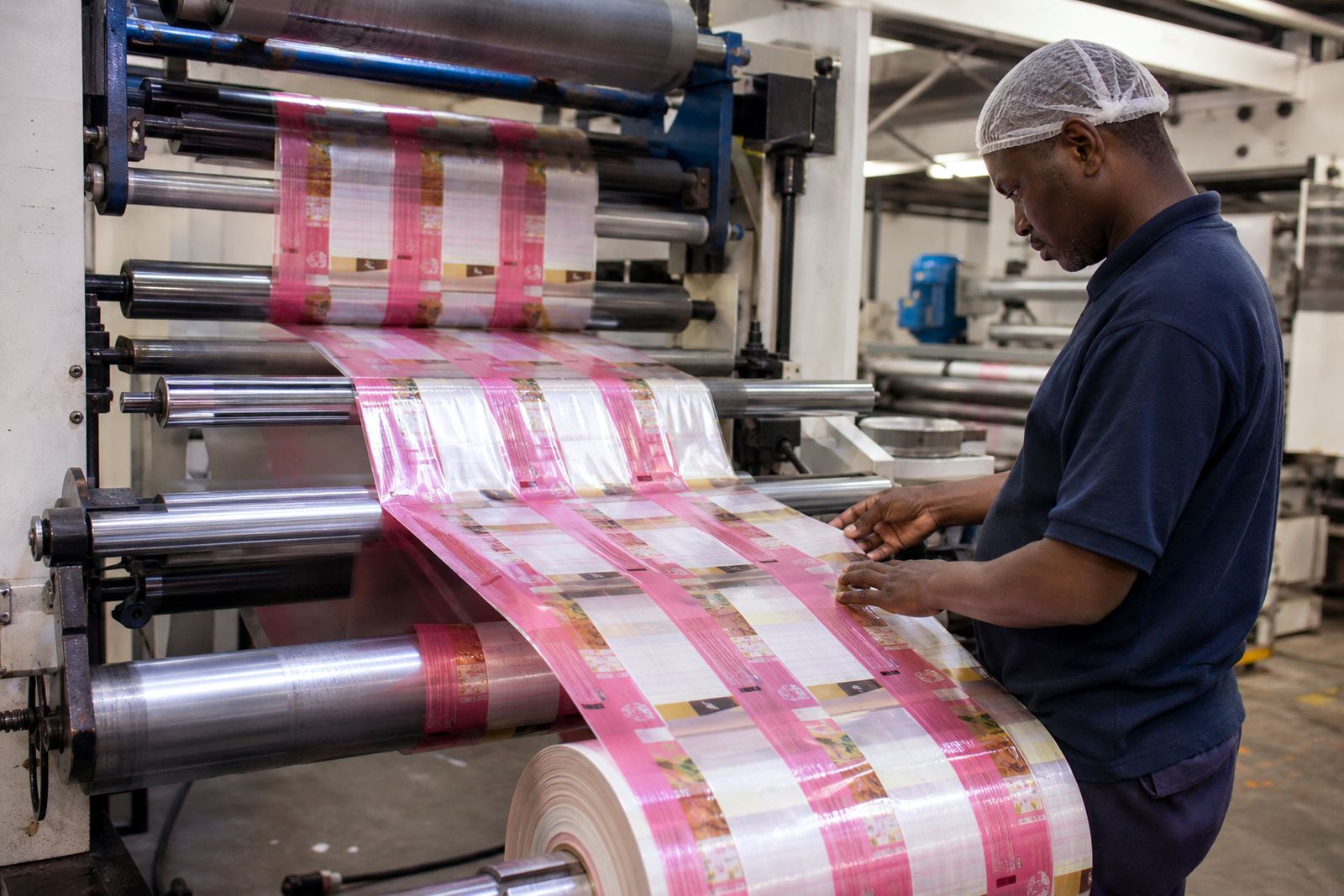
We supplied flexo printed wrap material and handled the prepress work needed before production started. That included artwork preparation, proofing, colour matching and material selection, then moving into print and converting once the pack layout was signed off. The aim was not to overcomplicate the format but to keep the essentials right: image placement, text clarity, seal area control and a finish that worked on the machine. It is simple work when done well, but there is no room for guessing.
The team handled the project from our Pinetown base, with Siyabonga Ndlovu overseeing the business side and Priya Naicker coordinating the client communication. Jason Petersen managed the prepress stage, Marius van Wyk handled production planning, Thandiwe Mkhize kept the client updated, and Lerato Molefe arranged dispatch so the wraps reached the factory on time. For this run we kept the pack size logic straightforward and made sure the wrap dimensions matched the product closely, rather than forcing the pack to fit around a generic spec.
- Artwork prep for a repeatable flexo run
- Colour matching for a consistent brand look
- Material selection matched to wrapping use
- Dispatch coordination from Pinetown to Verulam
Key pack details and working specs
The wraps were set up for confectionery presentation in both individual and multipack formats. The single units needed a tidy cut and fold line so they could be packed neatly without excess film at the ends. The multipacks needed enough strength to hold together in handling, while still giving a clean shelf face. We kept the print area practical, with clear text and simple visual blocks that reproduced well on flexo press conditions. The result was a run that could be repeated later without having to reset the whole job from scratch.
The important part was not chasing unnecessary detail. For this kind of product, clear panel spacing, sensible colour use and a clean seal zone do more for the end pack than decorative extras. We also kept the finishing practical for factory use in KwaZulu-Natal, where pack storage and transit can be affected by heat. Small changes in film performance can cause headaches later, so the spec was chosen to reduce that risk.
- Format: flow wraps for single units and multipacks
- Print method: flexo printed packaging material
- Focus: clean seals, readable panels, repeatable colour
- Use case: confectionery packing with regular repeat orders
Timeline from brief to delivery
The job moved through briefing, artwork prep, proofing, print and dispatch over a short production window of about 3 weeks. The first week focused on pack sizing, artwork checks and material selection. In week two, we finalised the proofing and confirmed the colour targets and layout details. The final week was used for print, converting and delivery coordination. That timing worked well because the client could slot the wraps into their own packing plan without standing stock for too long.
We kept communication practical throughout. If anything needed changing, it was dealt with early, before production moved too far along. That is usually the best way to keep a packaging job on schedule, especially when the product is going out in batches and the factory needs certainty around delivery dates. We prefer that kind of process because it saves time, and it avoids the kind of last minute patching that can throw off a production run.
- Week 1: brief, artwork prep and material selection
- Week 2: proofing, colour matching and sign-off
- Week 3: print, converting and dispatch
- Delivery point: Verulam with support into wider South Africa
What the client needed after delivery
The result was a set of wraps that gave the confectionery line a neater and more consistent finish. Single units presented better on the shelf and multipacks looked more uniform in the carton. The client also had a format they could return to for repeat production, which helps keep packaging predictable when a product range is already established. In practical terms, that means fewer small adjustments during packing and less wastage caused by poor fit.
If we were asked to do the same project again, we would keep the same approach: start with product dimensions, confirm the wrapping method early, and lock in the artwork before print. For confectionery producers in Verulam, Durban, Pinetown or further afield, that method gives a sensible balance between appearance, pack performance and supply reliability. It is also the sort of setup that works when orders need to move across South Africa without drama.
- Cleaner presentation for shelf and carton use
- Repeatable spec for future production runs
- Practical pack fit with less waste at the line
- Suitable for local distribution and wider South African supply
Key facts
| Client type | Confectionery producer in Verulam, KwaZulu-Natal |
|---|---|
| Format | Flow wraps for single units and multipacks |
| Print method | Flexo printed packaging material |
| Project duration | About 3 weeks from brief to delivery |
| Services used | Artwork Prep, Print Proofing, Colour Matching, Material Selection, Dispatch Coordination |
| Base and delivery | Pinetown base, delivered to Verulam with supply support across South Africa |