
Project brief from a biscuit packer in Gqeberha
The client was a biscuit supplier in Gqeberha moving away from a looser wrap style to a fin seal format for neater machine packing and steadier presentation on shelf. The pack needed to run through their packing equipment with less hand correction, while keeping the biscuit branding consistent across repeat batches. Their products were sent through local trade channels and then out to retailers and wholesalers in the Eastern Cape, so the wrap had to be tidy, readable and easy to stack.
The brief was straightforward on paper but detailed in practice. They wanted clear product naming, a repeatable layout, better control over seam placement, and print that would still look even when the line speed changed through the day. They also needed a format that could be produced in manageable runs without holding too much stock on site.
- Project type: biscuit fin seal wraps
- Location: Gqeberha, Eastern Cape
- Use: machine packing for repeat production
- Format goal: neat seam alignment and consistent branding
What made the job tricky on the production side
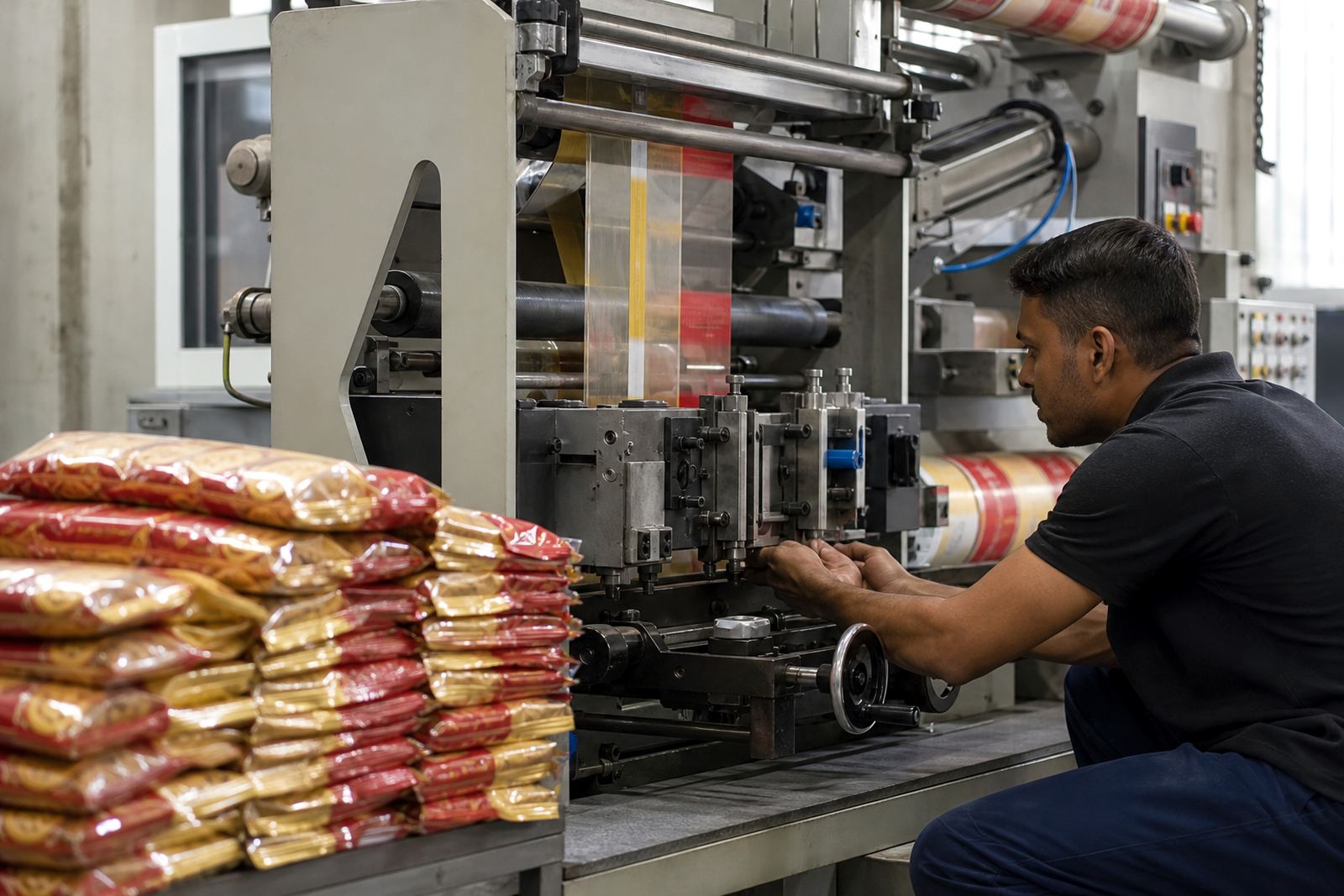
Flexible packaging for biscuits needs more than good graphics. The wrap must travel well through the packing line, seal properly, and keep its shape under normal handling. In this case the team needed a print setup that allowed for fine registration, stable repeat length and a material choice that could cope with the packing room conditions. Coastal humidity in Gqeberha can change how film behaves during a shift, so we planned with that in mind.
There were also practical limits around stock holding and dispatch timing. The client did not want a large one-off order sitting on the floor for months. They needed a production plan that allowed for shorter runs, with repeat orders matched closely to the first job. That meant careful artwork prep, proofing and a clean handover to the converting side. We kept the process tight because if the seam shifts by a few millimetres, the packet starts looking untidy very quickly.
- Key constraint: stable registration on a running pack line
- Key constraint: repeat orders matching the first production batch
- Key constraint: packaging needed to suit local storage and delivery timing
Artwork prep, proofing and colour matching
We started with artwork prep to make sure the panel order, safe zones and seal areas were right for the fin seal format. That included checking where the front panel would sit after sealing, where the back panel copy would land, and how the repeat would look when the wrap passed through the machine. The client wanted the brand name easy to read, with product details clear enough for trade buyers and packers alike.
Our prepress team prepared a proof for approval and then worked through colour matching so the printed wrap stayed close to the approved sample. Biscuit packs often rely on warm tones, so keeping those tones steady matters. Once the proof was signed off, we finalised the print-ready setup and moved to production. The line was monitored closely to avoid drift across the run, and any small adjustments were made before the job moved on to converting.
- Artwork checked for seal zones and repeat length
- Proof supplied before full production
- Colour matched against the approved sample
Materials and print method used for the wraps
For this project we supplied printed flexible wrap material suitable for biscuit packing, set up for fin seal conversion and machine feeding. The print method was chosen for sharp text, clear solids and repeat consistency. We also looked at the material selection carefully because the wrap had to handle routine packing, transport and storage without the edges curling or the print losing its finish. The client needed a practical material, not an overworked spec sheet.
We supplied the wraps in a format that would suit repeat production, with the roll size and winding direction arranged for the client’s packing line. The finish was selected to support easy handling and a clean look on the finished packs. This helped keep line stoppages down and made it simpler for the operators to keep the pack output neat through the day.
- Format: fin seal biscuit wraps
- Supply style: roll stock for machine packing
- Output focus: clear copy, tidy sealing, repeatable runs
Production timeline and dispatch to the Eastern Cape
The job ran over three weeks from brief to dispatch. Week one covered the brief, artwork checks and proof approval. Week two covered print setup and the first production run. Week three covered converting, pack-out and dispatch coordination. That timeline suited the client because it gave them enough room to confirm the artwork and plan their packing schedule without rushing the process.
Once the wraps were packed and checked, we arranged dispatch so the delivery could move efficiently to Gqeberha. Our logistics team coordinated the handover and kept the client updated on timing. For repeat jobs like this, a clear dispatch plan matters just as much as the print run itself. One late pallet can disrupt packing for the next shift, so we kept the handover tight and practical.
- Week 1: brief, artwork prep and proof approval
- Week 2: print run and colour checks
- Week 3: converting, packing and dispatch
What changed after the switch to fin seal wraps
The client wanted neater machine packing and repeat branding, and that is what the new wrap format gave them. The finished packs looked more uniform, the sealing path was easier to manage, and the branding stayed consistent from one batch to the next. That made the product easier for the pack room to handle and better presented for trade customers. The packer was also able to keep a steadier flow through the machine, which reduced the small interruptions that build up over a shift.
From our side, the main result was a repeatable supply pattern. Once the format was set, future orders could follow the same spec with only minor updates if needed. That is the value of getting the first run right. It saves time, keeps the output familiar, and gives the client a packing format they can return to without starting over each time.
- Cleaner pack appearance
- Better repeatability for future orders
- Less manual correction at the packing line
What we would do again for a biscuit wrap project
We would handle the next biscuit wrap project the same way: start with the machine format, confirm the seal areas early, and proof the artwork against the actual repeat before production begins. That sequence avoids a lot of waste and keeps the client confident in the final result. It also helps when the same pack needs to be repeated months later, because the spec is already locked in and the artwork sits neatly against the original setup.
For biscuit suppliers in Gqeberha, Durban or Johannesburg, the useful part is not only the print quality but the way the job is planned around packing, storage and delivery. A good wrap should run well, look right and arrive on time. That is what we built here, and it is the approach we would use again for any similar fin seal order.
- Start with pack line requirements
- Approve a proper proof before production
- Keep the repeat spec locked for future orders
Key facts
| Client type | Biscuit supplier |
|---|---|
| Project town | Gqeberha |
| Packaging format | Fin seal wraps |
| Production timeline | 3 weeks |
| Work completed | Artwork prep, proofing, colour matching, print, converting and dispatch |
| Primary outcome | Neater machine packing and repeat branding |