

Farm Stall Brief For A Cleaner Retail Range
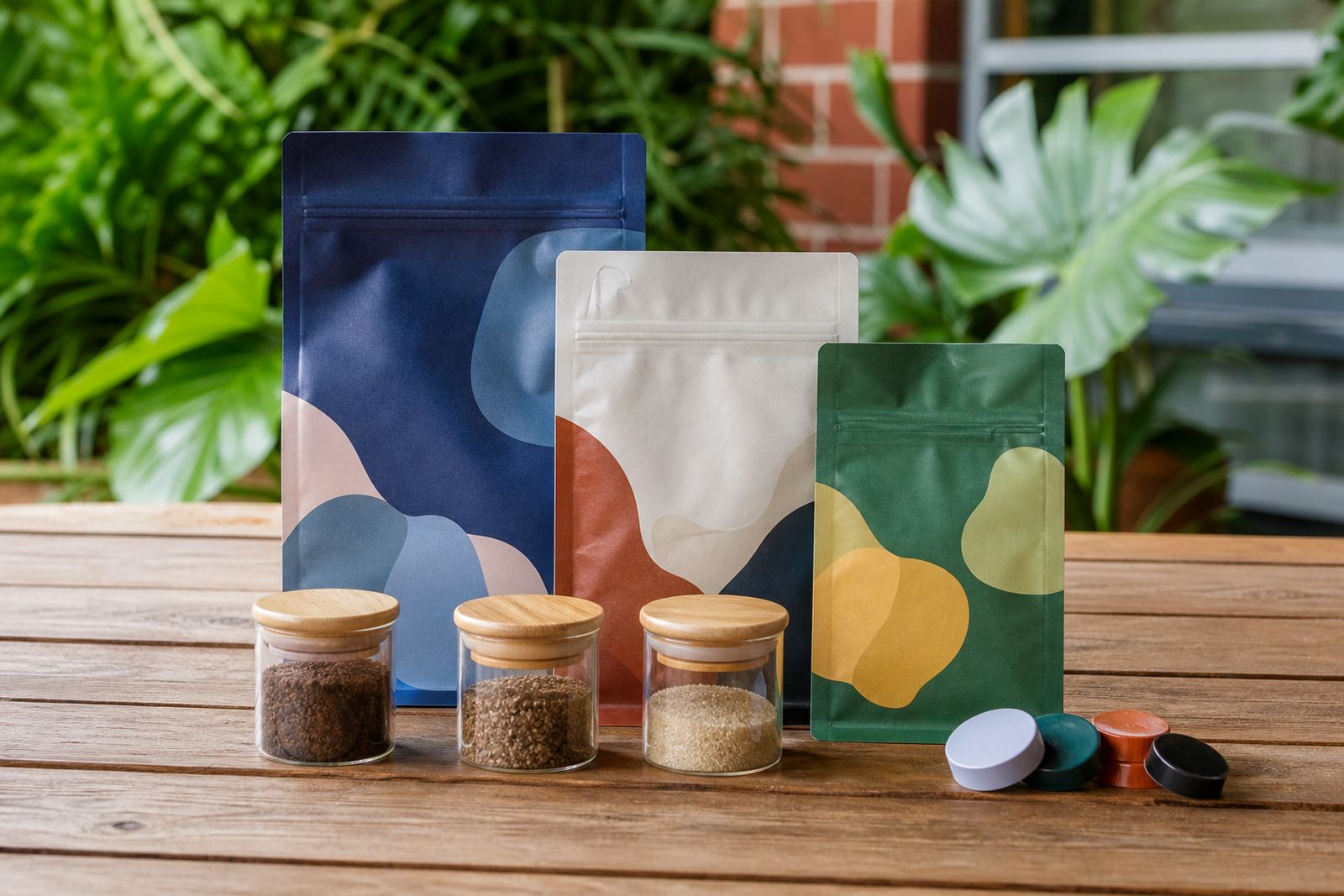
The brief came from a farm stall in Pietermaritzburg that wanted assorted dry goods brought into one family of pouch formats. The shelves held mixed pack styles before, so the goal was simple: give the range a neater retail look, make stock easier to stack, and keep packing staff working with fewer packaging types.
Because the products were sold locally and through seasonal rushes, the packaging needed to suit smaller batch production without looking like a stop-start solution. We planned around retail visibility, shelf order, and the realities of filling pouches by hand during the busier weeks. The range had to travel well too, as the stall moved product into Durban, Ballito and other KZN outlets when demand picked up.
- Client type: independent farm stall retailer in Pietermaritzburg
- Product group: assorted dry goods in retail pouch formats
- Packaging aim: matching look across the range with practical fill sizes
- Main concern: keeping the line neat without overcomplicating stock holding
What Had To Work In Real Production
The main constraints were fairly practical. The products were dry goods, so the pack had to protect against moisture in everyday handling, especially with KZN humidity and the stop-start nature of retail back-of-house storage. The stall also wanted pack sizes that were easy to group, count and display, rather than odd formats that slowed down restocking.
Artwork needed to fit a number of pouch sizes while keeping the same visual language across the line. That meant setting up flexible artwork panels, testing colour against the chosen material, and making sure the text remained readable on the smallest sachet-style format. We also had to keep lead times sensible, as the farm stall wanted to move quickly from approval to shelf stock. load-shedding can affect packing schedules, so the plan had to allow for that too.
- Need for moisture resistance suitable for dry goods
- Consistent shelf presence across different sizes
- Readable copy on compact pack faces
- Plan that could cope with local power interruptions and storage delays
Formats, Materials And Print Setup We Supplied
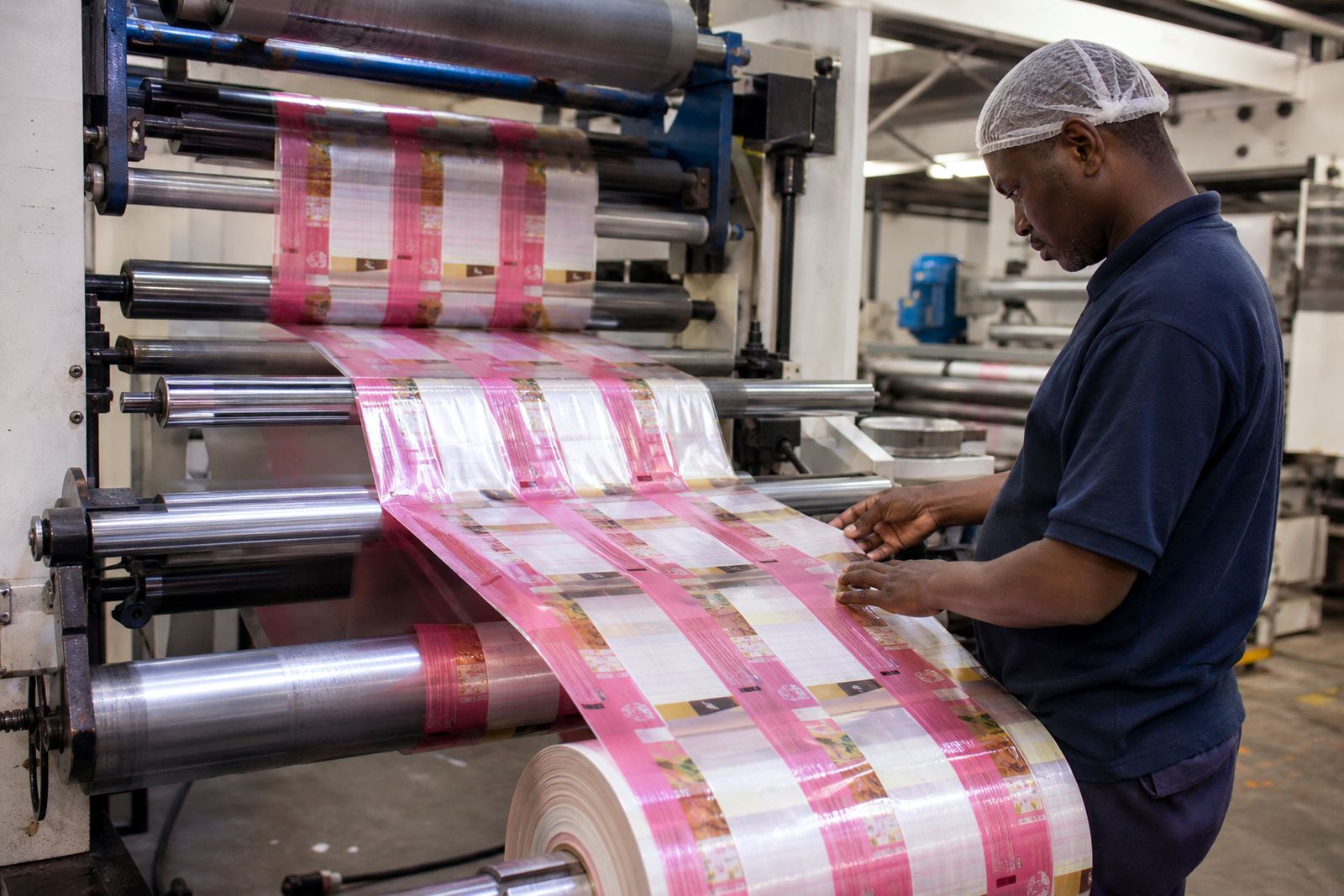
We handled the project as a flexo-printed flexible packaging order with pouch converting, artwork prep, proofing and colour matching. The range was set up as a family of retail pouches with coordinated front and back panels, plus smaller sachet-style packs where the product needed a lighter fill. For items sold in larger portions, wrap-style presentation was also considered for secondary uses and bundled stock.
Material selection was guided by the products and the filling method. We worked with a film structure suited to general dry goods, with enough body for shelf display and enough flexibility for packing on site. The artwork was prepared for clean registration and practical production, and we supplied print proofs before moving into the full run. A few items needed a tiny text shift to keep barcodes and legal copy clear, which is normal on pouch work.
- Retail pouch formats in coordinated sizes
- Sachet production for smaller portions
- Artwork prep and print proofing before run approval
- Colour matching across the family to keep the range uniform
- Material selection based on handling, storage and retail display
Timeline From First Brief To Dispatch
The full project ran over 4 weeks from initial brief to dispatch. Week one covered the packaging audit and format planning. Week two was artwork setup, layout checking and proofing. Week three was print production and pouch converting. Week four covered packing, dispatch coordination and delivery planning for the Pietermaritzburg base plus onward movement where needed.
That timeline gave enough room to avoid rushed decisions, especially where multiple pack sizes had to line up visually. It also allowed the client to review each proof stage properly instead of trying to fix small issues after production had started. The result was a cleaner handover and fewer surprises once the stock reached the farm stall. Small delays were possible around courier runs, but the schedule held. Here is how the work was broken down:
- Week 1: brief, product review and format choices
- Week 2: artwork prep, proofing and copy checks
- Week 3: flexo printing and converting
- Week 4: final pack-out, dispatch coordination and delivery
Results On Shelf And In The Packing Room
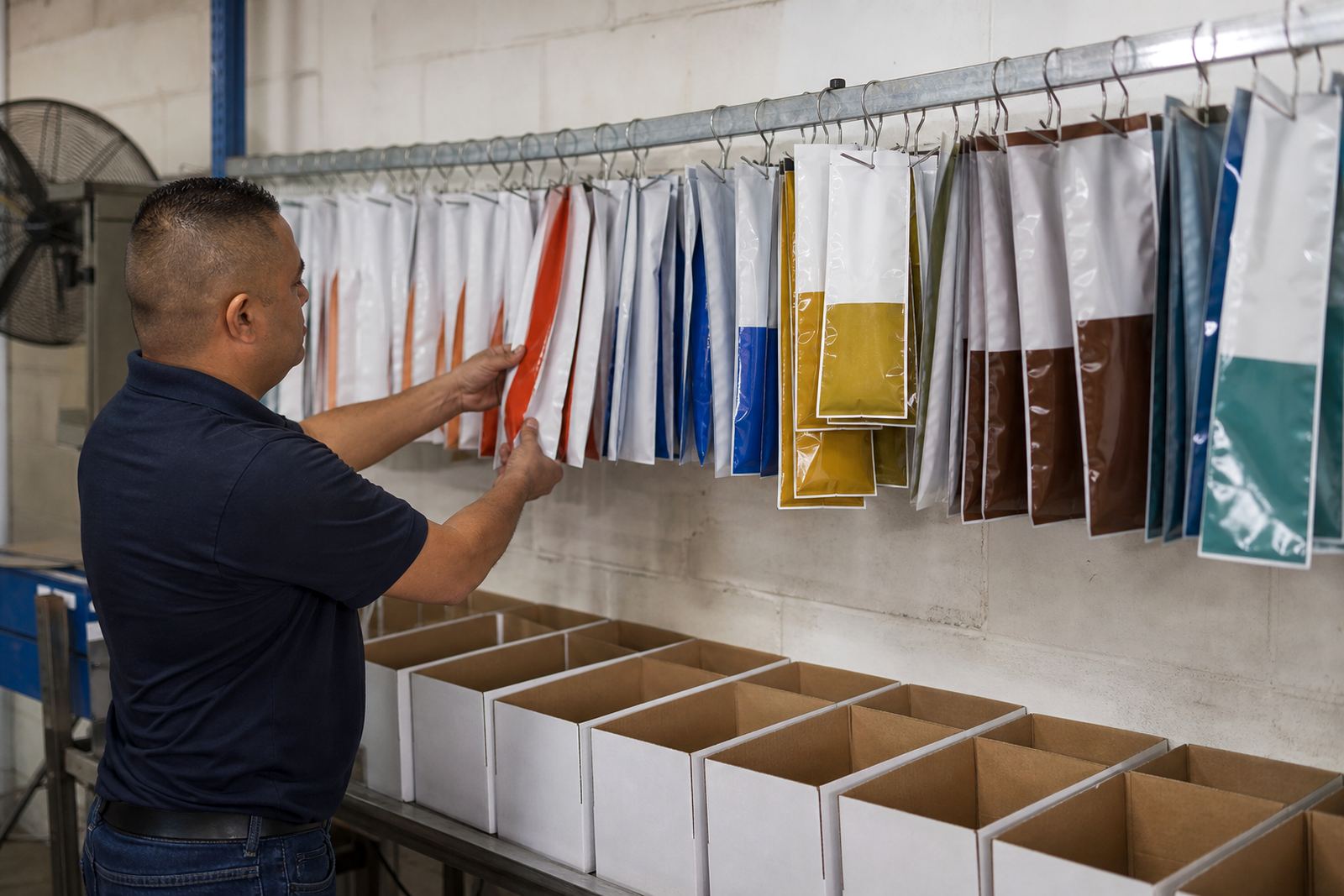
The updated pouch line gave the farm stall a more ordered retail presence. Stock looked like one range rather than a mix of unrelated packs, which helped with shelf presentation and made top-up packing simpler. It also reduced the time spent sorting through different packaging types, since the core line now worked from a tighter set of sizes and layouts.
From a sales point of view, the matching format helped the products sit better together, especially where the stall displayed mixed dry goods in one section. The client also found the repeat production easier to manage because the approved pack set could be reordered without starting from scratch each time. The finish held up well in everyday handling, and the packaging remained tidy through transport and display. That matters more than people think, particularly when the product is moving in and out of a warm storeroom.
- Cleaner shelf grouping across the range
- Less confusion during packing and restocking
- Repeat orders made simpler with approved artwork on file
- Better visual order for mixed dry goods in retail display
What We Would Repeat On The Next Rollout
If we were doing the next rollout for a similar Pietermaritzburg or KZN farm stall, we would keep the same approach: start with the actual packing method, choose the pouch sizes around the product weights, and proof the artwork at real size before production. That avoids guesswork and keeps the range useful from day one.
We would also keep the range flexible enough for seasonal demand. Farm stalls often need a smaller repeat run for quiet months and a quicker top-up before holidays or long weekends. Having the artwork, colour targets and material choice already settled makes that much easier. It also helps when a business wants to add one more flavour or pack size without rebuilding the whole line. The key is keeping the packaging practical, not overdone.
- Start with the fill weight and packing method first
- Keep one visual system across all pouch sizes
- Use proofing to catch layout issues before print
- Leave room for seasonal repeats and small range extensions
Key facts
| Project type | Retail flexible packaging upgrade for a Pietermaritzburg farm stall |
|---|---|
| Formats supplied | Matching retail pouches, sachet-style packs and wrap options |
| Print method | Flexo printing for flexible packaging |
| Timeline | 4 weeks from brief to dispatch |
| Base location | Pinetown, KwaZulu-Natal |
| Delivery reach | Durban, Johannesburg, Pretoria, Cape Town, Bloemfontein and KZN routes |