
What the Nelspruit range needed from day one
The brief came from a household refill brand in Nelspruit that wanted to introduce a smaller, affordable pack size for everyday use. The team needed sachets that could stand upright in retail trays, move easily through regional distribution and still look orderly on shelf. The product had to be practical for compact home storage, especially where buyers keep refill stock in cupboards, utility rooms or under a sink.
We were asked to support a narrow sachet format with enough print area for product name, instructions and batch space, without crowding the front panel. The client also wanted a format that would handle repeat production later, so we kept the layout disciplined from the start and set clear tolerances for repeat runs.
- Project town: Nelspruit, Mpumalanga
- Format focus: narrow refill sachets for household use
- Print method: flexo printing on flexible packaging film
- Display need: compact shelf presentation and easy carton packing
Format choices for a tight shelf footprint
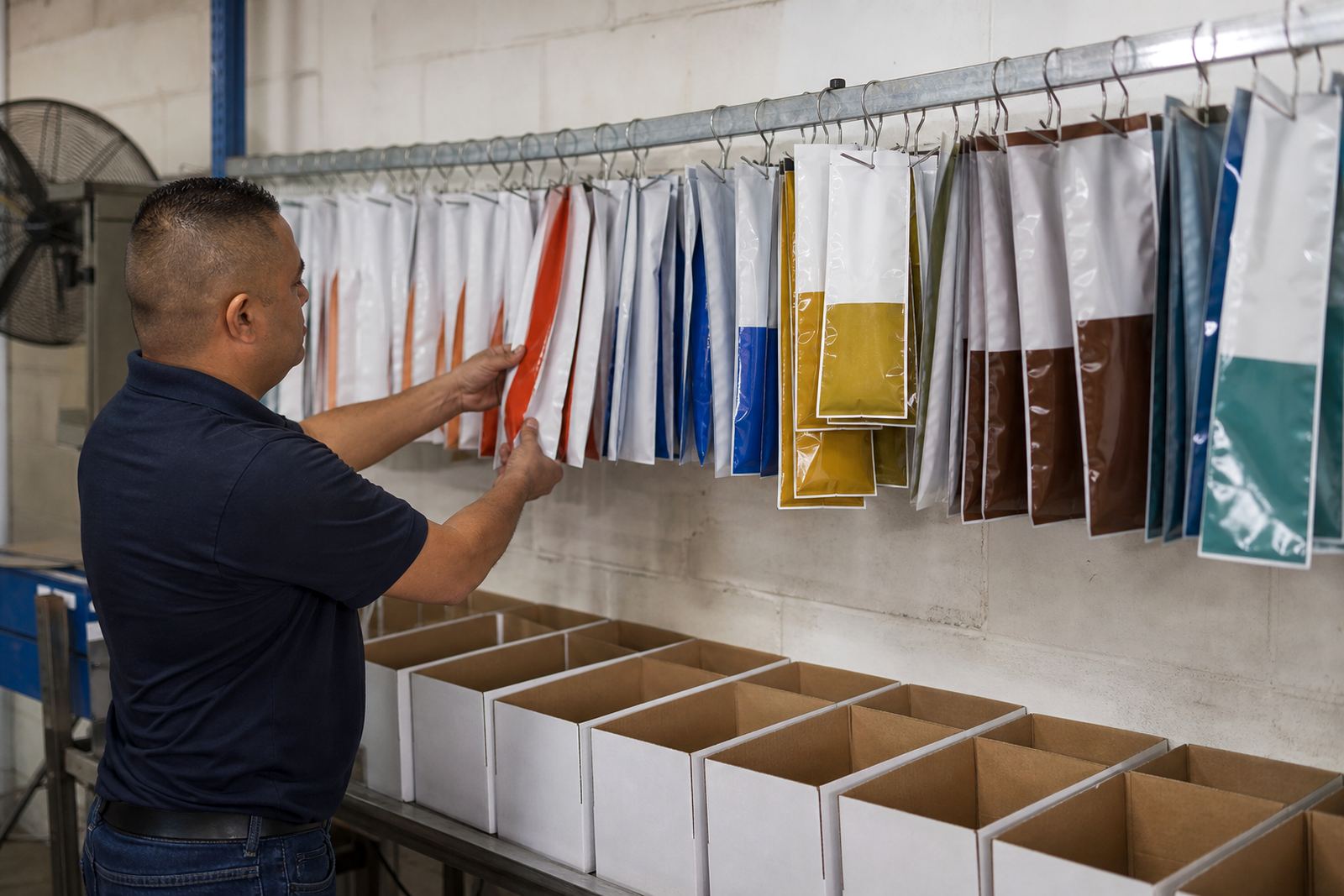
The main challenge was size. A refill sachet can become awkward if it is too wide, too soft at the seal or too busy in the layout. We worked with a slim format that supported a neat front panel and left enough margin for sealing on all sides. This made the sachets easier to stack, box and move without the packs bending out of shape.
For this project we supplied short run sachets first, then locked in the approved construction for repeat work. The film structure was chosen for dependable sealing and a clean print surface, with material selection guided by the storage conditions the brand expected in warmer inland weather. We also kept the pack easy to open at the tear point, since refill packs should not fight the customer at first use.
- Narrow sachet width for compact retail display
- Controlled seal zones to protect the fill area
- Space reserved for batch coding and instructions
- Film chosen for clean print, stacking and transport
Artwork prep, proofing and colour control
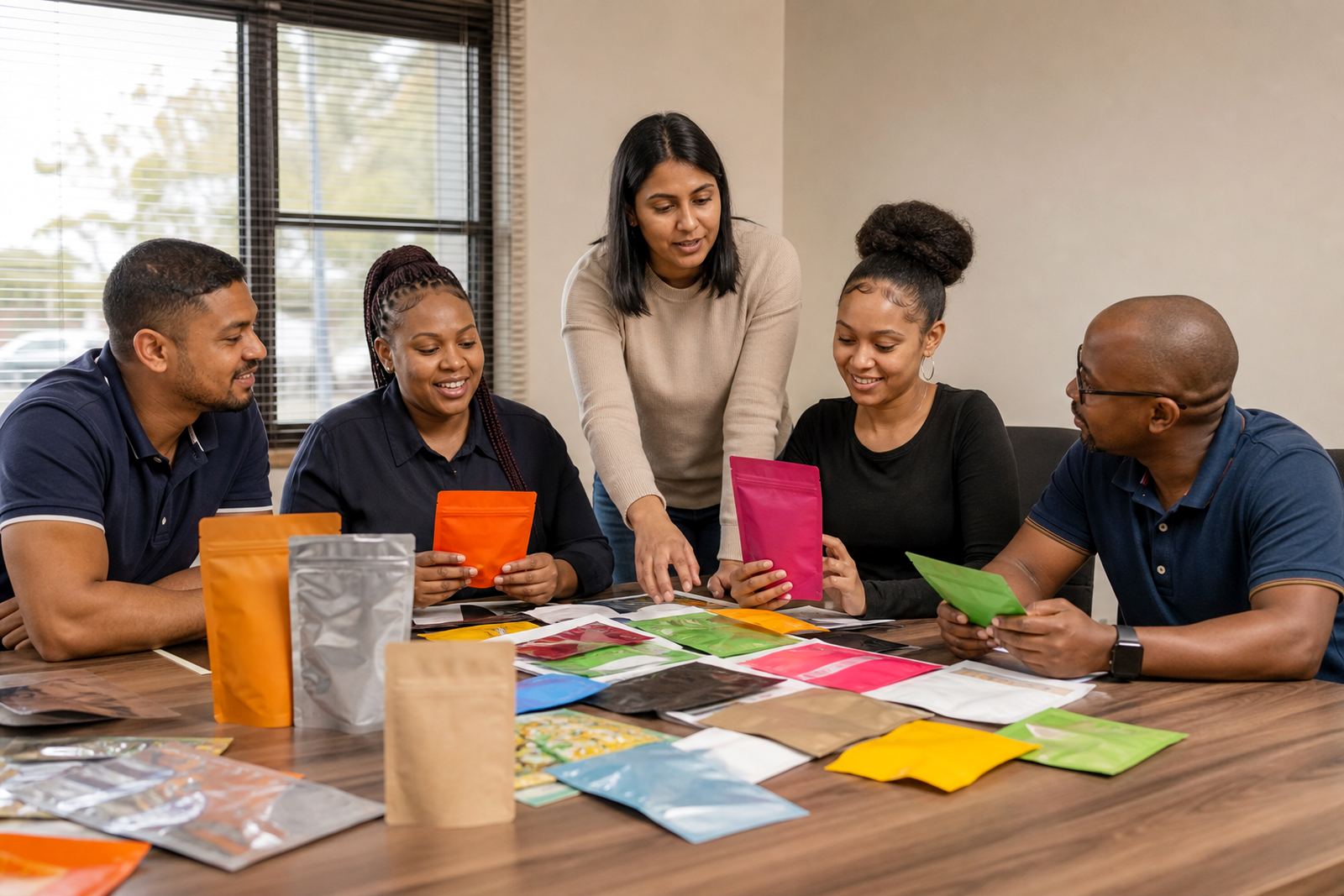
The household range needed clear graphics, readable type and a colour that stayed consistent from one carton to the next. Our prepress team prepared the artwork for flexo output, adjusted the linework where needed and checked that the small text would remain legible on a narrow face. We also separated the elements that needed stronger contrast so the final pack would still read properly under shop lighting.
Colour matching mattered because the brand wanted the refill range to look the same across later production runs. We ran print proofing and checked the tone against the approved sample before moving ahead. This saved time later, especially when the client returned for more sachets after the first round sold through. A small miss in registration can be obvious on a slim pack, so we kept the checks tight and the sign-off process simple.
- Artwork prep for narrow-panel flexo printing
- Proofing to confirm text size and panel balance
- Colour matching for repeat production consistency
- Registration checks on fine lines and small graphics
Production timeline and the work on the floor
The project moved from brief to first approved output in three weeks. Week one covered pack size, artwork corrections and print direction. Week two was used for proofing, material confirmation and the first sample build. Week three covered production and dispatch coordination. That gave the client enough room to make a confident launch decision without dragging the schedule out.
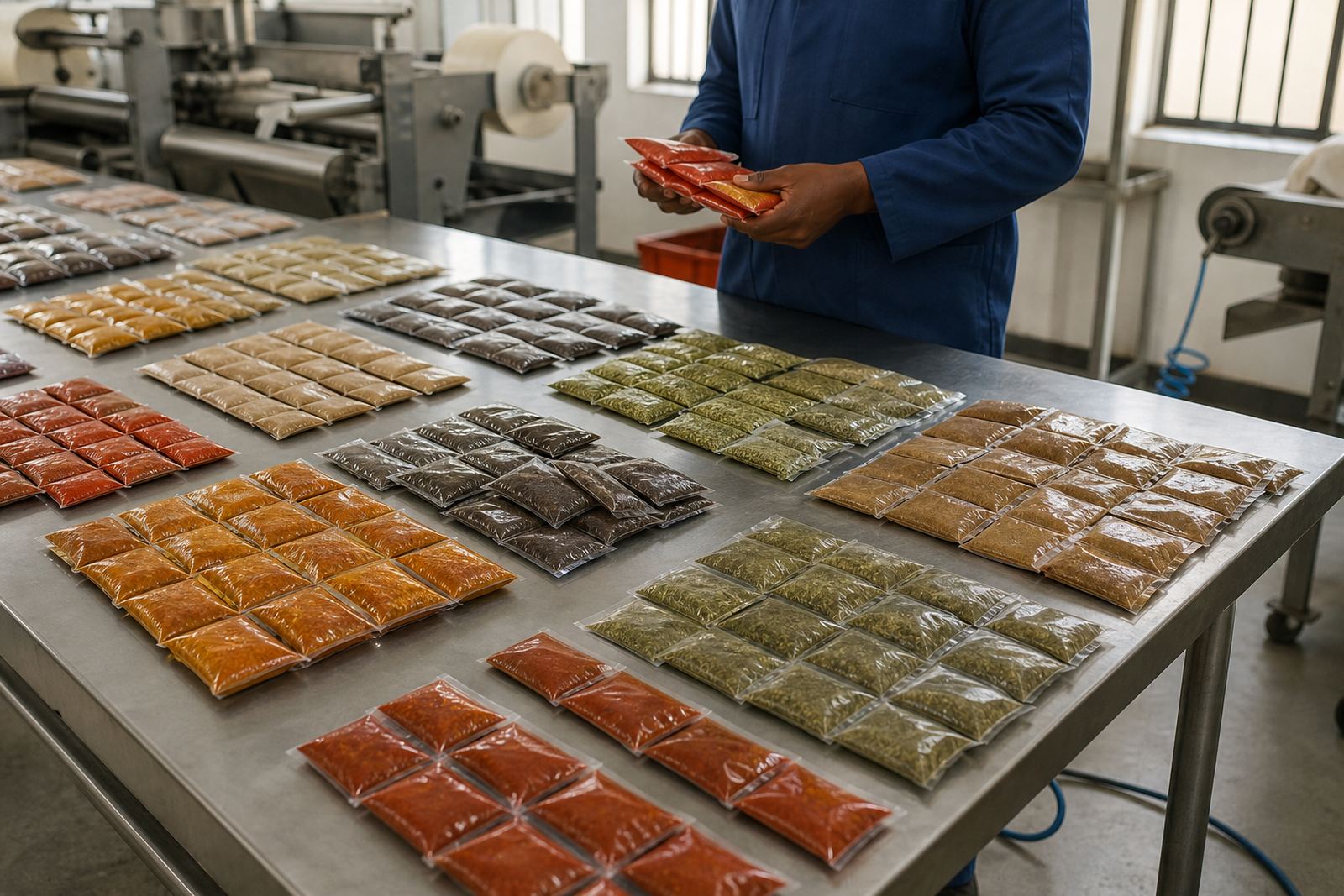
On the floor, the sachets were produced with care around seal consistency, ink laydown and cut accuracy. Shorter refill packs can be sensitive to slippage or uneven trim, so the line was monitored closely. We kept the process practical and steady, which matters when electricity interruptions and local delivery windows can affect a production day. By planning the job in smaller stages, we avoided last-minute pressure and kept the packs aligned with the launch date.
- Week 1: brief, artwork prep and size confirmation
- Week 2: proofing, sample approval and material selection
- Week 3: production, finishing and dispatch planning
- Key checks: seal integrity, trim accuracy and ink consistency
Dispatch from Pinetown to inland retail points
Although the project started for a Nelspruit customer, the finished sachets had to be ready for wider distribution through South Africa. The final packed cartons were arranged for easier loading and more stable travel, with care taken to protect the sachet edges during transit. We coordinated dispatch so the client could receive stock in a condition that needed no sorting before packing onto shelves.
From our Pinetown base, we regularly handle deliveries into Durban, Johannesburg, Pretoria, Cape Town and Bloemfontein, so the logistics side is part of the job, not an afterthought. For this range, the client wanted a simple handover and a clear carton count. That helped the receiving team work quickly and reduced avoidable handling at the point of receipt.
- Packed for carton stability and easier pallet movement
- Dispatch coordinated from Pinetown, KwaZulu-Natal
- Suitable for delivery across South Africa, including inland routes
- Clear counts and packing discipline for receiving teams
What changed after launch and what we would repeat
After the first release, the client reported that the narrow sachet format suited the refill position well. The packs were easier to display in a tighter retail bay, and the smaller footprint helped with transport and storage. The brand also liked that the pack carried enough information without feeling crowded. That balance is important on a refill product, because the customer must be able to identify the contents quickly and understand how to use them.
If we were doing the same job again, we would keep the same process: start with a disciplined format, lock in the proof early and protect the repeat run with strict colour control. For a household refill line, the best result is not just a good looking pack. It is a pack that fills cleanly, seals properly, travels well and stays presentable when it reaches the shelf.
- Stronger shelf fit for compact retail spaces
- Cleaner handling through transport and receiving
- Clear print area for instructions and product details
- Repeatable setup for later production runs
Key facts
| Project | Nelspruit Sachet Refill |
|---|---|
| Client type | Household refill brand |
| Location | Nelspruit, Mpumalanga |
| Format | Narrow flexible sachets |
| Timeline | 3 weeks from brief to dispatch |
| Scope | Flexo printing, artwork prep, proofing, colour matching and dispatch coordination |