
A Durban-area brief built around refill packs
The client was a homecare range from the Durban north area, with stock moving through spaza shops, small supermarkets and independent wholesalers. The brief was straightforward on paper but fussy in practice: make the product look neat on shelf, keep the pack sizes compact enough for repeat purchases, and print clearly on a material that would hold up in everyday handling and transport.
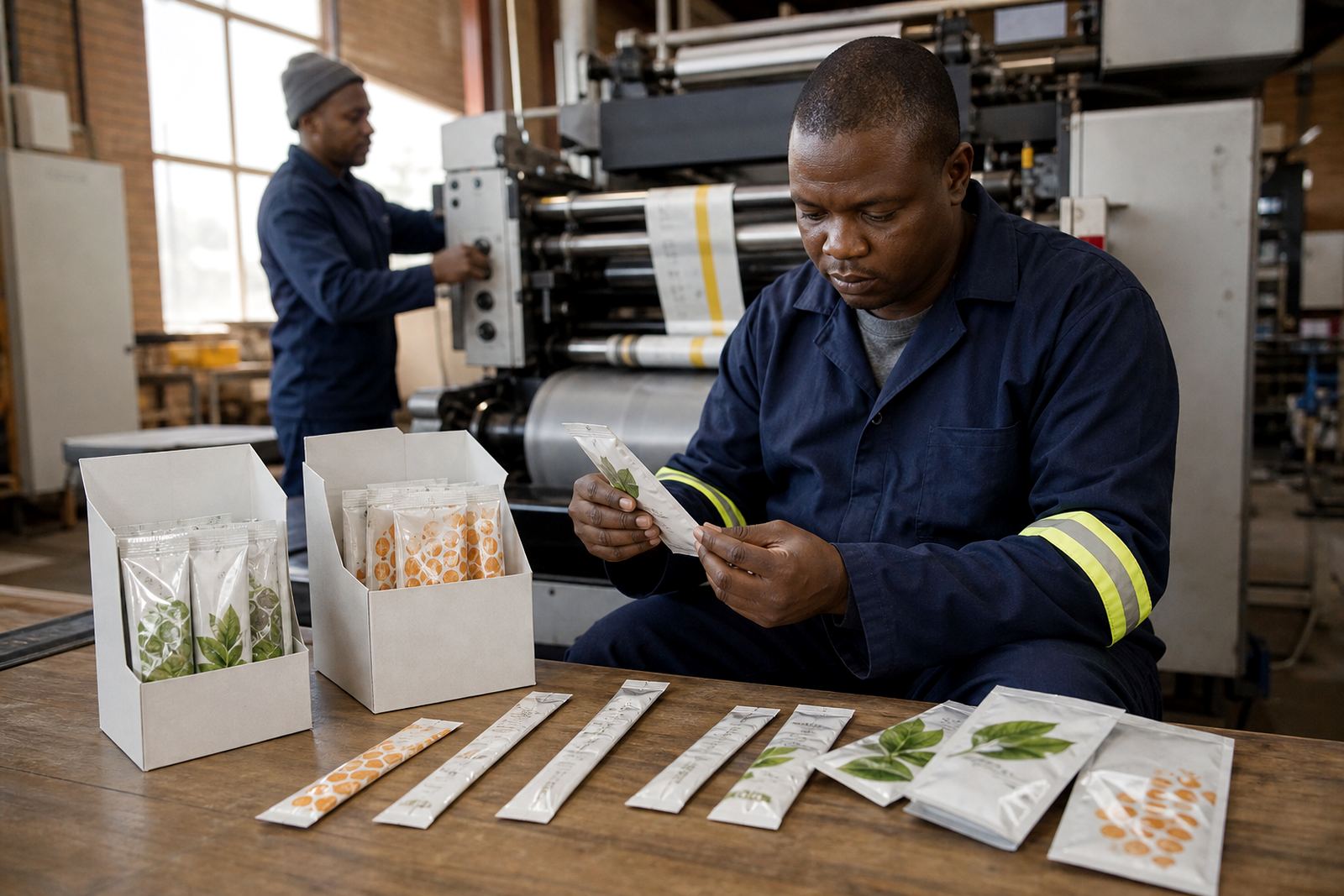
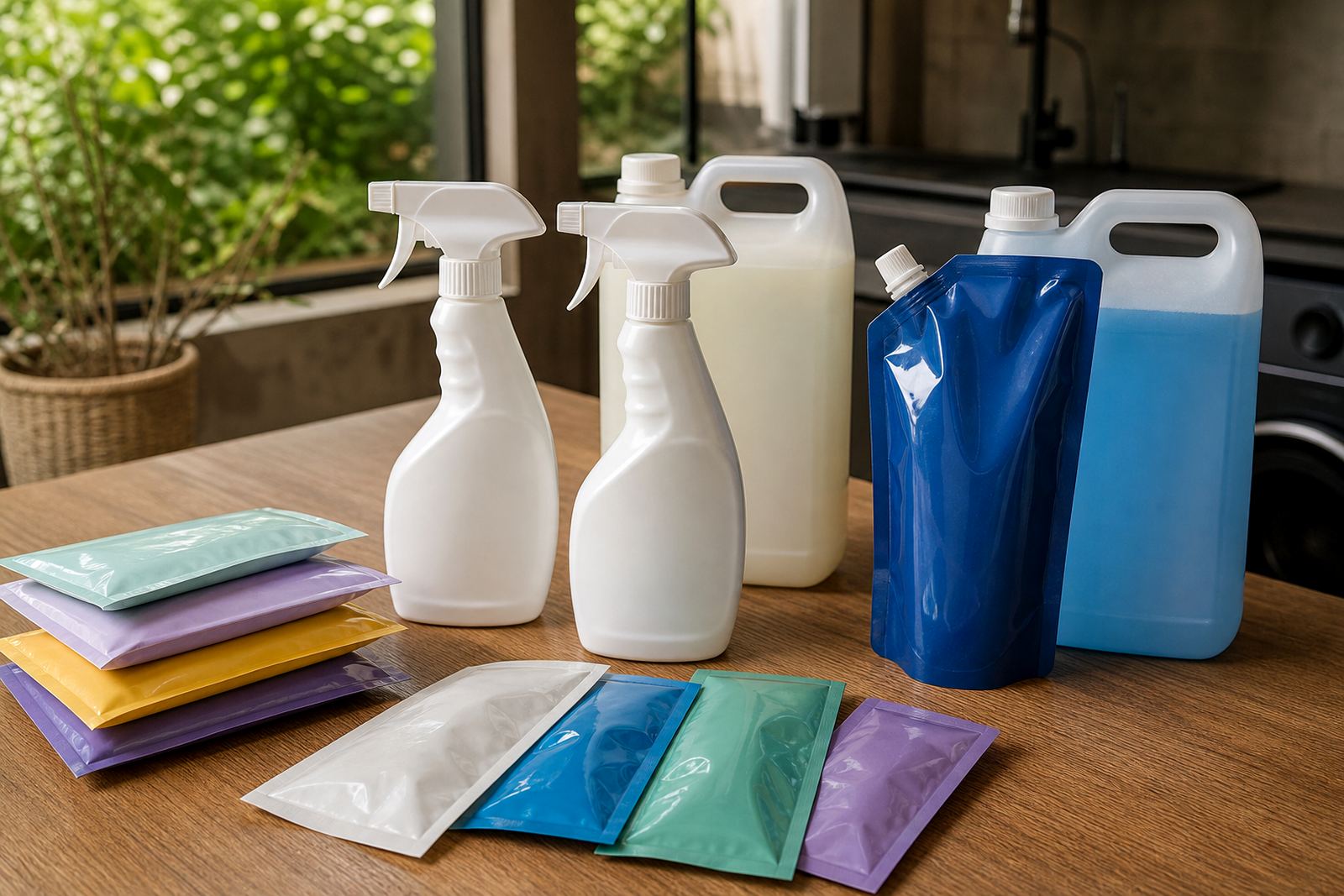
The range leaned on sachet formats for refill-style use, with a matching wrap for outer bundling and packed-out cartons. The client wanted a clean house look across the line, without adding unnecessary print complexity. We mapped the pack flow from prepress through to dispatch, because neighbourhood retail often means mixed order quantities and short delivery windows. That planning matters when stock is moving between Pinetown, Durban and out to inland branches.
- Client type: homecare brand serving local retail outlets
- Project area: Durban, KwaZulu-Natal
- Format focus: compact sachets and outer wraps
- Distribution: neighbourhood trade and repeat refill purchases
What the packaging had to handle
Household products sold in sachet form need more than a neat front panel. The pack must carry readable use directions, batch markings and enough product detail for the outlet staff and the end user. We also had to allow for the realities of local handling, including warm warehouse conditions, humidity along the coast and cartons being opened and closed many times before sale.
For this range, the main constraint was keeping the format practical for low-cost retail while still giving the product a tidy, consistent look. The artwork had to work across smaller sachet sizes without crowding the panel. We also planned the production run so repeat orders could be matched back to the original set-up with minimal adjustment, which helps when the same pack returns after a few weeks or months.
- Clear panel layout for usage details and product identification
- Small format sachets sized for refill sales
- Outer wraps for grouping and handling during dispatch
- Repeatable setup for future production lots
Flexo print setup and pack build
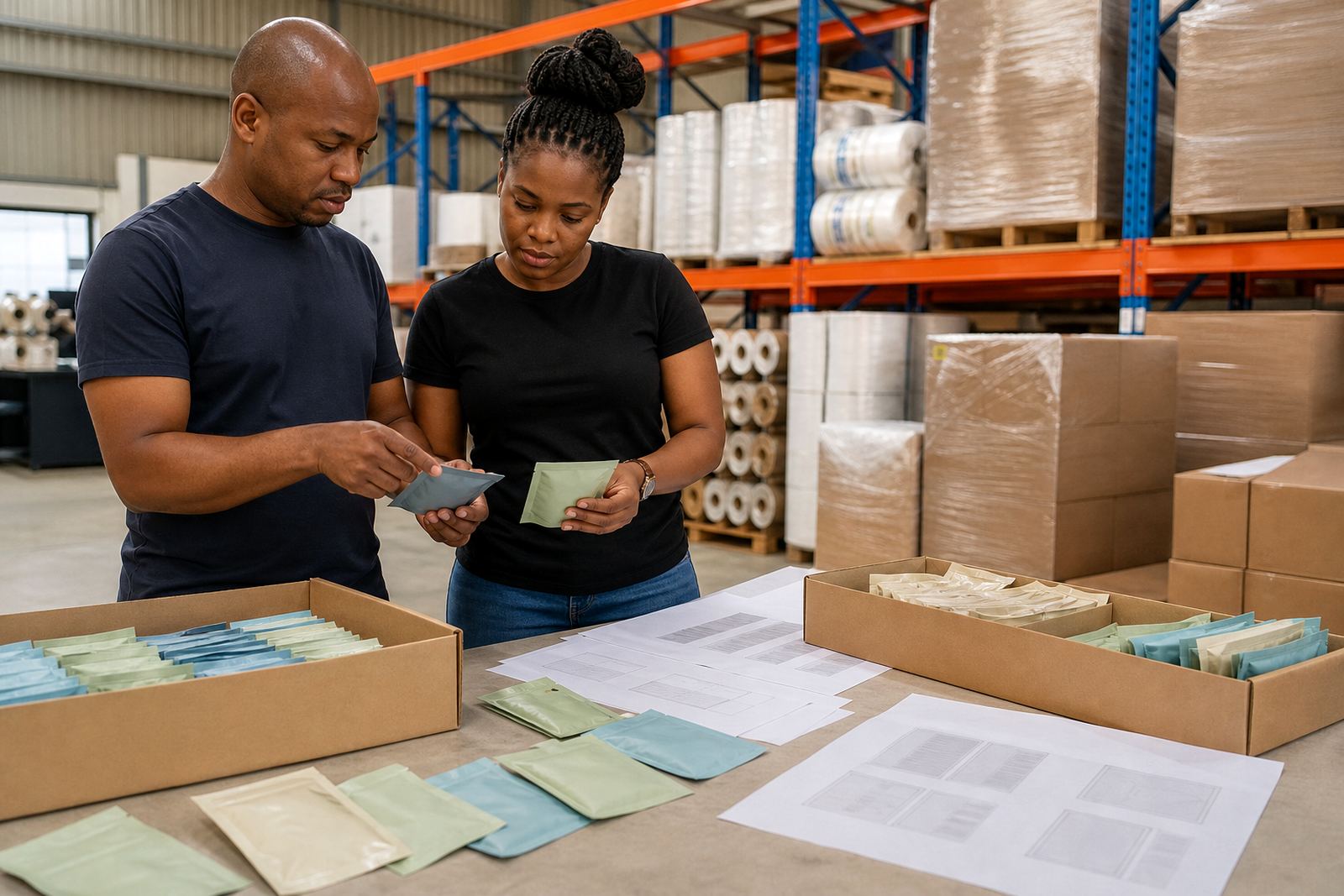
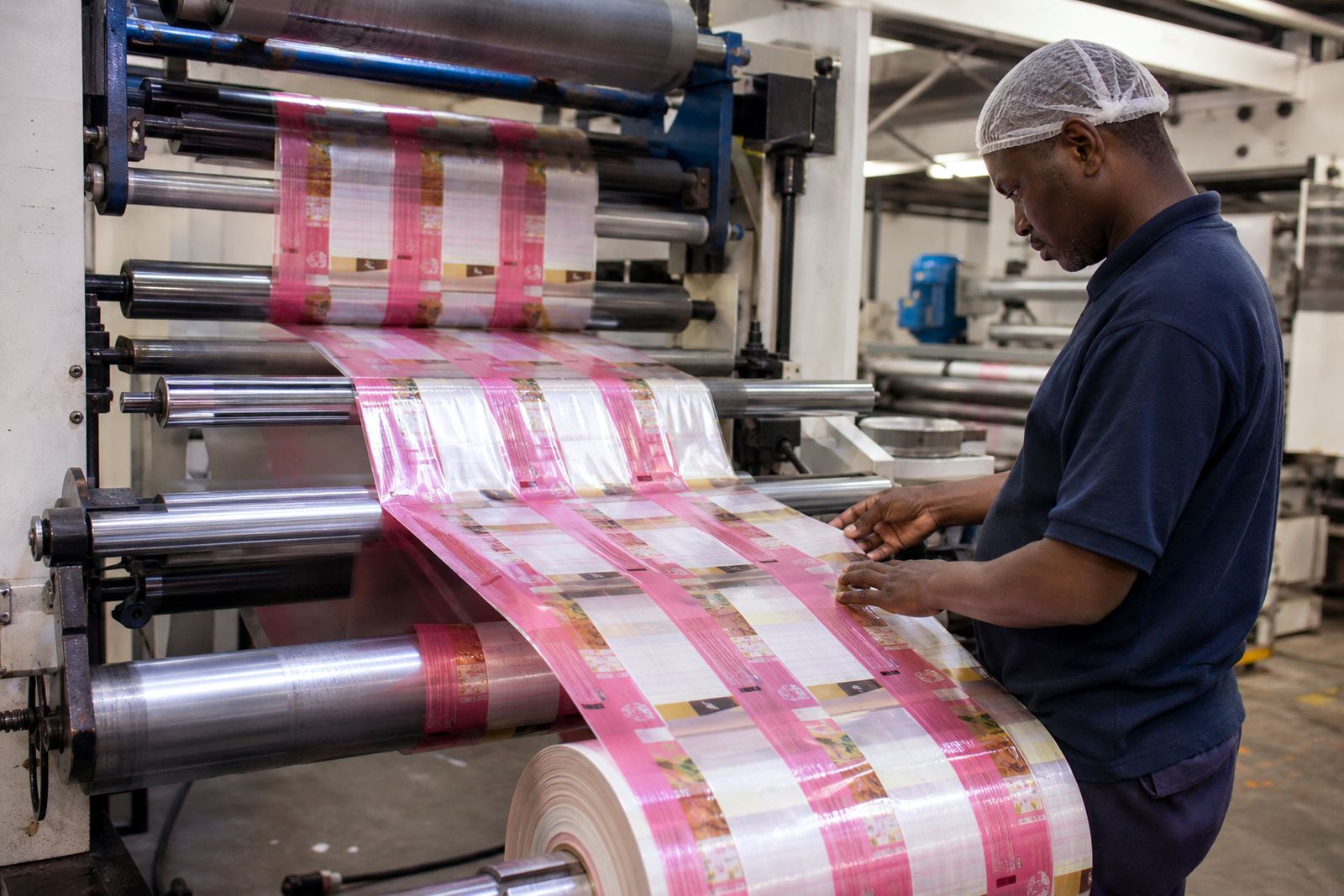
We handled flexo printing for the sachet and wrap components, with prepress checks before plates went to production. The key work was getting the colour stable and the text crisp on a compact pack area. In this kind of packaging, a small shift in ink density or register shows quickly, so we spent time on proofing and matching before the main run started.
The pouch converting and sachet production steps were set up around the required pack dimensions, seal width and fill allowance. We kept the spec practical for local filling and store handling, with line-ready material selection suited to flexible packaging use. The final artwork prep was checked against the live print plan, then we moved into production and dispatch coordination. It was a tidy job, but it needed careful checking at each stage, because small sachets leave little room for error.
- Artwork prep and proofing before print approval
- Colour matching against the approved house look
- Material selection for flexible packaging use
- Pouch converting and sachet production to the agreed sizes
Timeline, from first proof to dispatch
The project ran over four weeks from initial briefing to first dispatch. Week one covered the brief, pack sizing and artwork checks. Week two was used for proofing and final colour sign-off. Week three moved into production set-up and print. Week four covered finishing, packing and dispatch coordination to the client's distribution point.
That timing worked well because the client needed a practical launch window rather than a drawn-out development cycle. We kept contact tight through the process so there was no drift between the agreed layout and the printed pack. For homecare items sold through small outlets, time matters, but so does consistency. A missed shade or a weak seal can cause waste down the line, so the slower part of the work is often what saves time later.
- Week 1: briefing and pack sizing
- Week 2: proofing and colour approval
- Week 3: print and conversion
- Week 4: packing and dispatch
What the range needed on shelf
The finished sachets gave the range a cleaner retail presence, with stronger shelf order and less confusion between variants. Because the packs were made for refill-style use, the format suited smaller basket purchases and repeat top-up buying. The outer wraps also made handling simpler for stores that receive mixed stock and need packs sorted quickly onto shelves or into counter trays.
From a production point of view, the biggest gain was predictability. The approved colour setup held across the run, the text remained readable on the smaller pack face, and the job was built with repeat production in mind. That means the client can reorder the same spec later without starting over. It also helps when stock must move between Pinetown, Durban, Johannesburg and inland delivery points, where different stores may sell through at different rates.
- Neater shelf presentation for neighbourhood outlets
- Repeat-buy format suited to refill sales
- Consistent colour across the printed set
- Ready for future repeat orders
What we would do again for a similar line
If we were running a similar homecare project again, we would keep the same sequence: lock the pack sizes early, proof the artwork on the actual substrate, and plan the dispatch schedule around the client's local trade cycle. That order avoids last-minute changes and helps keep waste low. We would also keep the line structure simple, because compact sachets work best when each variant is easy to identify at a glance.
For South African neighbourhood retail, practical details make a difference. A short run can still be worth doing if the format is right, the print is consistent and the delivery plan fits the selling pattern. That is what this project showed us. The result was a straightforward, good-looking refill pack range that matched the way the product was actually sold, not just how it looked in a sample file.
- Keep the format simple and readable
- Proof on the final material before full production
- Plan reorders around store sell-through
- Keep the pack sizes practical for counter sales
Key facts
| Project | Phoenix Homecare Line |
|---|---|
| Client type | Homecare supplier serving local retail outlets |
| Location | Durban, KwaZulu-Natal |
| Format | Compact sachets with matching outer wraps |
| Production time | 4 weeks from brief to dispatch |
| Services used | Flexo Printing, Sachet Production, Artwork Prep, Colour Matching, Repeat Production, Dispatch Coordination |