
What Retort Style Pouches Are Used For
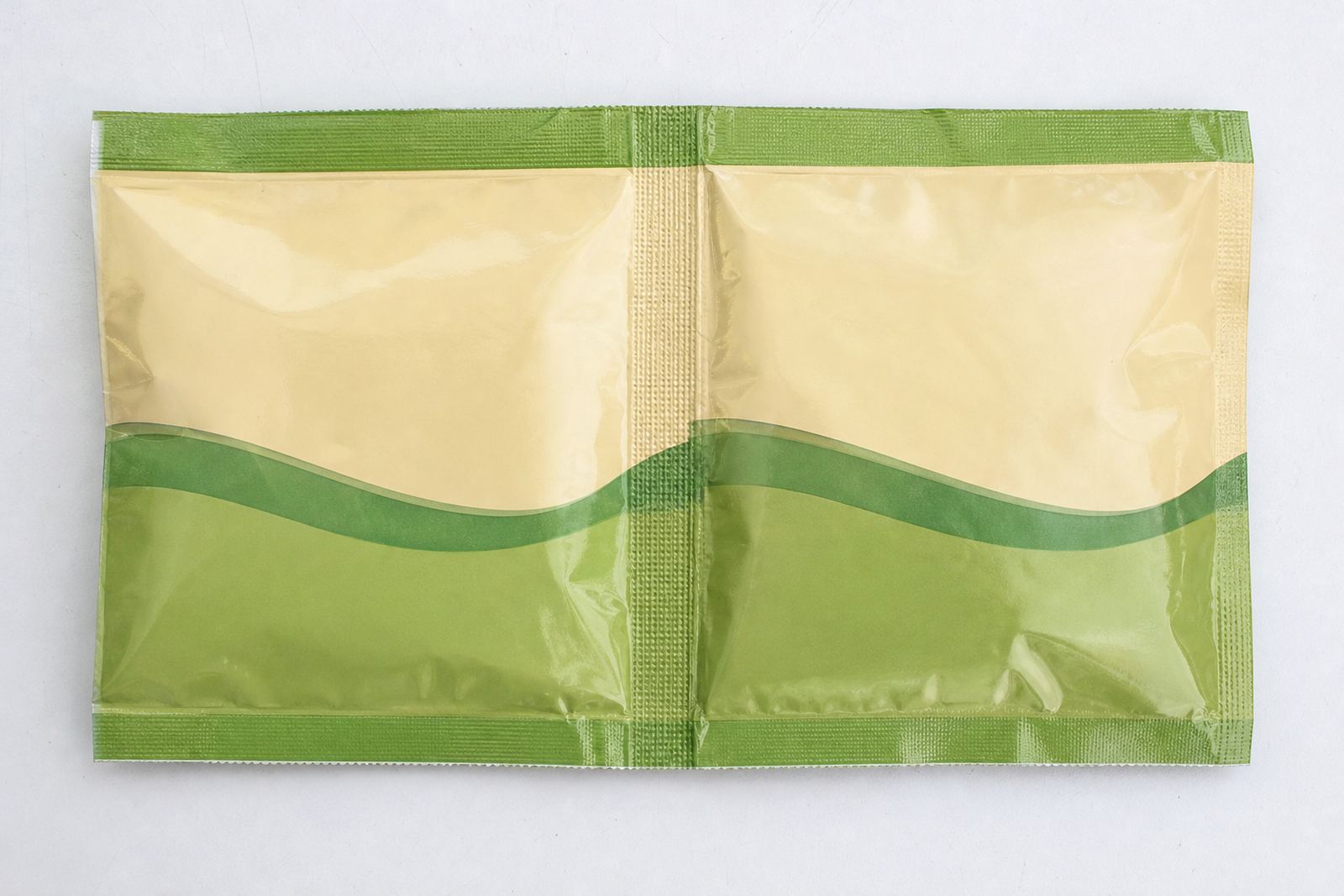
Retort style pouches are a flexible packaging format designed for products that go through heat processing after filling. The pouch structure is chosen to handle that process while still giving a clean retail finish, good seal integrity and practical handling on the line. For many South African brands, this format suits products that need longer shelf life, secure transport and a pack that stands up well in distribution.
They are commonly specified for wet goods, ready meals, sauces, gravies, pet food, soups, seasonings and similar items where the pack must cope with heat, moisture and handling. The exact material build depends on the product, fill method and process conditions, so the pouch is usually specified with the whole pack journey in mind, from filling through to dispatch.
Size Ranges, Shapes And Finishes
Retort style pouches can be made in a range of sizes to suit single-serve portions, family packs and trade packs. Typical options include flat pouches, stand-up formats and gusseted forms, with closures and tear features added where suitable. We also assist with artwork placement so the finished pack stays legible after filling, sealing and thermal processing.
- Small sachet-style portions for samples or single servings
- Mid-size pouches for retail packs and meal portions
- Larger pouches for bulk, foodservice or trade supply
- Matte, gloss or mixed finishes depending on the pack look
- Plain or printed areas for batch coding and date marking
Size choice should match both fill volume and the way the product moves through storage and transport. If a pouch is too tight, filling becomes awkward. If it is too large, it can waste material and give the pack an untidy appearance.
Where This Pouch Format Suits Best
This format suits brands that need a practical pack for products exposed to moisture, heat or repeated handling. It is often selected by food producers, contract packers and businesses supplying retail, wholesale and foodservice channels. The format also works well for products that must travel long distances, especially where high summer temperatures and rougher distribution conditions can put ordinary packaging under strain.
For coastal areas such as Durban and Ballito, packaging can face humidity during storage and transport. In hotter inland areas like Johannesburg and Pretoria, packs may spend time in warm warehouses or vehicles. A well specified retort pouch helps reduce the risk of seal failure, wrinkling or poor shelf presentation. It is not the right answer for every product, but when the format suits the use case it performs properly and keeps things tidy on the shelf.
- Retail food brands looking for a neat shelf pack
- Contract fillers handling heat-processed products
- Businesses needing repeat production with consistent appearance
- Suppliers distributing to stores across multiple provinces
Production Setup, Power And Line Requirements
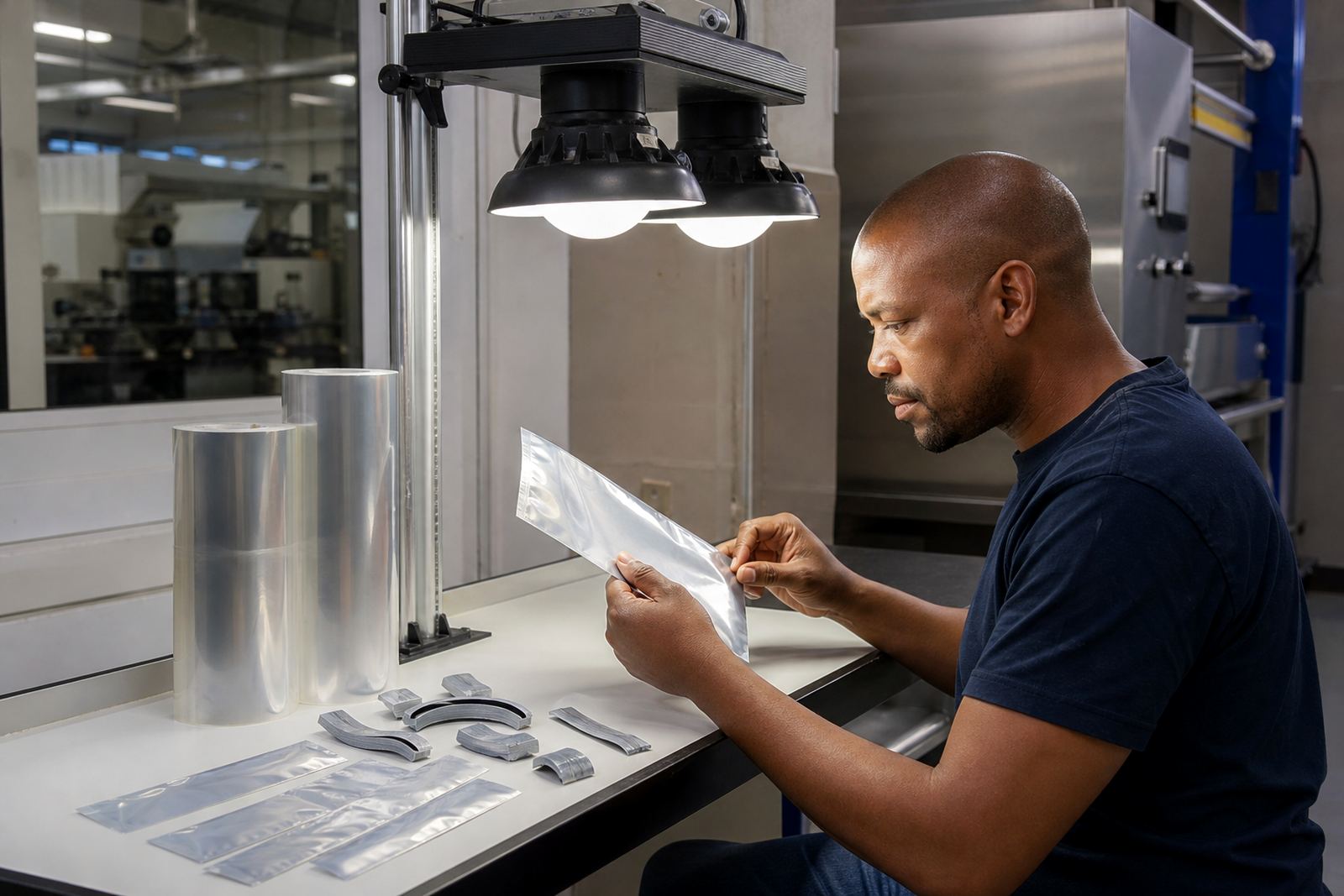
Retort style pouches need careful coordination between artwork, film construction, filling equipment and sealing conditions. In practice, the pack must be matched to the filling line, the heat process and the coding method. Before ordering, it helps to confirm pouch dimensions, seal area, fill temperature, headspace and the type of machine used for filling and closing.
For production planning, you should also consider power stability and plant conditions. Load-shedding can interrupt filling and sealing schedules, so many operations plan around backup power or shifted production windows. Where gas is used in the broader process area, it must be managed safely and in line with site rules. Keep the filling area dry, avoid dust and check that cutters, seal jaws and guides are clean and aligned.
- Confirm whether the line uses manual, semi-automatic or automated filling
- Check available power backup for sealing and coding equipment
- Allow space for finished packs to cool, inspect and dry where needed
- Keep compressed air, gas and electrical services properly maintained
Artwork, Colour Matching And Print Checks
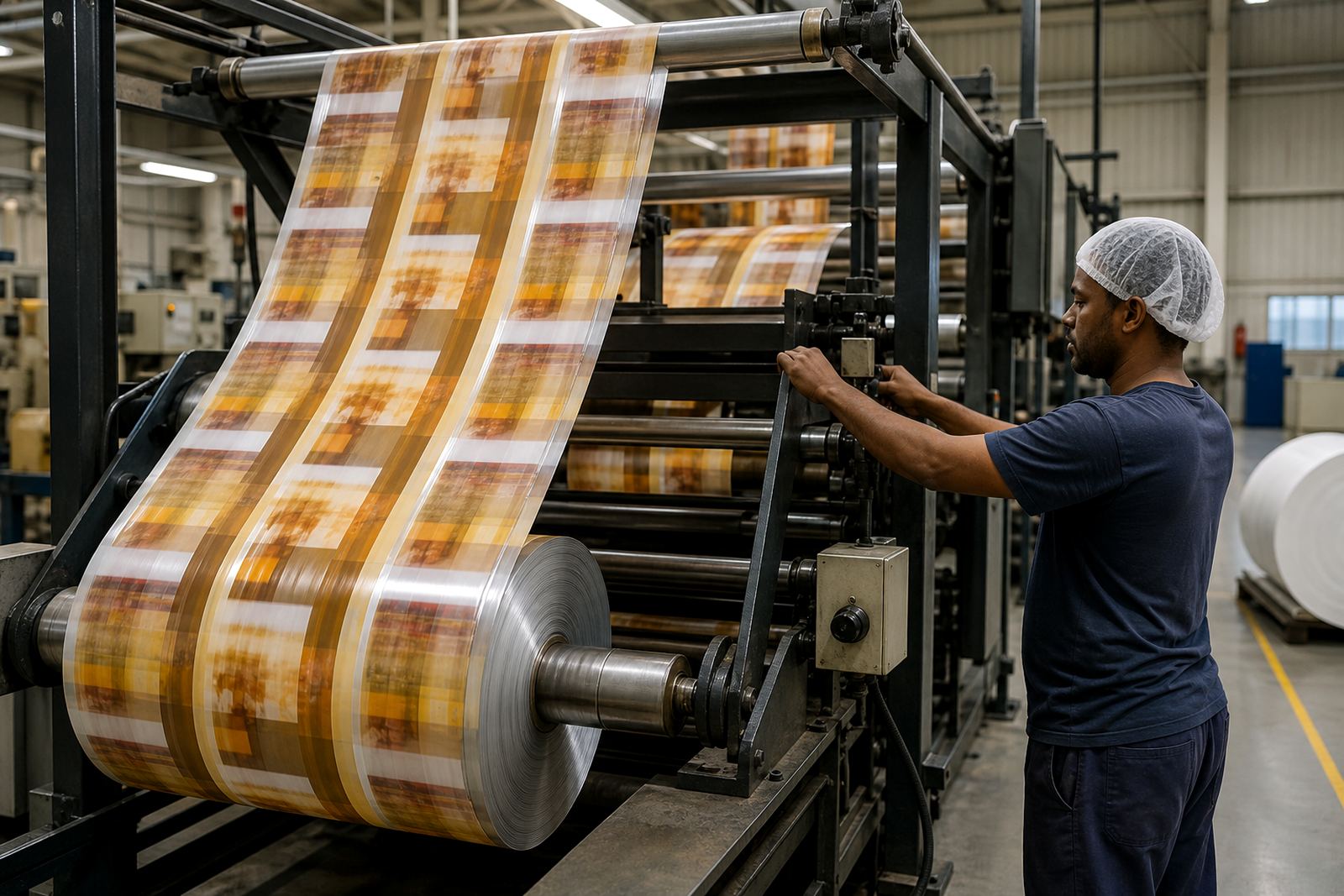
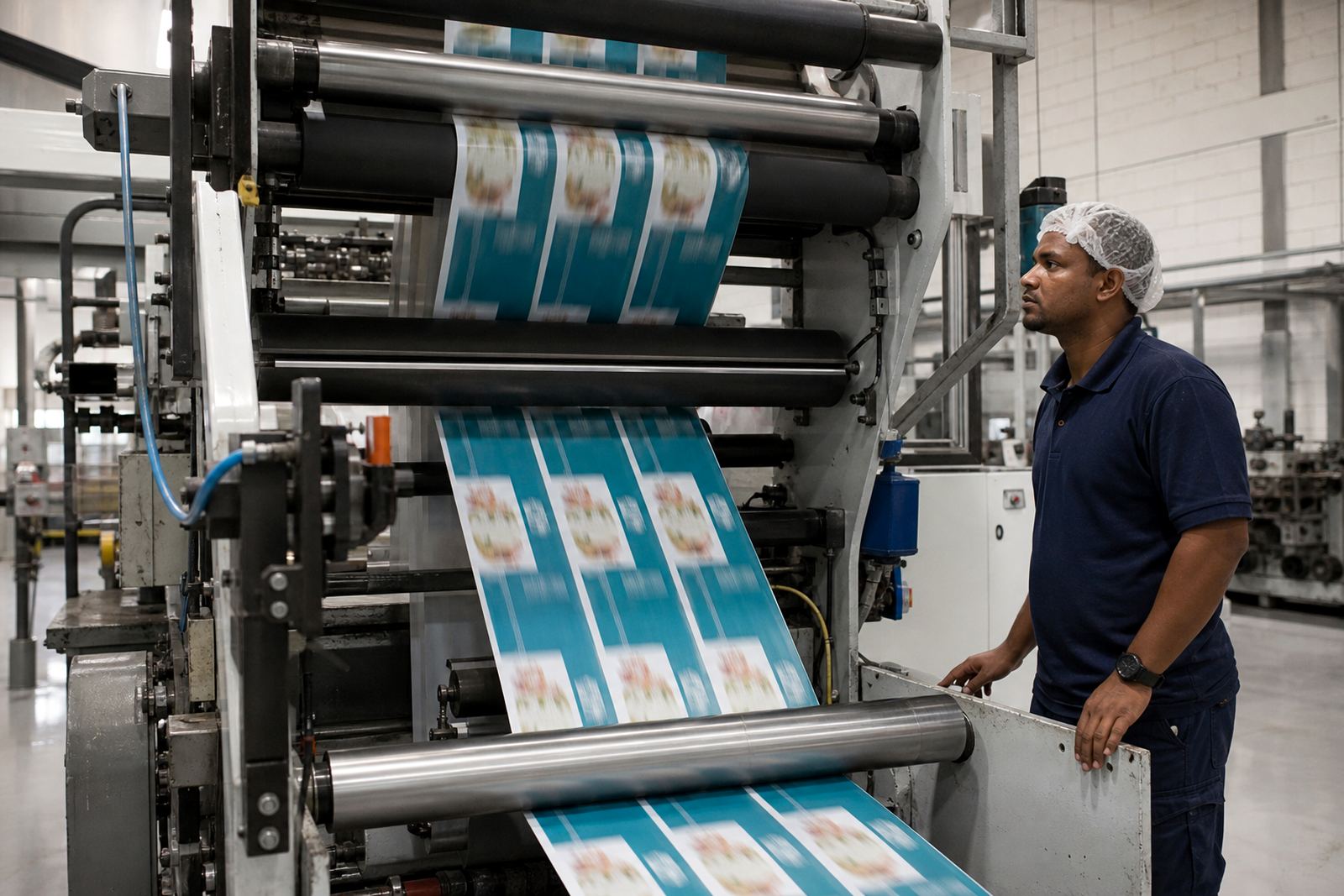
Because this pouch format is often used on retail shelves, the print needs to stay clear and consistent. Flexo printing is well suited to repeated production runs where colour control matters. Before full production, artwork should be checked for panel size, barcode placement, date coding space, warning text and any product instructions that must remain readable after the pouch is filled.
Colour matching should be checked against your approved reference where possible, especially for repeat orders. Small changes in substrate, ink coverage or press conditions can affect how colours appear on the finished pack. We also advise checking how the artwork sits on curved areas, seals and gussets so important copy is not lost in fold lines or cropped at the edges.
- Confirm artwork dimensions against the final pouch size
- Leave clear space for seals, tear notches and coding marks
- Check image resolution for logos, fine text and barcodes
- Approve a print proof before repeat production starts
Care, Storage And Servicing Notes
After production, retort style pouches should be stored flat or in an organised stack, away from direct sun, damp floors and heavy pressure that can crease the material. In South Africa, moisture and dust can affect both print appearance and handling, so storage conditions matter as much as the pack itself. Keep packs in clean, dry areas and rotate stock so older material is used first.
On the production side, routine servicing helps keep output steady. Seal bars, rollers and guides should be checked for wear. If the pouch is showing scuffing, weak seals or uneven print registration, the line should be inspected before the next run. A little preventative maintenance saves time later and keeps the packing room more predictable, which matters when delivery dates are tight.
What To Check Before You Place An Order
Before ordering retort style pouches, it helps to have the product details ready so the correct build can be specified. The main points are the fill product, target pack size, closing method, shelf-life needs and whether the pack must stand upright. If you are changing from another format, bring along a sample or an existing pack if possible.
- Product type and whether it will be heat processed after filling
- Target volume or weight per pouch
- Preferred pouch shape, finish and seal style
- Artwork files and any colour references
- Expected monthly or repeat order quantities
- Delivery town and any site access rules for dispatch
We work from Pinetown and coordinate delivery across Durban, Johannesburg, Pretoria, Cape Town, Bloemfontein, Pietermaritzburg and Ballito. Clients can use the enquiry form on our contact page to request a quote, arrange packaging consultation or set up a repeat production schedule.
Key facts
| Format | Retort style flexible pouch |
|---|---|
| Common sizes | Small, medium and large pack volumes, set to product fill requirements |
| Print method | Flexo printing for repeatable colour and production runs |
| Options | Flat, stand-up or gusseted pouch forms with tear features where suitable |
| Materials | Multi-layer flexible structures selected to suit heat processing and product type |
| Use cases | Ready meals, sauces, wet goods, pet food, soups and similar products |
| Base | Pinetown, KwaZulu-Natal |
| Delivery areas | Durban, Johannesburg, Pretoria, Cape Town, Bloemfontein and more |