When liquid sachets make sense for your product
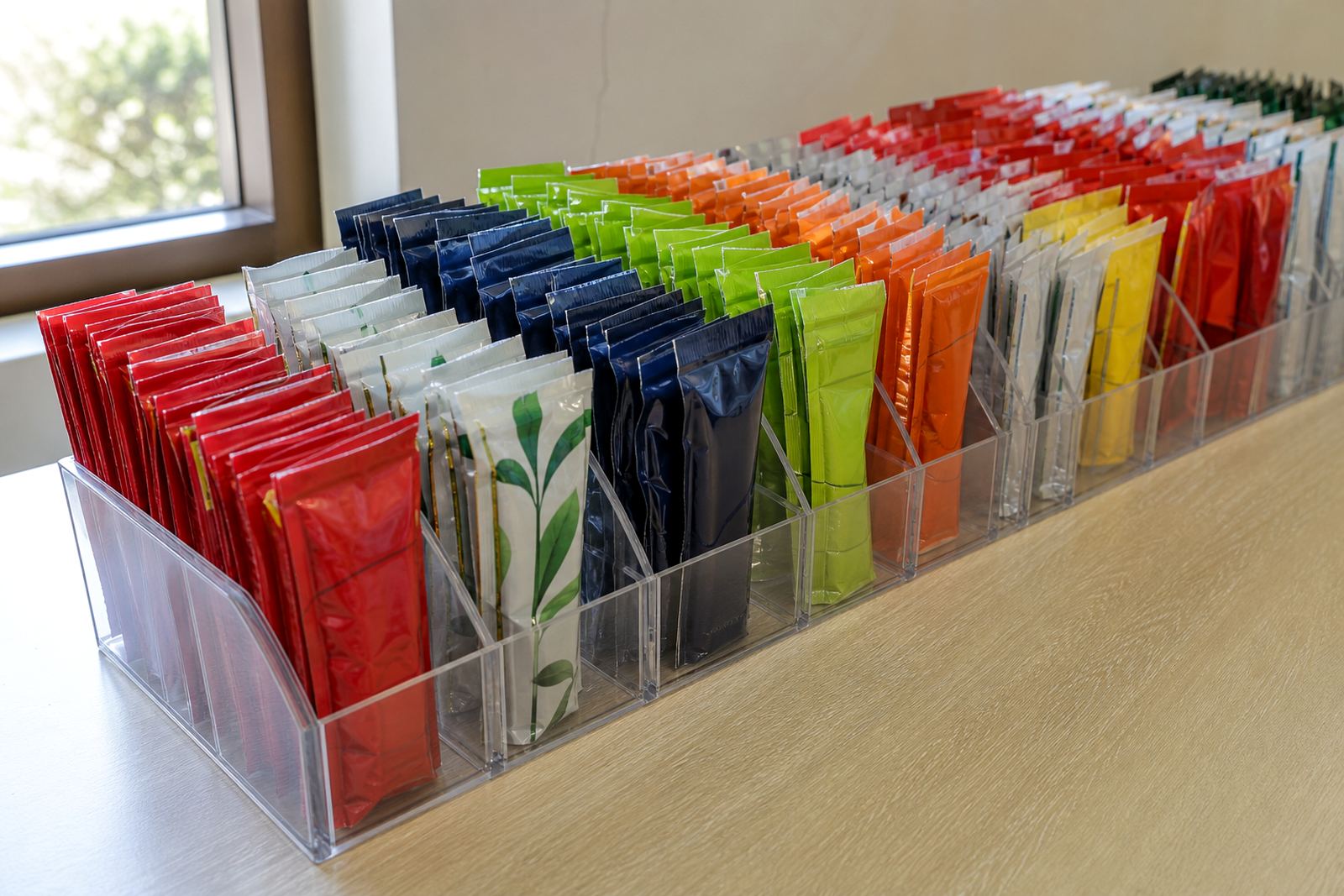
Liquid sachets suit products sold in single portions or trial sizes, especially where convenience matters more than a rigid bottle or tub. They are often used for sauces, condiments, shampoos, detergents, sample packs, concentrates and other products that need a neat measured dose. For brands selling into spaza shops, forecourts, salons, hospitality or promotions, sachets are a practical way to keep price points controlled while still presenting a proper branded pack.
In South Africa, a sachet also has to work in real conditions. It may sit in warm stores in Durban, travel inland to Johannesburg or Pretoria, or move through courier networks with long handling times. That means the material choice, seal area and print layout all matter. If the sachet is too thin, the pack can crease or leak. If the artwork is cramped, the label details become difficult to read. The aim is simple: hold the liquid securely and show the brand clearly.
For many businesses, sachets are the first step into a new market because the order volumes can be smaller than bulk packaging, and repeat production is easier once the layout is approved. That makes them useful for seasonal products, sampler packs and contract packers who need flexibility from one batch to the next.
Typical production set-up for liquid sachets
Liquid sachets are usually made with flexible film chosen to suit the product, the fill method and the final seal. In practice, the pack may need a barrier layer for moisture control, a film that resists scuffing, or a structure that handles oils and other active ingredients. Flexo printing is well suited to these packs because it gives consistent repeat prints and handles medium to larger production runs efficiently.
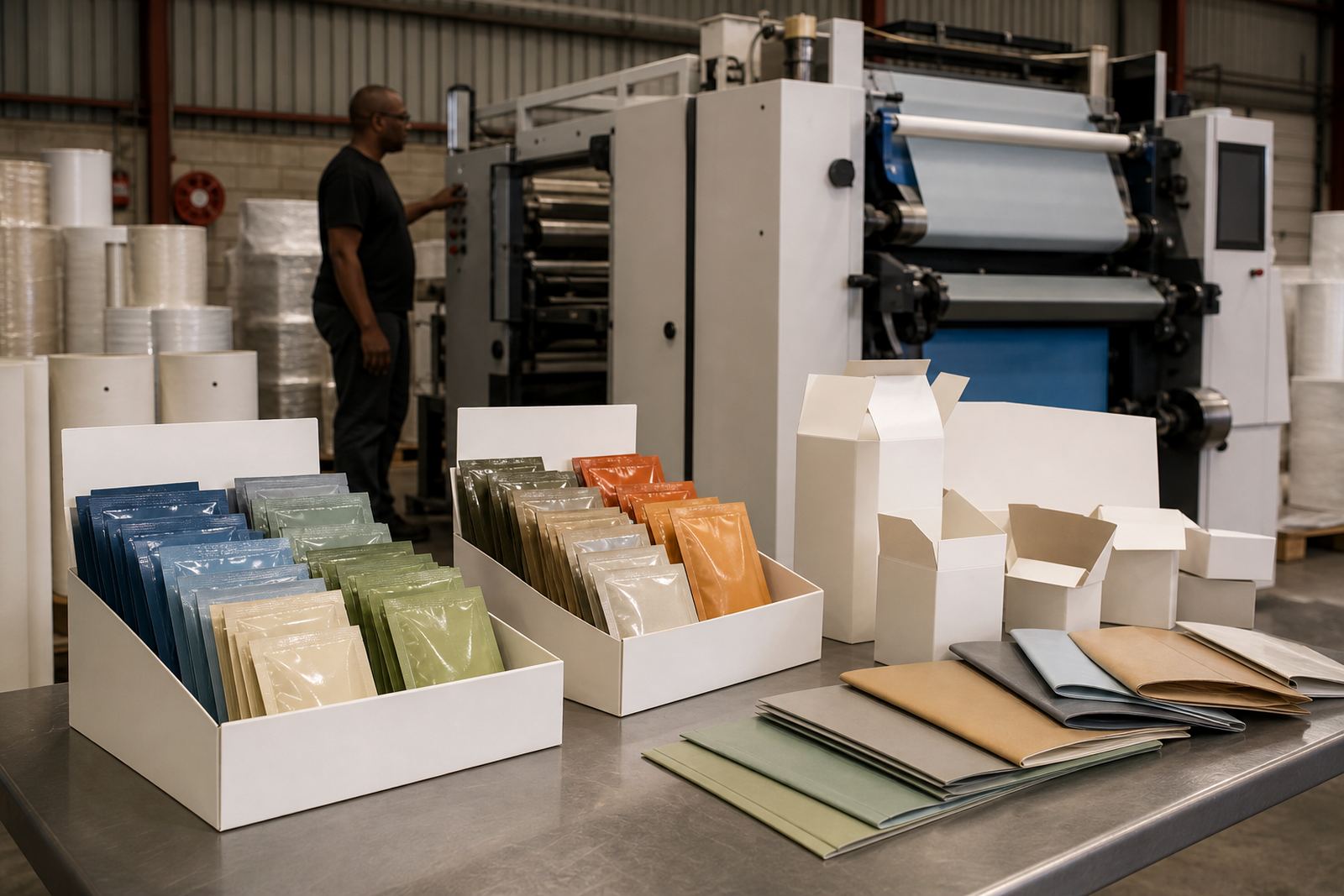
Our production approach normally includes artwork prep, plate planning, colour matching, print proofing and then the converting stage that turns printed film into finished sachets. Depending on the size and format, the equipment set can include:
- Flexo print units for the base film and branding layers
- Slitting and rewinding equipment for roll control
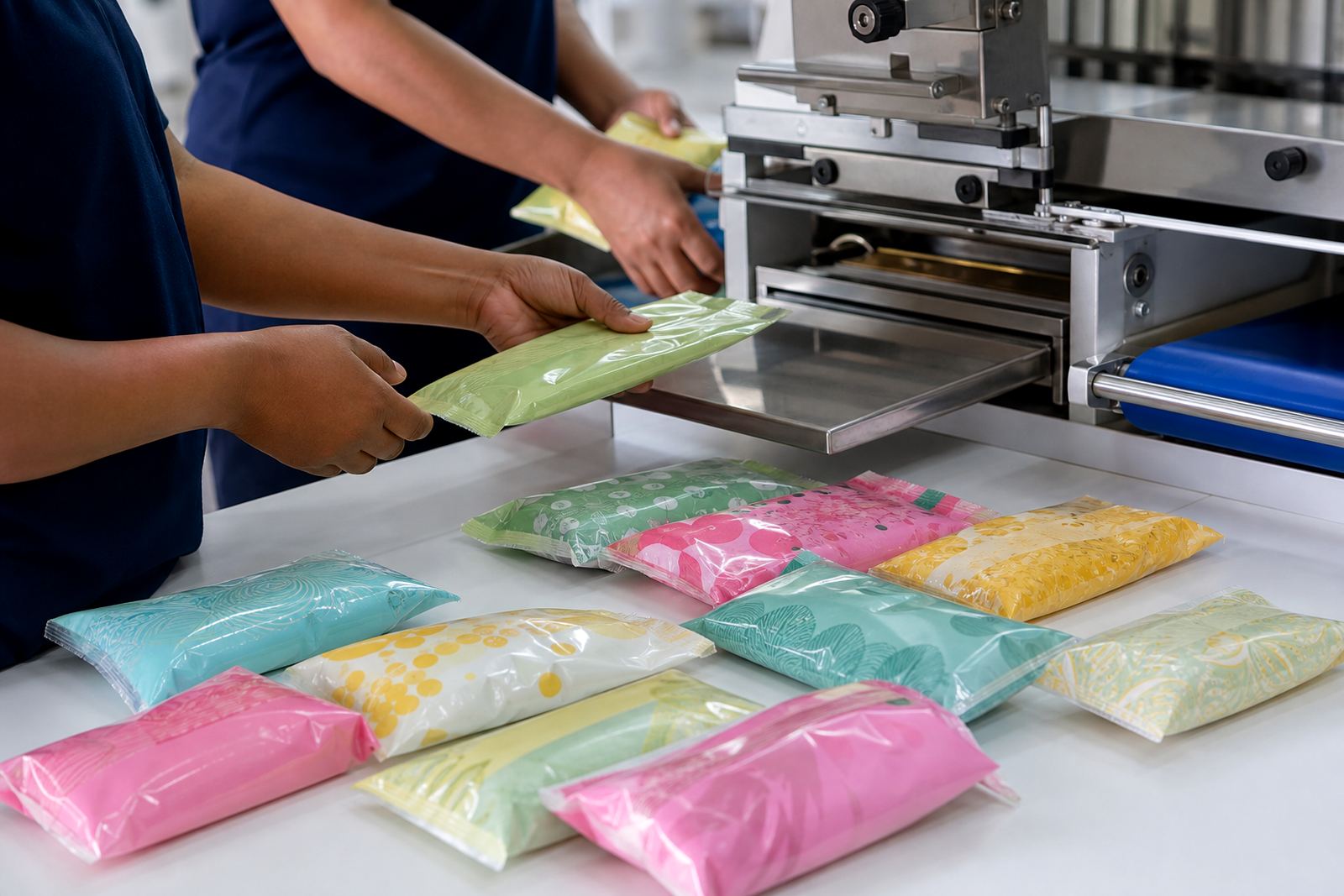
- Converting equipment for sachet forming and sealing
- Inspection and proof checks before dispatch
- Bulk packing materials for safe transport
For liquid packs, seal quality is usually the point that needs the most attention. A clean seal area allows the sachet to open and perform as intended, while poor seal planning can lead to bursts, wrinkling or filling issues. Load-shedding can also affect production planning, so it helps to allow time for proofing, machine setup and any repeat checks if a job needs to be scheduled around power interruptions.
Layout planning for a small pack that still has room to breathe
Sachets leave limited room for text, so the layout has to be planned carefully from the start. The front panel should carry the product name, variant, brand mark and any key visual cue that helps the customer recognise it quickly. The back or reverse panel is normally used for directions, ingredients, batch space, barcode positioning and any required legal text supplied by the client. If the pack is tiny, every millimetre counts.
Good planning starts with the filled volume and sachet dimensions, then works backwards to the artwork. A liquid pack may need extra seal margins, rounded corners or a clearer tear point if the user must open it by hand. The design also has to leave enough contrast for small type to remain legible after printing and sealing. Coastal humidity can affect handling and storage, so packs should be designed with storage and transport in mind, not only the shelf display.
- Keep the key product name large enough to read at arm’s length
- Use strong contrast between background and text
- Allow enough space for batch, date or fill markings
- Check that any fine lines or small icons will survive the print process
- Plan the seal edges before artwork is finalised
We often advise clients to think about the sachet as a working pack first and a graphic surface second. A clean layout is better than an overfilled one, especially when the pack is for busy retail environments or packed into cartons for national distribution.
Common mistakes that cause trouble later
The most common issue is starting with artwork before the sachet size has been confirmed. That usually leads to text sitting too close to the seal or important details being cut off. Another mistake is choosing a design that looks good on a screen but does not print well on a small flexible pack. Fine gradients, very thin type and weak contrast can all become a problem once the sachet is converted and filled.
Another frequent problem is leaving out practical information that the user needs. If the sachet is for repeat sale or professional use, the pack should have enough room for clear product identification and handling notes. Poor alignment of barcode areas, date spaces or opening marks can also slow down packing lines. It sounds simple, but these details save time later.
There is also a budgeting error we see often: allowing for print only and forgetting the other parts of the process. Proofing, colour matching, material selection and dispatch coordination all sit inside the real job cost. If a business wants a short run first and then repeat production after sales are tested, that should be planned from the start so the second run matches the first one properly.
What liquid sachet projects usually cost
Budget depends on the pack size, film specification, number of colours, print volume and whether the job needs short run or repeat production. As a working guide, smaller trial projects and short runs can start from about R18,000 to R35,000, while more involved sachet orders with multiple artwork elements and higher volumes may sit in the R35,000 to R90,000 range or more. The final figure depends on the exact structure and finishing requirements.
If you are comparing options, it helps to request pricing with the same details each time: sachet dimensions, filled product type, expected quantity, artwork status and delivery destination. A job heading to Durban may need different dispatch timing from one going to Bloemfontein or Cape Town, especially if there is a launch date or retail deadline. Clear information early on usually keeps the quote tighter and the production plan cleaner.
For brands in Pinetown, Pietermaritzburg, Ballito and the wider KwaZulu-Natal area, it is often useful to build in a little buffer for proofing and dispatch. That helps if there are last-minute artwork changes or if the client wants to compare a sample version before the full run is released.
How we support sachet orders from Pinetown to every major centre
From our Pinetown base, we work with local brands that need practical packaging support and reliable movement across the country. Our team handles flexo printing, pouch converting, sachet production, artwork prep, print proofing, colour matching, material selection, short run orders, repeat production, dispatch coordination and packaging consultation. Siyabonga Ndlovu leads the business, with support from Priya Naicker, Marius van Wyk, Thandiwe Mkhize, Jason Petersen and Lerato Molefe across sales, production, client service, prepress and logistics.
Clients reach us through the enquiry form on our contact page, and we use that first brief to check size, volume, artwork stage and delivery needs. Whether the destination is Durban, Johannesburg, Pretoria, Cape Town or Bloemfontein, the aim is to keep the process straightforward and practical. If your liquid sachet project is still at concept stage, we can help you shape the pack before production starts, so the result suits the product and the market rather than fighting it.