
What a Spouted Pouch Does Well
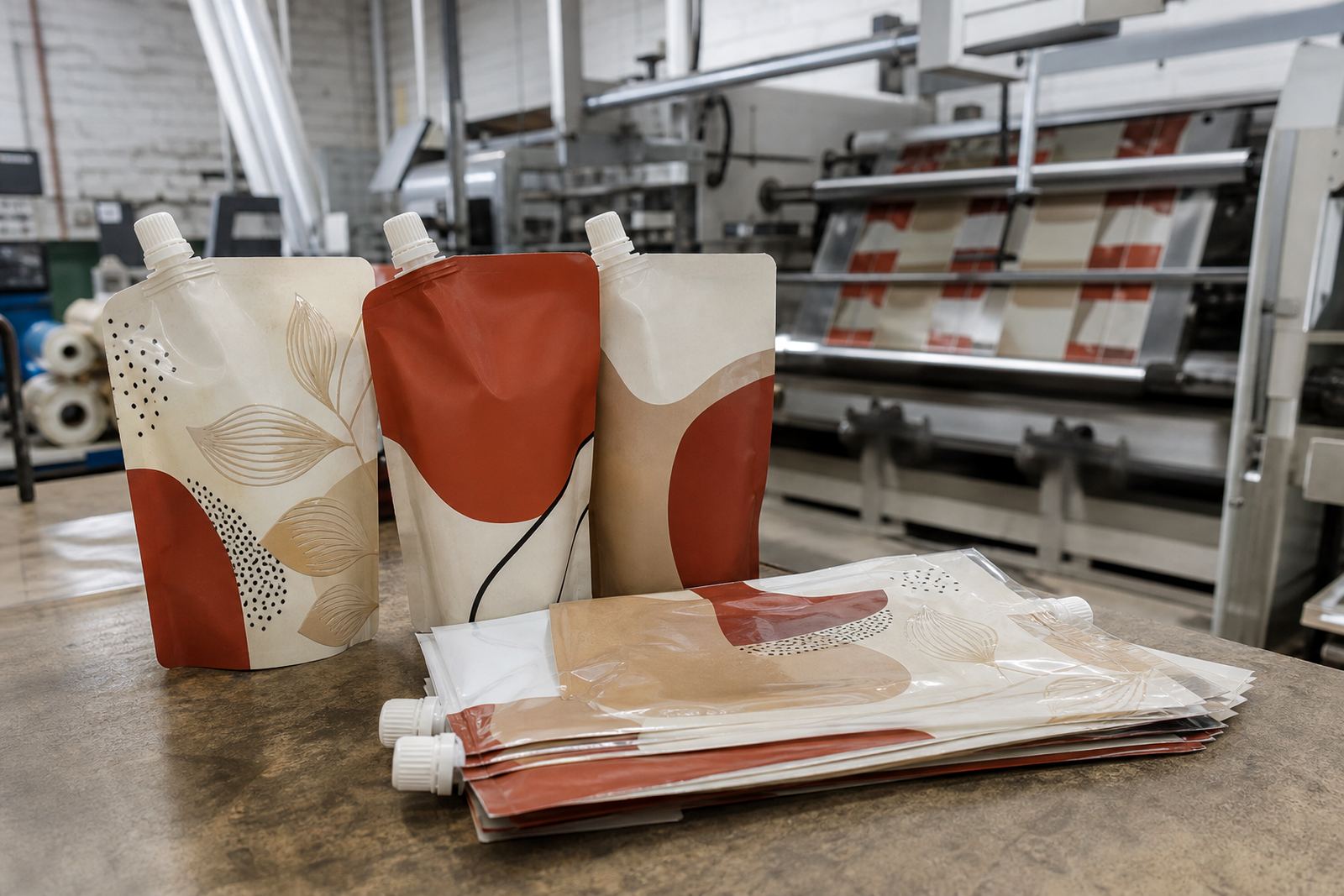
A spouted pouch is a flexible pack with a fitted pour spout, made for products that need to flow out in a steady way rather than being tipped or scooped out. It suits liquids, sauces, concentrates, cleansers, oils and other semi-liquid fills that need neat dispensing at home, in retail, or on the move. The format is light, takes up less storage space than rigid containers, and is easier to pack into cartons for transport from Pinetown to Durban, Johannesburg or Cape Town.
For brands, the main benefit is control. The spout helps reduce spills and gives the user a cleaner pour, while the pouch body can be printed with product details, usage notes and branding on the front and back. It also works well where shelf space is tight and pack weight needs to stay low, which is handy for local distributors working through warehouse and retail channels.
Size Choices, Structures and Closure Options
Spouted pouches are usually specified by fill volume, pouch shape and the type of closure needed. Common options range from small trial sizes through to family-size packs, depending on the product and the way it will be used. The pouch can be made with a flat base, side gussets or a stand-up profile, and the spout may sit in a corner or on a top face, depending on how you want the product to pour.
- Typical fill volumes: 100 ml to 2 litre, depending on application
- Spout position: corner, top centre or top corner
- Closure: tamper-evident cap, screw cap or flip-style closure
- Pack style: stand-up pouch, flat pouch or gusseted pouch
- Film choice: single or multilayer flexible packaging structures
We also help with practical choices like gloss or matt finish, clear windows, reseal behaviour and the amount of barrier needed for the fill. If your product is sensitive to moisture or odour, the film build needs careful checking before production starts.
Where Spouted Pouches Suit Best
This format suits products that are poured in controlled amounts and may be used more than once after opening. It is often selected for household liquids, food-related fills, personal care products and industrial or agricultural liquids. In coastal areas like Durban and Ballito, the right pack structure helps protect contents from humidity, while inland deliveries to Pretoria and Bloemfontein may need a different balance of stiffness and barrier.
It is also a good choice for brands that want a lighter pack for transport over long distances. Fewer breakages in the supply chain can make a real difference when stock is moving between warehouse, shop floor and end user, especially where loads are handled often and storage space is tight.
- Useful for refill products and repeat-use items
- Suitable for retail shelves and promotional packs
- Works well for liquid products that need a clean pour
- Can support short runs for market testing or repeat production
Artwork, Flexo Printing and Colour Control
Because the pouch surface is flexible, artwork has to be planned around seams, heat-seal areas and the spout position. Our flexo printing process is set up for flexible packaging, so we check layout, copy placement and barcode space before print approval. This matters when the pack carries dosage notes, ingredients, storage instructions or handling details that must stay legible after filling and sealing.
Colour matching is a key part of the job. On flexible films, ink appearance can shift depending on the material build and finish, so proofing and prepress checks are done before production. We work through artwork prep, print proofing and repeat production planning from Pinetown, and clients can use the enquiry form on our contact page to send order details and pack specs. A missing note on seal allowance or cap placement can lead to delays, so it is worth checking the layout early.
Installation, Filling and Site Requirements
Spouted pouches are typically filled on flexible packaging equipment that can handle the pouch shape, spout placement and closure system chosen for the job. The pouch line may need set-up for sealing temperatures, fill accuracy and cap application, depending on whether the product is hot-filled, cold-filled or filled at ambient temperature. If the product needs post-fill handling, the pack should be tested for seal strength and squeeze performance before the full run starts.
Power and gas needs depend on the filling and sealing line used at your site, not only the pouch itself. For most operations, the important points are steady power supply, correct air pressure if pneumatic equipment is used, and enough space for cartons, reels and finished stock. In South Africa, load-shedding planning matters, so many teams keep production schedules flexible and allow for safe stop-start procedures. If your site is near the coast, storage conditions should also take humidity into account.
What to Check Before You Order
Before you place an order, it helps to have the product fill, pouch size and closure type clearly set out. The more detail you provide at the start, the easier it is to match the film structure, artwork and dispatch plan to your needs. If you are moving from a bottle or tub format, the pack height, spout position and carton count should be checked early so that warehouse handling stays simple.
- Exact product type and fill weight or volume
- Preferred pouch size and shape
- Spout position and closure style
- Print colours, artwork format and text requirements
- Storage conditions, including heat and humidity exposure
- Order quantity, repeat schedule and delivery town
We also suggest confirming whether the pack will be used for retail sale, sampling or internal supply, because that changes the print detail and the number of checks needed before dispatch. Our logistics coordination team arranges deliveries across Durban, Johannesburg, Pretoria, Cape Town and Bloemfontein, with stock movement planned around the order size and delivery window.
Care, Storage and Repeat Production
Spouted pouches should be stored flat in a clean, dry place away from sharp edges and direct sunlight. Stacking cartons too high can crease the packs, and once the spout or cap area is damaged, the pouch may not fill or seal properly. When products are moved between sites, keep the cartons upright where possible and avoid rough handling at the edges of pallets.
For repeat production, keep a record of the approved artwork, fill volume, material build and closure type. That makes reordering simpler and helps maintain consistency from one batch to the next. If you are changing the product formula, moving to a new factory, or adjusting pack sizes for Pinetown, Pietermaritzburg or Ballito delivery, it is best to review the specification again before print and converting begin.
Key facts
| Product format | Spouted flexible pouch for controlled pouring |
|---|---|
| Typical sizes | 100 ml to 2 litre, subject to product and fill method |
| Closure options | Screw cap, tamper-evident cap or flip-style closure |
| Print method | Flexo printing on flexible packaging structures |
| Finish options | Gloss, matt or mixed finish depending on artwork and film |
| Delivery areas | Pinetown, Durban, Johannesburg, Pretoria, Cape Town, Bloemfontein, Pietermaritzburg and Ballito |