
What cold seal wraps are and where they help
Cold seal wraps are printed flexible packaging webs made for products that need to be closed by pressure rather than heat. The sealing layer bonds when the pack is pressed through the packaging line, which makes it a practical choice for products that can be affected by temperature, or for operations where heat sealing slows things down.
In South African packing rooms, this format is often used for confectionery, snack bars, biscuits, dried goods and other fast moving retail products. It is also useful where pack appearance matters, because the wrap gives a neat printed finish while still allowing efficient packing. For coastal areas like Durban and Ballito, material selection matters too, because humidity can affect handling and storage if the film is not specified correctly.
As with any printed wrap, the finished result depends on the product weight, shelf life target, packing speed and the type of cartoning or flow wrapping equipment in use. That is why the right film and print build need to be matched to the line, not just the artwork.
Format choices, sizes and print build
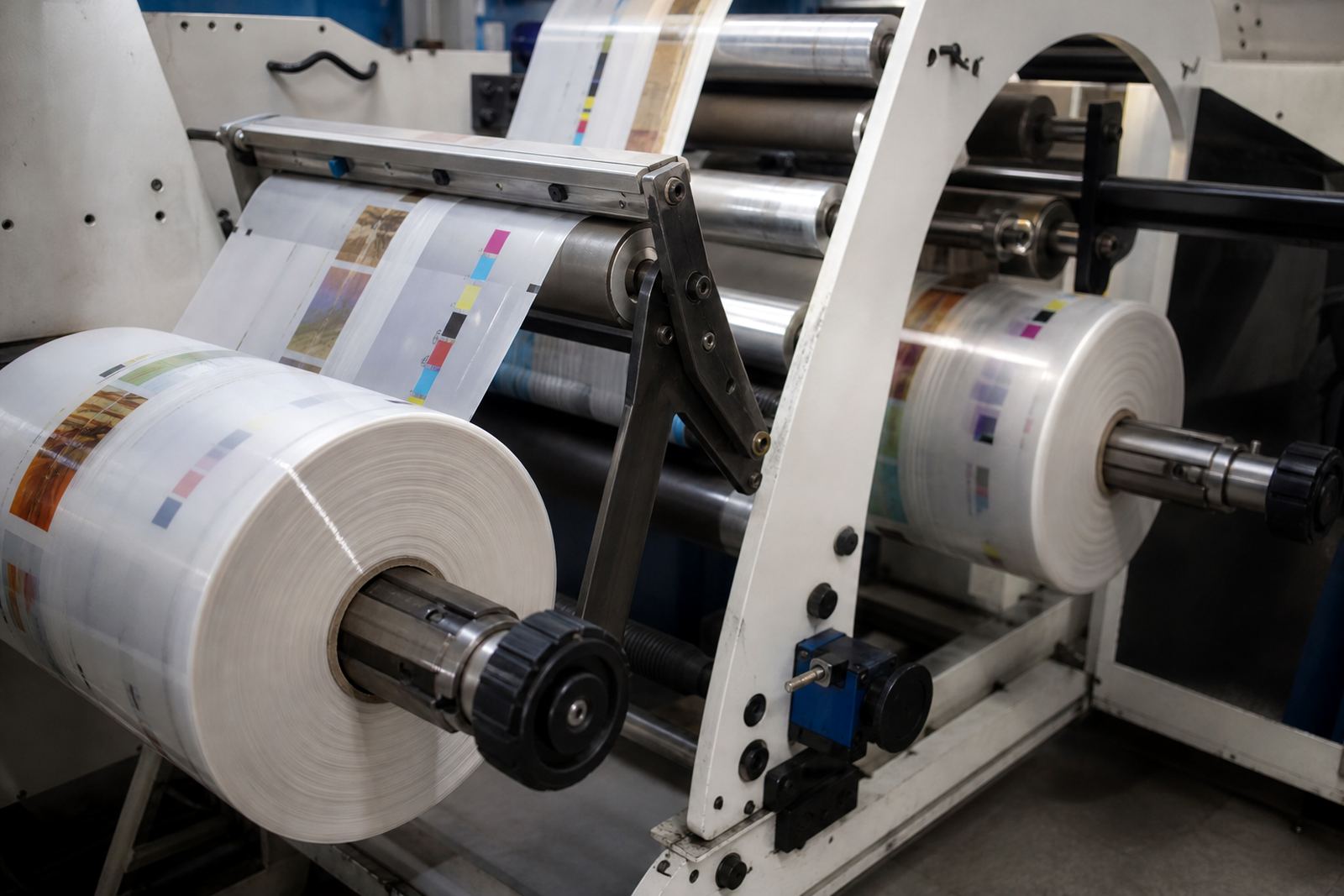
Cold seal wraps can be produced in different widths, repeat lengths and roll diameters depending on your machine and pack size. The most common request is for roll-fed wrap material supplied to suit existing packing equipment, with print set up to match the repeat and registration needed on the line.
Options usually depend on product weight, the pack shape and how much shelf presence is needed. We can work with short run orders for product testing, then repeat production once the pack is confirmed. Colour matching and prepress checks are important on wrap work because even a small shift in artwork can show clearly across a long repeat.
- Roll widths matched to your wrapping machine
- Repeat lengths set to the finished pack size
- Single or multi-colour flexo printing
- Gloss or matt finish depending on the look required
- Film selection based on pack speed and handling needs
Where cold seal wraps suit local production
This format suits brands that need a clean retail appearance and a sealing method that does not depend on heat. It is often chosen for high speed packing lines where every second matters, and where product temperature must stay controlled. In places like Pinetown and Pietermaritzburg, where many smaller manufacturers run mixed production schedules, a wrap format that packs quickly can make day to day work easier.
Cold seal wraps are also a sensible option for businesses supplying national retail chains from one base. If you are dispatching to Johannesburg, Pretoria or Cape Town, the printed roll must hold up during transport and storage, so material thickness, roll winding and edge quality all need attention. We help with packaging consultation so the wrap suits the machine, the product and the distribution route.
- Fast moving consumer packs
- Temperature sensitive pack rooms
- Products needing neat shelf presentation
- Brands with repeat nationwide distribution
Installation, machine setup and utility needs
Cold seal wraps are used on compatible packing machines that apply pressure to create the seal. The exact setup depends on the line, but the packer must be set to feed the roll cleanly, with correct tension and registration. If the wrapping machine is not aligned properly, the artwork can drift and the seal area may not close evenly. That leads to waste and stops on the line.
Unlike heat seal packaging, this format is generally chosen to reduce dependence on heated bars or high thermal input at the sealing point. That can be useful where power supply is a concern during load shedding, or where the packing area is already running several machines and heaters. No gas system is normally needed for the wrap itself, though your packing line may still have its own utility needs depending on the equipment in use.
Before ordering, it helps to confirm roll core size, unwind direction, web width and the speed your machine can handle. Jason and the production team can also advise on artwork prep and print proofing so the wrap runs correctly when it reaches the floor.
Care, storage and servicing over time
Printed wraps should be stored flat, dry and away from direct sunlight. In KwaZulu-Natal, especially near the coast, moisture can affect roll handling if stock is left in open areas. Keep cartons closed until use and allow rolls to acclimatise if they move between cool storage and a warmer packing floor.
On the machine side, the sealing components and feed path should be kept clean so dust and product residue do not interfere with the pressure seal. Regular servicing on the wrapping line helps avoid misfeeds and uneven sealing. If the line shows repeated registration drift, it may be a machine issue or a print repeat issue, so checking both is worth doing rather than assuming the film is at fault.
For repeat production, keeping a sample roll and approved proof on file makes future runs easier. It also helps with colour matching if the same product is ordered again after a few months.
What to confirm before placing an order
To avoid delays and wasted material, have the pack details ready before you send through an enquiry. The more accurate the information, the better we can match the print and film to your wrapping setup and delivery plan.
- Finished pack size and target weight
- Machine type, roll width and core size
- Whether you need short run or repeat production
- Artwork files and any brand colour references
- Required finish, gloss or matt
- Delivery town and turnaround expectation
If you are supplying across South Africa, tell us whether the stock is going to Durban, Johannesburg, Pretoria, Cape Town or Bloemfontein, because transport timing can affect dispatch planning. From our Pinetown base, we coordinate packing, checking and loading so the order moves in a practical way. Marius oversees production and Lerato handles dispatch coordination, which helps keep the process clear from approval to delivery.
Key facts
| Product type | Cold seal printed flexible wrap for pressure sealing applications |
|---|---|
| Common formats | Roll-fed wrap material for compatible packing machines |
| Print method | Flexo printing |
| Typical use | Confectionery, snacks, biscuits and other retail packs |
| Options | Widths, repeat lengths, finishes and run quantities matched to the line |
| Service area | Pinetown, Durban, Johannesburg, Pretoria, Cape Town and Bloemfontein |