
What pouch converting covers
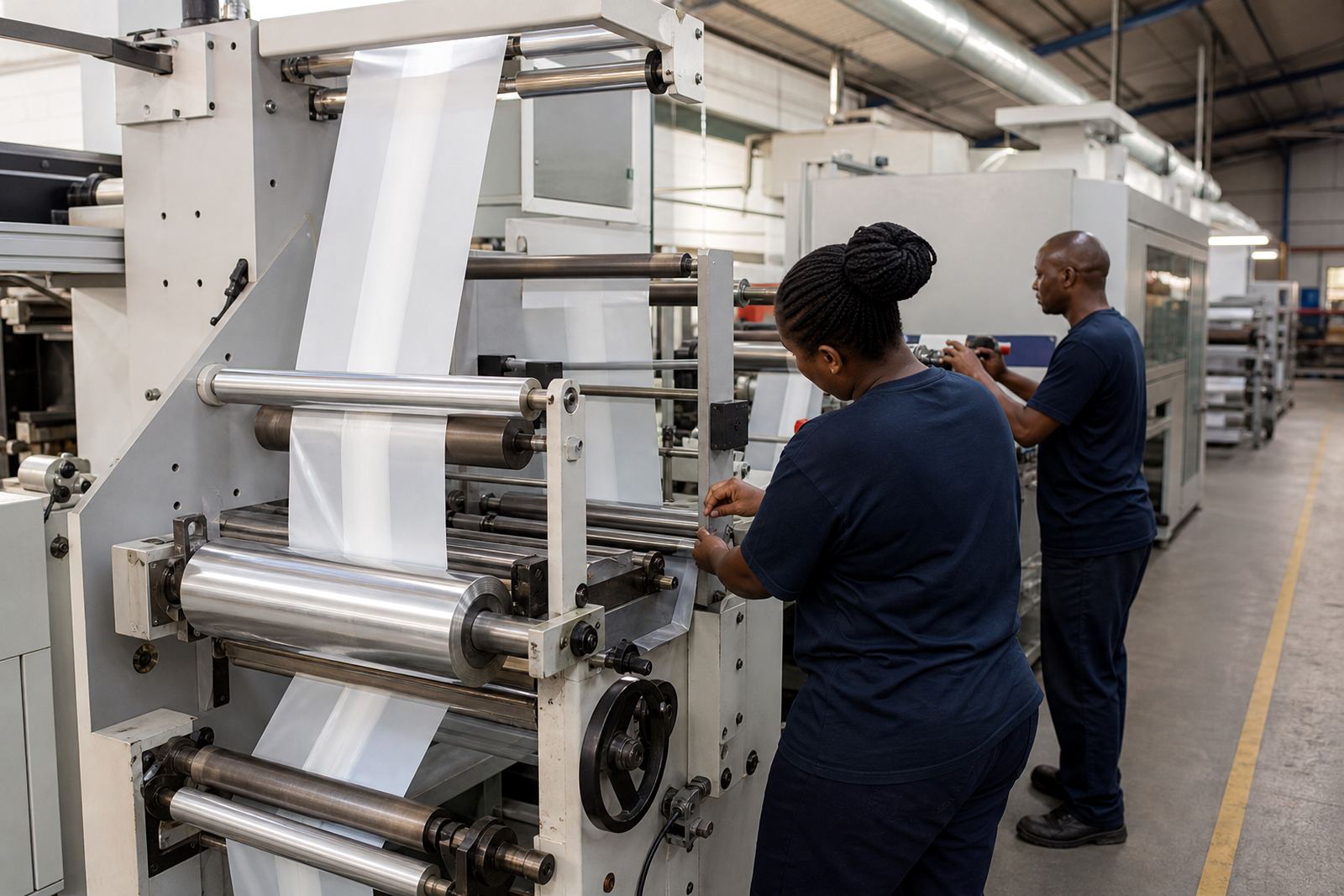
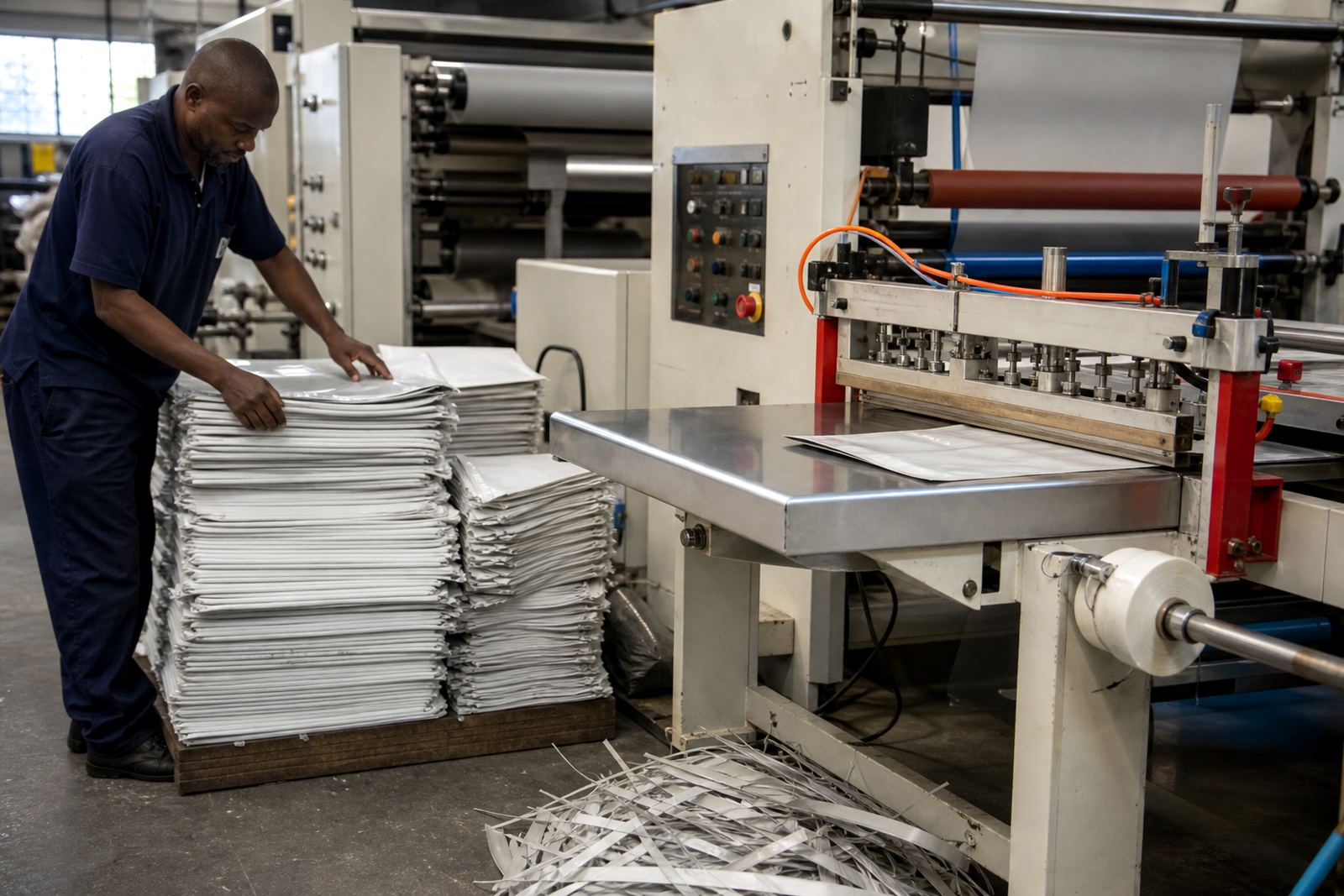
Pouch converting is the step where printed flexible material is turned into a finished pack that can be filled, sealed and moved through your supply chain. At our Pinetown base, this includes cutting, folding, sealing and finishing to suit the pack style you need for powders, granules, liquids or dry goods.
We work with flexo-printed structures for pouches in a range of sizes, from small retail sachet formats through to larger recloseable packs. The aim is practical fitment, neat edge finishing and consistent sealing, so your packaging performs properly on the line and on the shelf.
- Stand-up pouch format conversion
- Flat pouch and sachet format conversion
- Wrap-style conversion for products needing a compact pack form
- Recloseable features where the job calls for them
How we handle each converting job
Every job starts with the approved artwork, pack dimensions and the intended filling method. From there we confirm material build, seal area allowances and the amount of slack needed for easy filling. If the pack is going onto a fast line in Durban or a smaller batch line in Pietermaritzburg, the setup is adjusted to suit the run size and packing method.
Jason Petersen in prepress checks the artwork against the finishing format, while Marius van Wyk and the production team confirm the converting sequence. That includes the seal layout, trim allowance, notch position and the final pack dimensions, so there are no surprises once production starts.
- Artwork check and dimensional confirmation
- Material review for the required pack style
- Converting setup and trial pieces
- Final finishing, inspection and dispatch planning
Pack styles and size options we convert
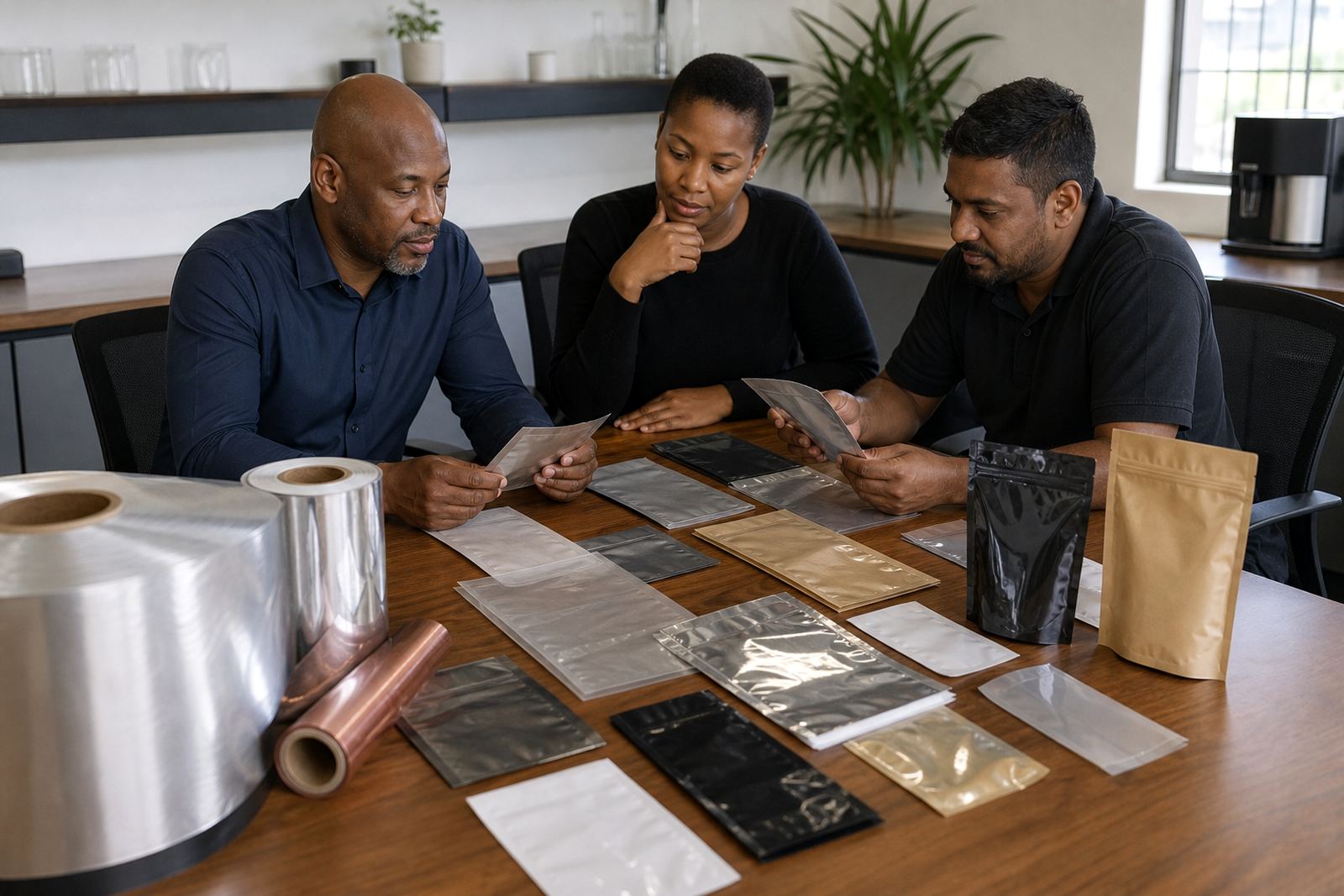
Different products need different pack geometry. Some need a wide base for shelf stability, others need a slimmer profile for carton packing or hanging display. We convert pouches and sachets in practical formats suited to local retail, wholesale and contract packing environments. If your pack is destined for Cape Town, Johannesburg or Bloemfontein, the same standards apply to fit, seal and finish.
Common size and format considerations include fill volume, gusset depth, seal width and opening style. We also look at material thickness and how the pack will behave in warm storage, coastal humidity or during transport over long distances.
- Compact sachet packs for single-use portions
- Flat pouches for dry ingredients and sample packs
- Stand-up pouches for shelf presentation
- Custom widths and lengths to suit your filling equipment
Turnaround times and dispatch planning
Turnaround depends on the order quantity, finishing requirements and whether the job is a repeat production or a first-time setup. Repeat runs are usually faster because the pack specification, tooling and artwork checks are already in place. New converting jobs allow for a fuller proofing and sign-off process, which helps avoid delays later on.
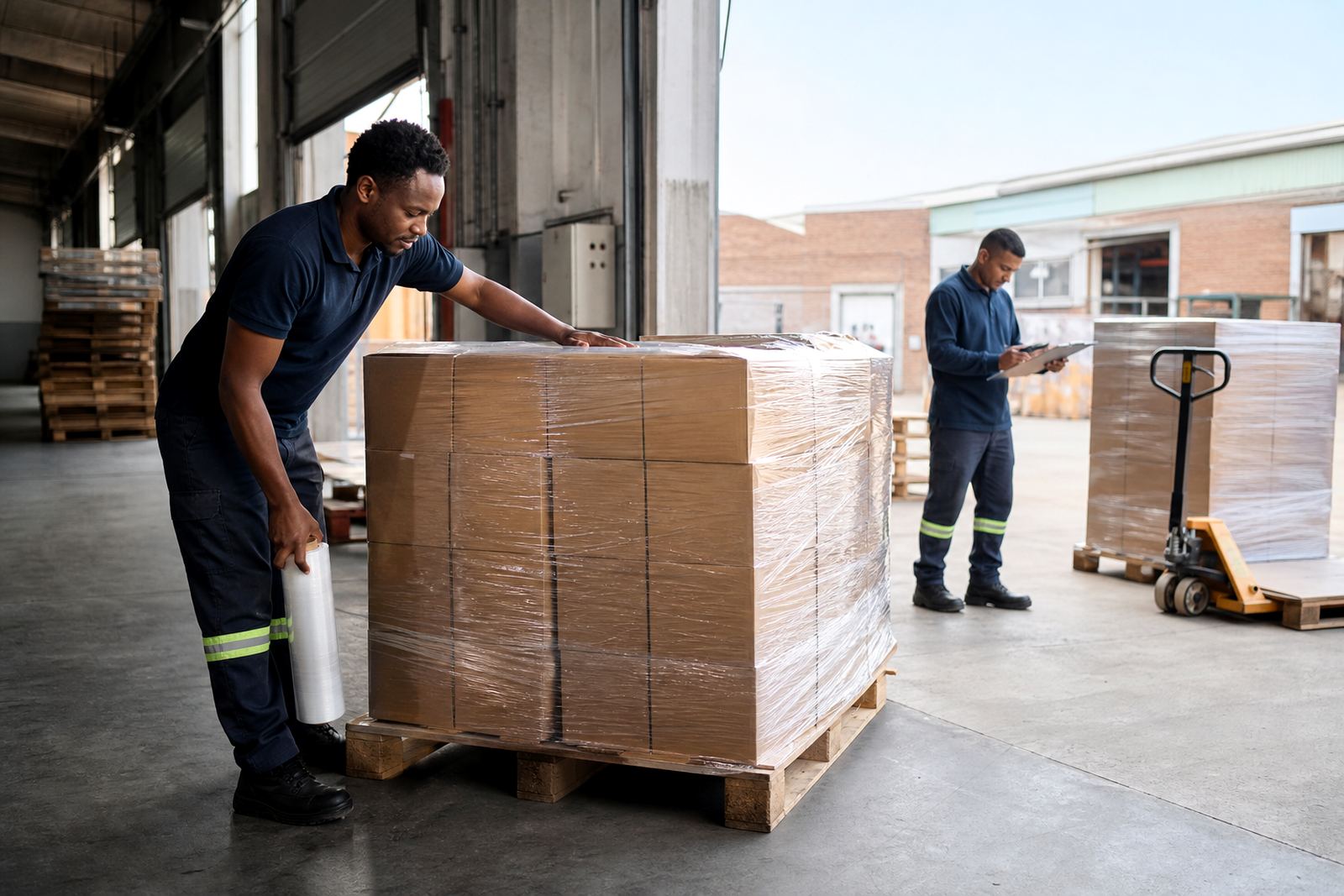
For urgent local work in Pinetown, Durban or Ballito, we plan dispatch around production slots and delivery routes. For out-of-town orders, especially when freight is involved, we factor in loading, route timing and any municipal or site delivery requirements that may affect receiving times.
- Short run orders for smaller launches or trial packs
- Repeat production for steady supply
- Scheduled dispatch coordination for local and national delivery
- Lead times confirmed against the exact pack format and quantity
Pricing approach for pouch converting
Pricing is based on the pack type, material make-up, finishing steps and order quantity. A simple flat pouch will not price the same as a recloseable stand-up format, and a short run usually carries different handling costs from a larger repeat order. We quote against the actual specification so you know where the cost is coming from.
We also take into account the amount of setup required, the complexity of the trim, and whether the order includes extra checks such as colour matching or proof review. If you are comparing options for a new product, Priya Naicker can help you work through the practical trade-offs between pack style, unit cost and production efficiency.
- Material choice and pack structure
- Quantity and repeat frequency
- Finishing complexity and setup time
- Any extra proofing or artwork adjustments
Maintenance intervals and production care
Good pouch converting depends on well-kept equipment and regular checks. We follow routine maintenance intervals on sealing components, cutting parts and alignment systems so the finished packs stay consistent from one run to the next. In KwaZulu-Natal, where humidity can affect material handling, this matters even more for clean edges and stable sealing.
For production care, we also check tooling condition before each run and again during longer jobs. If a material change or pack style change is coming up, the line is reset and verified before production continues. That keeps wastage down and helps avoid issues with wrinkling, skewing or uneven seals.
- Pre-run inspection before every job
- Routine checks during longer production runs
- Scheduled servicing on cutting and sealing parts
- Material storage review for moisture-sensitive stock
Key facts
| Formats | Stand-up pouches, flat pouches, sachets and wrap-style packs |
|---|---|
| Material types | Printed flexible materials converted to finished pack formats |
| Typical size range | Small sample sachets through to larger retail pouches |
| Finish options | Trimmed edges, sealed sides, fill-ready openings and recloseable features where required |
| Turnaround | Based on quantity, pack style and proof approval |
| Base area | Pinetown, KwaZulu-Natal with delivery across South Africa |